South Alabama agency opens utility bill assistance for low-income households
The Community Action Agency of South Alabama opened applications to help low-income households cover heating and utility bills through a federally funded program.
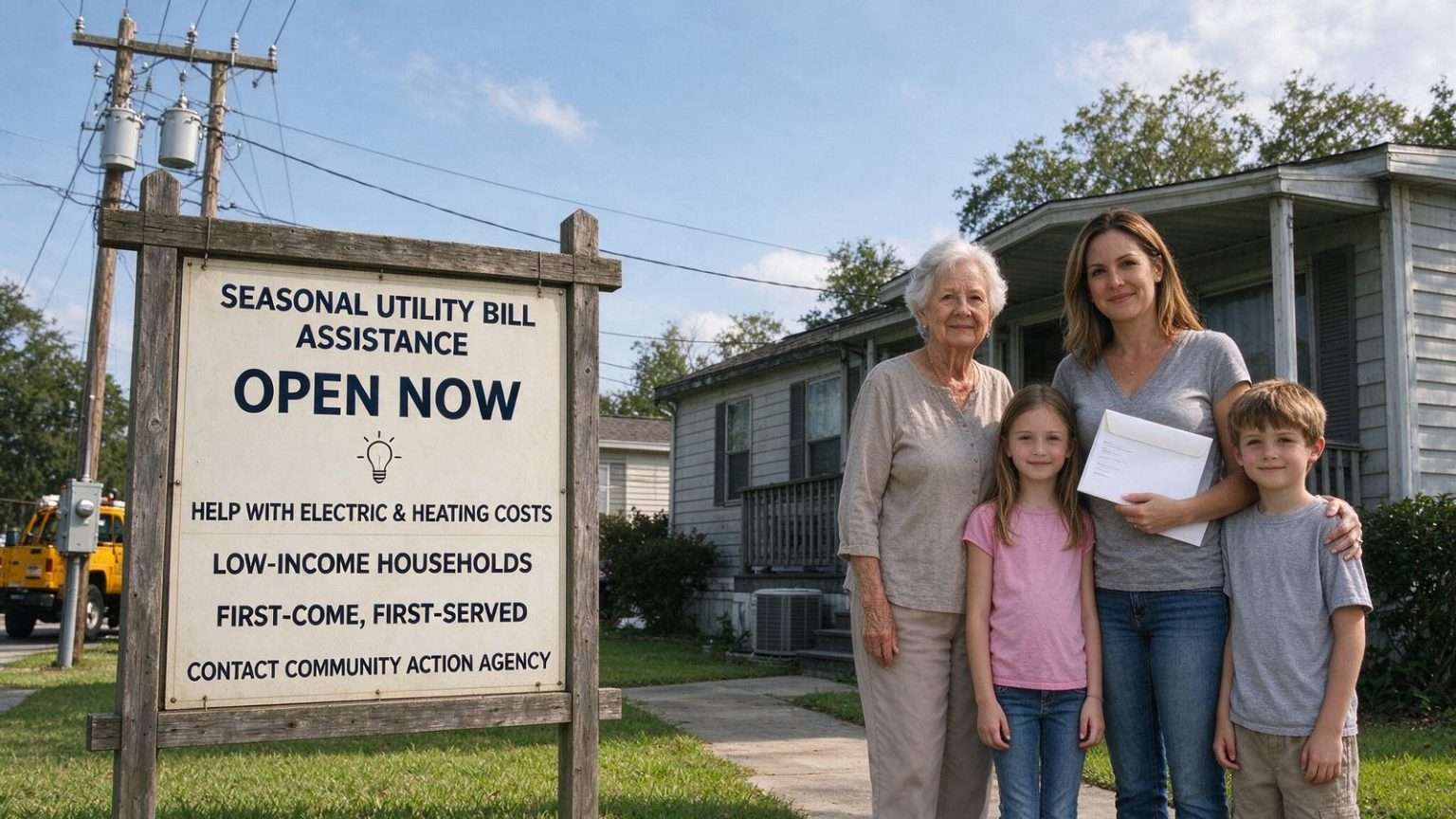
Low-income households across the region were encouraged to apply for help covering their utility bills through a seasonal assistance program run by the Community Action Agency of South Alabama. The agency opened its application process to families struggling to keep up with heating and electricity costs, drawing on federal funds set aside for the purpose. The program arrives each year as a lifeline for households where a single high power bill — summer cooling or winter heating in a Gulf Coast climate that demands both — can force an impossible choice between the electric bill and other necessities.
The Community Action Agency of South Alabama serves Mobile and the surrounding counties as part of the national network of community action agencies created in the 1960s to fight poverty at the local level. Energy assistance is among the agency’s most visible programs, but its reach extends across the spectrum of services low-income families depend on — making it the first phone call for many residents who don’t know where else to turn when a bill comes due.
How the Assistance Works
The program provides eligible households with an allotment paid directly to their utility provider. Because payments go straight to the power company rather than to the applicant, the assistance is applied against the household’s account rather than handed out as cash. The structure protects both the program and the household: the money cannot be diverted to other expenses, the utility applies the credit directly against the balance, and families at risk of disconnection get real relief on the account that matters most.
For a household facing disconnection, that direct-payment design makes the difference between keeping the lights on and arranging an expensive reconnection. Utilities across Alabama work with the program on the payment side, and a credit posted to an account can also stop late fees from compounding — a hidden benefit for families already carrying past-due balances from the previous season.
Who Qualifies
Eligibility is tied to household income. Applicants must document the combined income of everyone in the home, before deductions, for the full month prior to the month they apply. At the time, the monthly income limits were set at roughly $1,458 for a single-person household, $1,966 for two people, $2,473 for three and $2,981 for four, with about $508 added for each additional member beyond that. The limits track the federal poverty guidelines used by the Low Income Home Energy Assistance Program — LIHEAP — the federal block grant that funds energy assistance nationwide.
Households whose income hovers near the limit are still encouraged to apply, because the calculation includes everyone living in the home and the limits rise with family size. A single parent with three children working a modest wage can fall within eligibility even when the household feels far from “poor” by appearance — and Gulf Coast utility costs, with their brutal summer peaks, push many working families into seasonal crisis regardless of how carefully they budget.
What to Bring
To apply, residents needed to bring proof of income along with Social Security cards, a photo ID for the head of household, and the date of birth and age of each household member. The utility account had to be in the name of the head of household or a spouse, and only that person was permitted to file the application. Officials noted that bank statements were no longer accepted as proof of income.
The documentation requirements catch many first-time applicants off guard, so the agency’s advice is simple: gather everything before coming in. A missing Social Security card or an account in a roommate’s name can turn a routine application into a wasted trip — and with appointment slots scarce, a wasted trip can mean missing the program’s window entirely. Households whose utility account is not in a qualifying name should contact their provider about transferring the account before applying.
Limited Funds, First-Come Basis
The agency cautioned that money for the program was limited and distributed on a first-come, first-served basis. Some appointment slots had already been filled, and the number of applications accepted each day was capped because of the paperwork involved and the finite pool of funds. Staff said special arrangements could be made for elderly residents and people with physical disabilities to ease the application process.
The first-come structure is a federal requirement, not an agency choice — LIHEAP funds arrive in allocations that must be spent within the program year, and demand across South Alabama reliably exceeds the available pool. When the seasonal money is gone, it is gone until the next allocation, which is why officials urge households to apply early in the season rather than waiting until a disconnection notice arrives. Elderly residents and those with disabilities who cannot navigate the appointment system can call ahead for accommodations, and agency staff will work with them individually.
Why Energy Assistance Matters Here
Programs like this one, funded through federal energy-assistance dollars, are a lifeline for the region’s most vulnerable residents — and the need on the Gulf Coast is distinctive. South Alabama’s climate runs air conditioners nearly flat-out from May through October, and winter heating snaps arrive with sudden cold fronts that send electric bills soaring for households with older, poorly insulated housing. The region’s housing stock includes a large share of older homes and manufactured housing, the categories least able to hold temperature and most likely to produce punishing seasonal bills.
The consequences of falling behind are more serious than an inconvenient notice. A utility disconnection in an Alabama summer is a health hazard, particularly for elderly residents, infants and anyone with a chronic illness. Families who lose service often resort to unsafe stopgaps — extension cords to a neighbor’s outlet, candles instead of lights, ovens used as heat sources in winter — and children in homes without power fall behind in school when the stress cascades. Energy assistance interrupts that cascade at the cheapest possible point: before the disconnection, before the health emergency, before the crisis becomes a family’s new normal.
Beyond the Power Bill
The Community Action Agency’s energy program is also a doorway to its other services. Families who come in for help with a power bill are often eligible for assistance the agency administers elsewhere — weatherization work that permanently lowers bills by sealing and insulating homes, food and nutrition programs, senior services, and referrals to partner organizations across the region. Weatherization in particular compounds the value of every assistance dollar: a home that leaks less air needs less emergency help the following year.
For households applying for the first time, agency staff can also explain rights and options when dealing with a utility — payment plans, medical protection certificates for households with critical equipment, and the seasonal protections available to low-income customers. Navigating those systems alone is difficult for anyone; having an advocate who deals with them daily is part of what the community action network exists to provide.
Practical Advice for Applicants
Residents preparing to apply should keep a few practical points in mind. Apply at the start of the season, not when the disconnection notice arrives — early applications face the fullest funding pool and the shortest waits. Call the agency first to confirm what documentation is required for a specific situation, since requirements can vary with circumstances such as a recent job loss, fixed retirement income or self-employment. And if the utility account is in someone else’s name, resolve that with the provider before the appointment, because the account name rule is enforced without exception.
Applicants should also keep copies of everything they submit, note the name of anyone they speak with at the agency, and follow up promptly if additional paperwork is requested — approved applications can sit unfinished while a file waits on one missing document, and program deadlines do not wait.
A Community Resource Worth Knowing
For the low-income households of South Alabama — seniors on fixed incomes, working families stretched by a summer of triple-digit heat indexes, and parents choosing between the power bill and the pharmacy — the seasonal energy assistance program is one of the region’s most important quiet safety nets. It does not make headlines, and many eligible households never learn of it until a friend or church mentions it. Spreading that word is part of the program’s own strategy, because every household that applies on time is a household that keeps its power on through the hardest stretch of the Gulf Coast year.
Residents who believe they may qualify — or who know a neighbor, family member or church member who might — are encouraged to contact the Community Action Agency of South Alabama to ask about the current application window, required documents and any special arrangements available for elderly or disabled applicants. The funds are limited, the season is finite, and in a region where the weather sets the size of the electric bill, a season’s assistance can be the difference between getting by and falling behind.