

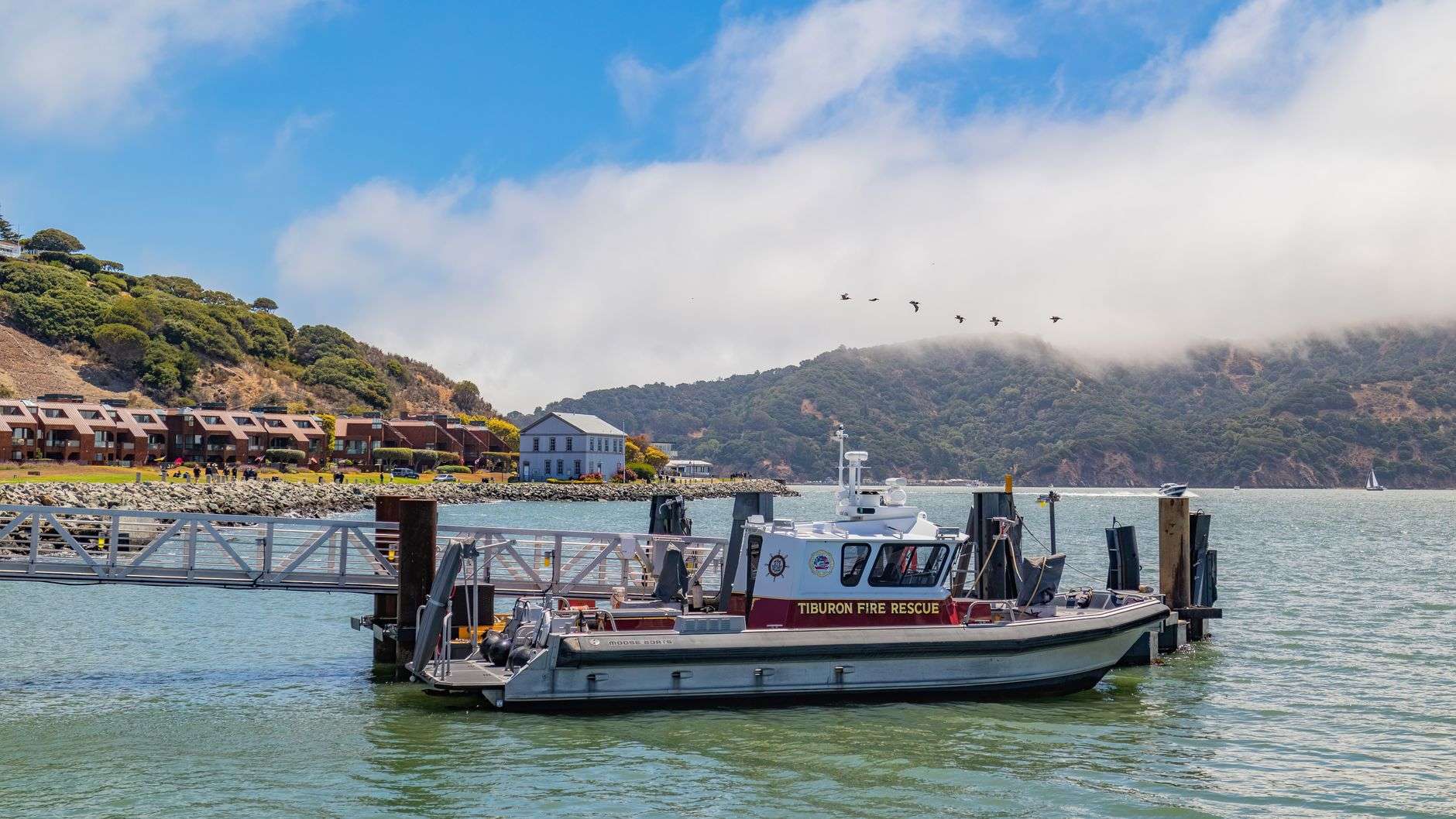
Daphne Search and Rescue is getting a new headquarters, after the Daphne City Council approved a pair of resolutions during its Monday, July 20 meeting to fund construction of a new building for the volunteer group. The move ends the organization’s tenure at a site the city no longer needs and relocates the squad to property designed around its actual working requirements — storage for boats and rescue gear, office space for training and administration, and a location next to the emergency responders it most often works alongside.
The council determined that the organization’s current facility at 616 Belrose Ave., located near City Hall, is no longer needed for public or municipal purposes. The new building will instead be constructed adjacent to Fire Station No. 1 at 25250 Bailey Yelding Jr. Drive, property the search and rescue team will lease from the city. The new site is expected to offer significantly more room for storage and office space than the group’s current home.
The financing was split across the two resolutions. The first awarded the construction contract to Youngblood-Barrett Construction & Engineering, valued at $464,636. The second transferred $328,003 from the city’s General Fund into its Capital Reserve Fund to help cover the project, which carries a total estimated cost of $527,468. City documents show Daphne has already sold the Belrose Avenue property, netting $199,465 in proceeds that will go toward construction of the new facility.
The accounting tells the story of a project structured to be as close to self-funding as a municipal construction job gets. The sale of the old property covered nearly two-fifths of the total cost; the city’s contribution moves through the Capital Reserve Fund, the account reserved for exactly this category of long-lived capital asset rather than recurring operations. What the city receives for its share is a permanent, purpose-built home for a service it has never had to pay to provide.
Four Decades of Volunteer Water Rescue
Daphne Search and Rescue has served the community since it was incorporated in 1976. The all-volunteer nonprofit responds to water search and rescue calls across roughly 300 square miles of area waterways, including the northern half of Mobile Bay and the Five Rivers Delta, and also provides land-based search and rescue support for Daphne and neighboring communities.
The territory the squad covers is among the most demanding search environments on the Gulf Coast. The northern half of Mobile Bay is a broad, shallow, sediment-heavy embayment where visibility underwater is effectively zero and currents, tides, and wind-driven chop complicate everything from recovery operations to simple boat handling. North and east of the bay, the delta country — the braided system of rivers, bayous, and bottomland swamp that the region gathers under the Five Rivers name, where the Mobile, Tensaw, Apalachee, Blakeley and Spanish rivers spread into one of the largest river deltas and wetland systems in the country — is famously easy to get lost in and difficult to search: thousands of acres of cypress and tupelo, channels that braid and dead-end, and shorelines accessible only by water.
Into that environment come the calls that fill the squad’s logbook: boating accidents, drownings, missing anglers and kayakers, and land-based searches for missing persons that the squad supports for Daphne and the communities around it. Volunteer rescue squads like this one play a critical role along the Gulf Coast, where local fire departments and law enforcement often rely on trained water-rescue crews and specialized equipment, such as sonar systems, to respond to boating accidents, drownings and missing-person searches on the bay and delta.
The reliance is structural, not incidental. Municipal fire departments are organized, equipped, and staffed for structural fires and medical response; police agencies are organized for law enforcement. Neither maintains, at scale, the boats, side-scan sonar units, and personnel trained to run grid searches across open water and delta swamp. On the Gulf Coast, that capability lives in volunteer squads like Daphne’s — crews whose members hold the same certifications paid rescuers do, maintained on fundraisers, membership dues, and the goodwill of the municipalities they serve.
For a city like Daphne, sitting on the eastern shore of Mobile Bay with delta waterways at its back, the arrangement is a bargain: the city supplies a building and a lease, and in return holds a permanent, local water-rescue capability without carrying it on a payroll. The new facility’s scale — significantly more storage than the Belrose Avenue building offered — reflects the equipment burden that role carries. Boats, trailers, sonar packages, dive and recovery gear, and the radios and navigation electronics that tie it together all require secure, climate-managed space if they are to work when the pager goes off at 2 a.m.
The Mayor’s Case: A Win-Win Next to the Fire Station
Daphne Mayor Robin LeJeune said the new facility reflects the city’s appreciation for the group’s work and could open the door to closer coordination with the fire department.
“We feel it’s important that we take care of them,” LeJeune said. “Building them this new building, a facility they can put their equipment in out of the weather, maintain it better and have a place that they can call home that is right next door to our fire station, so maybe we can get some cross training and helping and that type of thing, so it’s a win-win for the city.”
The mayor’s framing put the project’s logic plainly: the building is both a thank-you and an investment. “Out of the weather” is not a small point for equipment that lives on the Gulf Coast, where humidity, salt air, and summer storms degrade boats, trailers, and electronics with remarkable speed. Gear stored indoors and maintained regularly works when it is needed; gear stored under a carport does not, and a rescue that depends on a failed bilge pump or a corroded connector is a rescue that fails.
Placing the new building next to Fire Station No. 1 is intended to foster closer ties between the two organizations, potentially allowing for shared training exercises and a faster, more coordinated response when water emergencies arise on Mobile Bay or in the surrounding delta system.
Proximity changes how two response organizations work together in concrete ways. Shared drills become easy to schedule when the partners share a parking lot; career firefighters gain hands-on familiarity with the volunteer squad’s boats and sonar equipment; and the volunteer crew gains access to the fire service’s communications infrastructure and medical training pipeline. On an actual call — a capsized vessel on the bay, a missing swimmer in a delta river — the minutes saved by two organizations that have trained together, share a radio plan, and know each other’s capabilities are precisely the minutes that matter.
Why the Waterways Demand It
The scale of the region’s water traffic explains why a city of Daphne’s size maintains this capability at all. Mobile Bay is a working body of water — commercial vessels, charter boats, and one of the busiest recreational fleets on the Gulf Coast — and its northern half, where the bay narrows toward the Causeway and the delta, mixes that traffic with the shallows, stumps, and shifting channels that produce groundings, collisions, and man-overboard calls. Warm water and a long boating season extend the risk calendar well past the summer months, and duck hunting, fishing, and paddling put small craft into the delta’s remote channels in every season.
When something goes wrong in that environment, the search is not a matter of driving to an address. Grid searches on open water require boats, sonar operators, and coordination with the agencies already on scene; delta searches add currents, vegetation, and the disorientation that comes from hundreds of nearly identical bayous. It is precisely the work that volunteer squads with local knowledge and specialized equipment exist to do, and the reason fire chiefs and sheriffs across the Gulf Coast describe organizations like Daphne Search and Rescue as force multipliers rather than supplements.
What the Move Changes
The relocation also returns the Belrose Avenue property near City Hall to the city’s use, closing out a chapter in which a nonprofit occupied a municipal building while the city’s own needs evolved. The sale proceeds — $199,465 — flow directly into the new construction, an arrangement that converts an aging facility the city no longer needed into the down payment on one it does.
Construction timing, contract administration, and the squad’s move will unfold under the city’s oversight, with the team leasing its new home from the city under the arrangement the council approved. For the volunteers, the practical changes are immediate: more room, dry storage, office space for administration and training, and a professional address next to the department they work with most.
For the public, the most important change will be invisible until it is needed — the moment a call goes out for a missing boater on the bay or a swimmer in the delta, and a volunteer crew turns out of a purpose-built facility beside a fire station, better equipped and better coordinated than the generation of rescuers who founded the organization in 1976 could have imagined.