Dauphin Island Tables Rezoning Plan After Resident Pushback
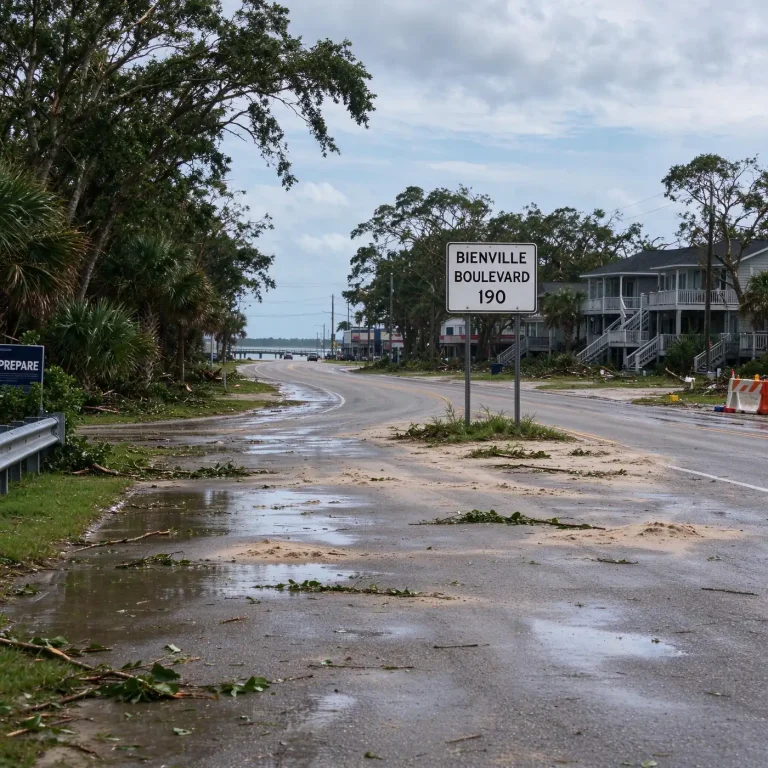
Dauphin Island's planning commission tabled a rezoning plan this week after residents raised concerns about protecting the island's small-town character.
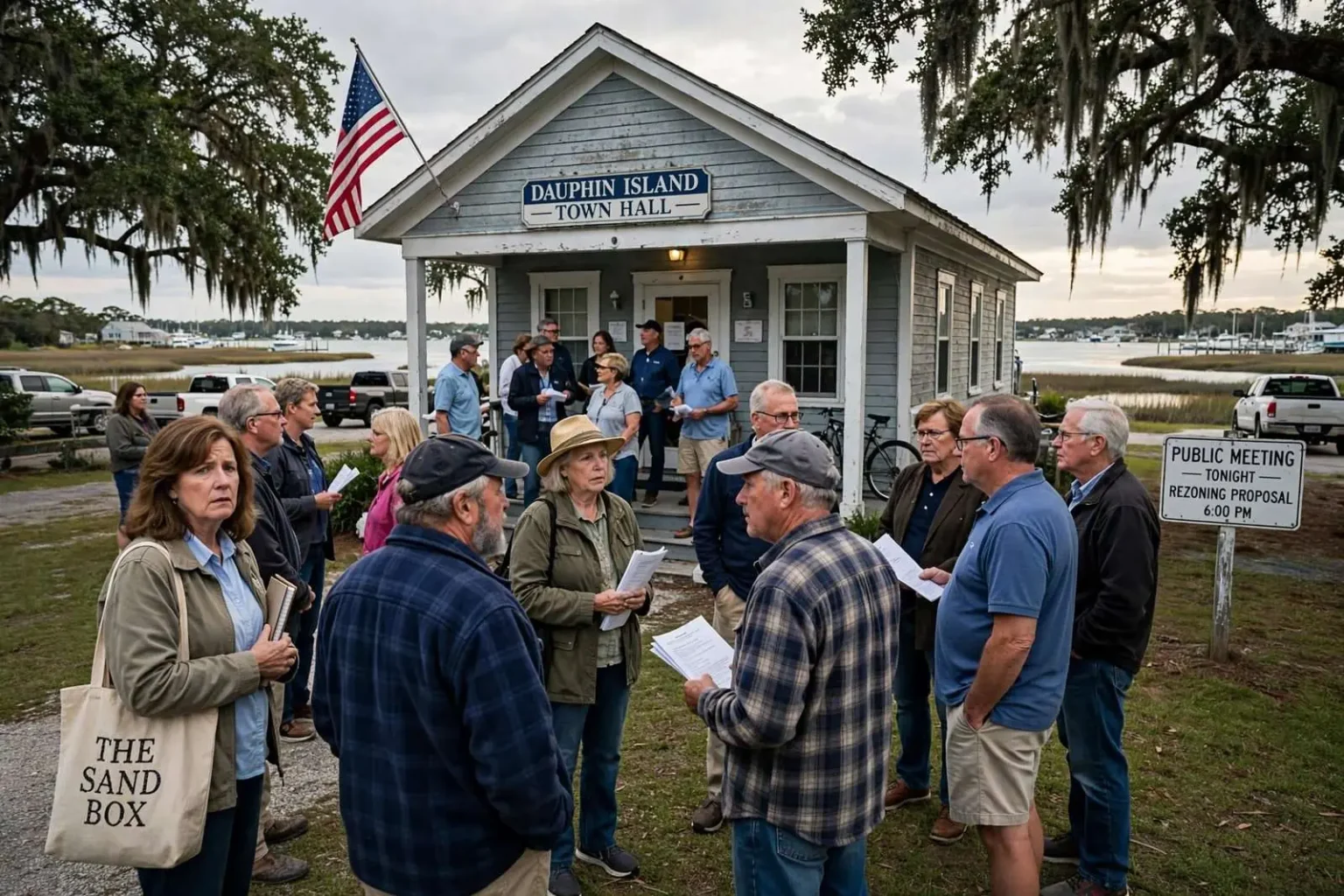
A proposed rezoning plan for Dauphin Island has been sent back to the drawing board after residents packed a public forum this week to voice concerns about how the changes could reshape the island’s character. The island’s planning commission had spent recent weeks reviewing a broader rezoning proposal aimed at giving property owners more flexibility in how they use their land. After hearing from the public on Tuesday, commission members opted to table the plan and send it back for further review rather than move forward immediately.
The turnout said as much as the testimony. On an island of roughly 1,300 year-round residents, a packed hearing room represents a significant share of the town — and in a community where everyone knows everyone, a rezoning debate is never an abstraction. It is a conversation about what neighbors can do with the lots next door.
Mayor Jeff Collier said the decision to pause reflected the town’s intent from the outset to build the plan around community feedback rather than push it through without buy-in.
“It’s not my island,” Collier said. “It’s the people’s island.”
What the Plan Would Have Changed
At its core, the draft rezoning aimed at a problem familiar to small towns built before modern zoning codes: property owners who want to use their land in ways the existing map does not anticipate. According to Collier, some island homeowners have asked for more flexibility to use their properties for small-scale commercial purposes, and the rezoning plan was meant to give them a legal pathway to do it — a studio, an office, a shop — without needing a variance for each case.
“We aren’t talking about Dollar General, we’re talking about an art gallery or an accountant’s office to give people more opportunities to make use of their properties,” he said.
Collier stressed that the rezoning effort was never intended to open the door to large national chains, a fear that surfaced repeatedly in the public comments. The distinction matters in a town with a tiny commercial base and an economy that rises and falls with the beach season; residents have watched other coastal towns balloon with franchise retail and have little appetite for the same.
Among those who spoke up was Trisha Kerr, who owns The Sand Box, a business on the island. Kerr said she worried the draft plan didn’t include enough guardrails on where certain types of businesses could locate. She raised the example of a garage potentially opening in the middle of a residential area under the proposed rules.
Kerr said she’d rather see the island attract more businesses geared toward serving residents and visitors during the slower winter months, such as restaurants, and cautioned against changes that could erode what makes the island distinct.
“It’s a unique little place, and we don’t want to see it get trashy,” she said. “That’s what we’re all fighting for.”
The Island’s Balancing Act
Dauphin Island’s economy has always been a tightrope. Summer brings beach visitors, fishermen and families staying in rental houses; winter brings a quiet so deep that some businesses close entirely. The town’s year-round businesses — restaurants, bait shops, hardware, the marinas — live on the summer surge and endure the off-season, which is exactly why Kerr’s point about winter-oriented businesses resonated: the island needs more reasons to come in February, not more places to buy a boat motor.
The island’s geography sharpens every planning debate. As a barrier island at the mouth of Mobile Bay, it has a single road on and off, limited fresh water and sewer capacity, and a coastline that hurricanes redraw every few decades. Zoning decisions here are not just about land use; they are about how many people and businesses the island can absorb while staying functional when the next storm arrives.
How the Town Governs Itself
The planning commission’s decision to table the plan follows the town’s usual rhythm of governance. Dauphin Island operates with a mayor-council form of government and a volunteer planning commission that reviews zoning questions, subdivisions and conditional uses before they reach the council. Public hearings are the fulcrum of that process, and the commission’s willingness to send its own draft back for rework after one contentious hearing is, in practical terms, how a small town’s checks and balances are supposed to work.
What happens next is the slow part: commissioners will take the specific objections — guardrails on business locations, protections for residential streets, the winter-economy question — and revise the draft, likely returning with a narrower proposal or clearer district boundaries. Another public hearing would precede any vote, and the ultimate decision on a rezoning ordinance rests with the town council after a commission recommendation.
Residents who want to follow the process can expect the draft materials and meeting notices through the town’s usual channels — posted agendas at town hall and on the town’s website ahead of each commission session. For a plan of this scope, the revisions will take weeks at minimum.
The Case For and Against Flexibility
The arguments on both sides are familiar to anyone who has watched a small coastal town wrestle with its future. Supporters of the flexibility measures point out that the island’s year-round economy needs all the help it can get: a resident running a bookkeeping practice from home, an artist opening a studio, a family renting a cottage by the week. Each adds spending that stays on the island and helps businesses survive the winter.
Critics like Kerr counter that the same flexibility, written loosely, invites the uses nobody wants next door — repair shops, storage yards, commercial traffic on sand streets built for beach houses. The difference between the two outcomes lies entirely in the drafting: which districts allow what, and what standards apply before a residential property crosses into commercial use.
That drafting work is what the commission has now committed to. The town’s experience with previous land-use fights — and the hurricane-driven turnover that periodically reshapes the island’s housing stock — has made residents justifiably protective of the map. A plan that clarifies where businesses belong, without blanketing residential streets with new commercial rights, is the outcome most commenters seemed to want.
What Residents Should Watch
The mayor’s framing sets the standard for the redo. If the revised plan emerges with explicit district boundaries, clear standards for home-based businesses and a list of uses that remain prohibited in residential areas, it will answer most of the objections raised Tuesday. If it returns essentially unchanged, the same crowd — and the same arguments — will be waiting.
For now, the island’s map stays as it was. Property owners who wanted the new flexibility will wait for a better-drafted version, and neighbors who feared it will watch the revision closely. The one thing both sides seemed to agree on, in a hearing room full of people who share a two-lane road and a beach, is that whatever changes come to Dauphin Island should come at the island’s own pace.
A Town Shaped by Water
Any land-use debate on Dauphin Island unfolds against the backdrop of the place itself. The island stretches west from the historic Fort Gaines site at the mouth of Mobile Bay, a ribbon of sand and marsh crossed by a single causeway and home to the public beaches, the Sea Lab estuarium and the fishing pier that anchor the island’s tourist identity. Lots near the water carry both the highest value and the highest risk, and the island’s building history — camps, cottages and newer raised homes — tells the story of every storm that has come through.
That storm history shapes the zoning conversation in practical ways. Houses that are lost and rebuilt, lots that sit vacant for years, and property that changes hands after hurricanes all create the patchwork of uses that a rezoning attempt tries to tidy. Homeowners who acquired land decades ago as fishing camps now hold lots that could support much more — and the question of what “more” should be allowed to look like is precisely the one the commission will now redraft.
The ferry connection to Fort Morgan, the bird sanctuary that draws ecotourists each migration season and the Audubon trails all add layers to the island’s identity that residents cited in different ways Tuesday: this is a place people visit on purpose, and its economy depends on keeping the reasons intact.
The Business Climate on the Island
The island’s commercial inventory remains small by any measure — a handful of restaurants, grocery and convenience options, bait and tackle shops, marinas, vacation-rental managers and the like — and every one of them rides the same seasonal wave. Visitors arrive with the warm months and thin out after Labor Day, and the businesses that survive are the ones that plan for a winter that can stretch from November to spring.
That reality explains why the “winter months” argument carried weight in the hearing. A zoning map that merely permits more commercial activity does not guarantee the right kind; a restaurant that stays open year-round does more for the island than a seasonal t-shirt shop, and Kerr’s testimony put the commission on notice that residents want the map written with that distinction in mind.
Small-town economics also set the stakes lower in one sense and higher in another. No national retailer was ever likely to site a store on an island with one road and a seasonal customer base, whatever the zoning said — but a single badly placed commercial use on a quiet residential street is felt by everyone, because there is nowhere on the island that is far from everywhere else.
Next Steps
The commission’s tabling is a pause, not a burial. The mayor’s office and the commissioners now have a clear list of what the revision must address: guardrails on commercial locations in or near residential areas, a use list that separates the galleries and offices the plan was meant to invite from the shops and garages residents fear, and incentives — or at least no obstacles — for businesses that serve the island year-round.
Residents can follow the reworked draft as it moves back through the commission, with public notice before the next hearing and, if the commission advances a revision, a council vote to follow. Tuesday’s crowd made the terms clear, and Collier’s own words set the measure of the outcome: the plan succeeds only if the people’s island recognizes itself in it.