

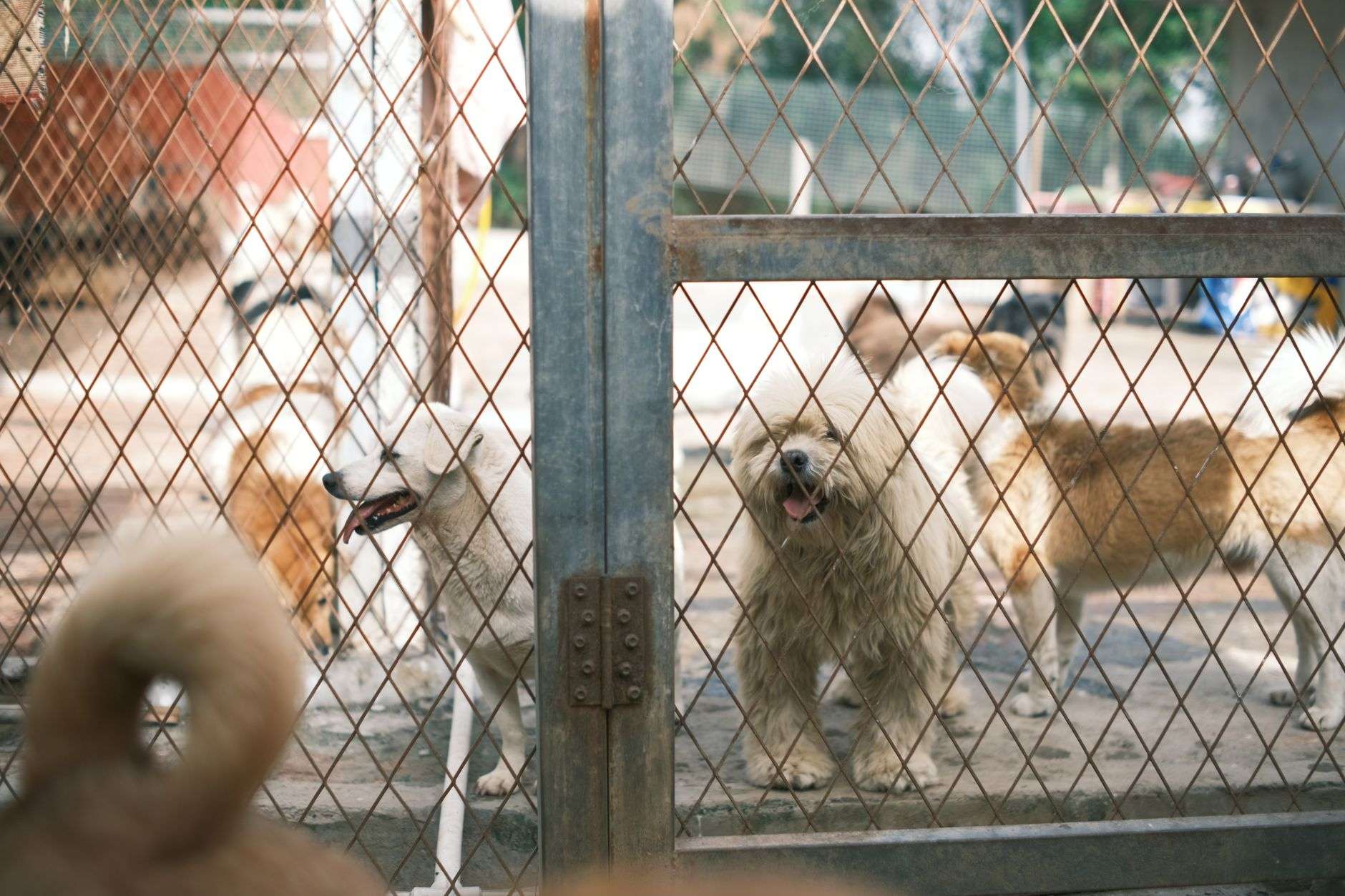
Mobile’s animal shelter is swamped after two dozen dogs were booked Tuesday morning. The influx was enough to make the facility temporarily pause non-emergency intakes. For a shelter already operating near its limits, a single morning’s arrivals of that size meant kennel space, staff attention and supplies all hit the wall at once — and the city made the unusual decision to stop accepting new animals in non-emergency situations until the pressure eased.
According to a statement from the city, Animal Services captured 19 loose and roaming dogs while on patrol of the 900 block of Dawes Road. Not long after, five more dogs were brought directly to the city’s shelter. The sequence left staff facing what would normally be a week’s worth of intakes in a matter of hours, from two very different channels: a field operation that swept nearly two dozen roaming animals off a single stretch of west Mobile roadway, and the steady drip of public drop-offs that continues no matter how full the kennels run.
Animal Resource Supervisor Stacey Yawn said pulling 19 dogs from a single case is unusual. “19 from one case is an anomaly for sure, and then couple that with our standard intake process, we ended up with roughly 24 dogs coming in yesterday. Way too much. So right now we’re over capacity,” Yawn said. Intake at a municipal shelter is not simply opening a door: each animal requires documentation, vaccinations, a health check, a kennel assignment and feeding, and each of those steps takes staff time that a sudden surge can consume entirely.
Roaming dogs in that kind of concentration usually trace back to a common source — a property where animals have been allowed to breed without restraint, a feeding station where strays have gathered, or a pack that has grown around a few unsterilized animals left outdoors. Whatever the origin on Dawes Road, the result was the same: nineteen dogs with no owner in sight, loaded into a single day’s patrol, all of them needing the same cage, the same food and the same evaluation on the same morning.
Despite the circumstances that brought the dogs in, Yawn said they are faring better than expected. “They’re overall fairly healthy. There’s definitely some that have like ear infections, some of the common things you see when dogs are roaming, but nothing too dire,” she said. “They’re very dog friendly, they seem human friendly. They’re a bit nervous, understandably so, but overall not in too bad of conditions.” That assessment matters enormously for the animals’ prospects: dogs that arrive healthy and social are far more likely to move quickly into adoption or foster placement than those that arrive sick or frightened enough to be unhandleable.
Why the Shelter Had to Close Its Intake Door
The already overcrowded animal shelter on Owens Street has decided to no longer accept pet surrenders until the influx subsides. A surrender pause is among the hardest calls a municipal shelter has to make. Staff would rather take every animal offered to them than turn anyone away, but a facility with a fixed number of kennels and a fixed budget cannot absorb a sudden influx of two dozen dogs without putting the animals already in its care at risk — of disease, of stress-related decline, or simply of losing the floor space and staffing needed for basic daily care.
Non-emergency bookings could resume as early as 10 a.m. on Tuesday, Aug. 11, according to the city’s statement. The short window reflects the city’s hope that adoptions, transfers and reclaims would move enough dogs out of the building in the intervening days to restore the intake capacity the shelter normally runs on. Until then, the message to pet owners is uncomfortable but explicit: the shelter cannot take your animal right now, and owners facing a surrender need to explore alternatives — family members, rescue partners, rehoming networks — until the pause lifts.
The pause applies only to non-emergency intakes; the shelter says it will continue responding to emergency situations involving animals. Animals that are injured, in immediate danger, or impounded as part of cruelty investigations will still be taken in, and field officers will still respond to calls where an animal’s safety is at stake. The distinction is designed to protect the most vulnerable animals while giving the shelter room to stabilize its population — a triage system that municipal shelters across the country have increasingly adopted as intake pressures outpace kennel capacity.
Yawn said adoptions, foster placements and volunteer hours can all help create space and let staff focus on the animals already in their care, and she encouraged pet owners to microchip their animals so any that get lost and end up at a shelter can be identified and returned home. Each of those levers works differently. An adoption moves a dog out of the building permanently; a foster placement moves one out temporarily, freeing a kennel while the animal waits for a permanent home in a living room instead of a run; and a volunteer hour — walking dogs, socializing cats, helping with laundry and feeding — substitutes for staffing the shelter cannot afford to expand.
Microchipping, meanwhile, addresses the problem at the other end. A chip the size of a grain of rice, implanted between the shoulder blades and registered with current contact information, turns a found dog into a five-minute reunion instead of a five-day shelter stay. A large share of the dogs that occupy municipal kennels for weeks are animals whose owners could not be found — no tag, no chip, no record — and every one of those kennel-days is space that the Dawes Road influx is now competing for.
Anyone interested in adopting an animal from the city’s shelter is encouraged to contact Mobile Animal Services directly for current adoption hours and available pets. With two dozen new dogs cycling through intake, evaluation and vaccination, the available-adoption roster will change daily, and staff say direct contact — by phone or through the department’s listings — is the fastest way to find out which animals are ready to meet. Adoption fees typically cover spay or neuter surgery and initial vaccinations, making the shelter one of the least expensive ways to bring home a healthy pet in the Mobile area.
The Broader Stray Problem in Mobile
The Dawes Road case highlights a problem Animal Services deals with continuously in a city of Mobile’s size and geography. Loose and roaming dogs are a recurring complaint across the city’s neighborhoods — on major corridors like Dawes Road, in residential subdivisions, and in the rural pockets of west Mobile where animals are often kept outdoors and unconfined. Field officers spend much of their patrol time responding to those calls, and the animals they pick up form the backbone of the shelter’s daily intake even in ordinary weeks.
Unconfined and unsterilized animals reproduce at a pace that makes the problem self-sustaining. A single pair of unaltered dogs and their offspring can produce litters of puppies year after year, and each generation adds to the population of animals that end up roaming, breeding or arriving at the shelter door. That arithmetic is why spay-and-neuter programs, low-cost clinics and rescue partnerships are treated by shelter professionals not as optional extras but as the only long-term answer to intake surges like the one that closed the Owens Street kennels this week.
For the nineteen dogs captured in a single sweep, the path forward runs through the shelter’s standard process: medical evaluation, vaccination, spay or neuter surgery, and then the often-lengthy wait for an adopter or a rescue slot. Their unexpected advantage, by Yawn’s account, is temperament — dogs that arrive friendly with people and other animals photograph better, meet better, and go home faster. The ear infections and minor ailments common to roaming dogs are treatable; the harder variable is always whether the shelter has the room and the days to hold them until the right adopter walks in.
Residents who want to help have a menu of options that all translate into kennel space. Adopting one of the Dawes Road dogs directly opens a run for the next arrival. Fostering — taking an animal home for weeks or months at no cost beyond food and love in most programs — does the same while sparing the dog the stress of long-term kennel life. Volunteering even a few hours a week multiplies the staff’s capacity for the walks, socialization and cleaning that keep a crowded shelter humane. And for those not in a position to take an animal in, sharing adoption listings and supporting local rescue groups still shortens the wait for dogs like these.
The city’s statement has asked the public to be patient with the temporary surrender pause, and history suggests the pause will do its job: intakes resume, adoptions continue, and the shelter returns to its regular rhythm — until the next anomaly. Shelters run on thin margins of space and time, and a single case like this one consumes both at once. The difference between a crisis and a rough week is usually how fast the community responds.
What the staff at Owens Street are asking for in the meantime is simple: come meet the dogs, take one home if you can, foster if you cannot, volunteer when you are able, and chip your pets so the animals that do get lost come straight back home instead of consuming a kennel that two dozen newcomers now need. The Dawes Road dogs, by all accounts, are ready to be someone’s pets — healthy, friendly, and a little nervous, waiting on the other side of a very full kennel row.