

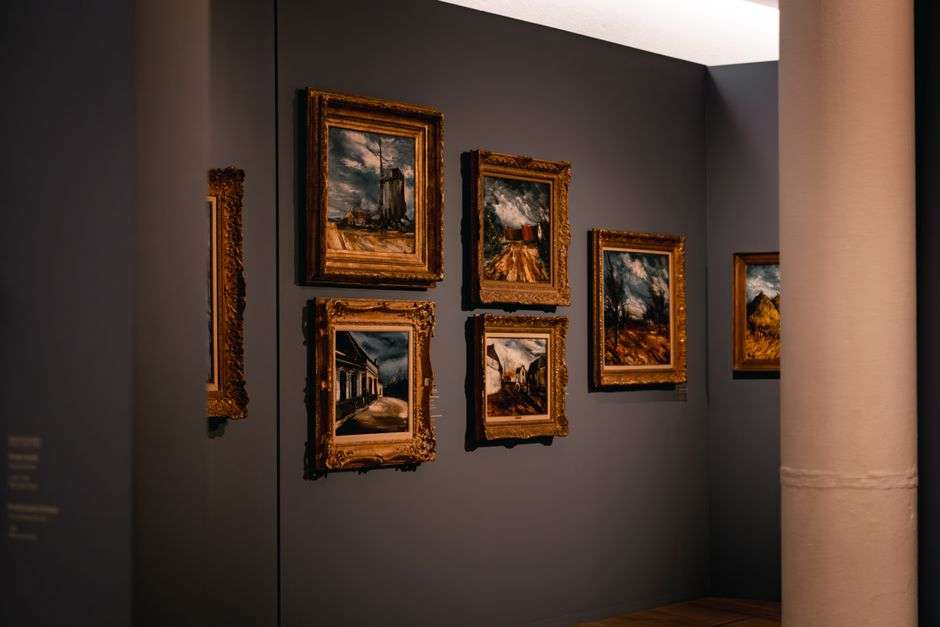
The Alabama Contemporary Art Center in downtown Mobile has opened a new exhibit exploring life, art and culture in Cuba, giving area residents a rare look at the island nation as diplomatic and travel relations between the United States and Cuba continue to shift.
The exhibit, titled “Sister Shores,” pairs large-format portraits of Cuban residents with bilingual excerpts of conversations conducted by Eastern Shore writer Lynn Oldshue. Each portrait is displayed alongside quotations printed in both English and Spanish, offering visitors insight into the daily lives, struggles and perspectives of the people photographed.
The bilingual format is central to the show’s design. By presenting each subject’s words in both languages, the exhibit allows Spanish-speaking visitors to engage with the material directly while giving English-speaking audiences the texture of the original voices. That approach mirrors the wider cultural conversation the show is meant to start: Mobile and Havana share a Gulf, a maritime history and generations of commercial contact, and “Sister Shores” invites visitors to think of the two port cities as neighbors rather than distant strangers separated by politics.
ACAC Board Chair Mike Dow, who served four terms as mayor of Mobile, has cultivated ties with Havana for years and helped set the exhibit in motion roughly a year before it opened. Dow’s long interest in Cuba dates to his years leading the city, when Mobile pursued trade relationships with Cuban ports, and his involvement gave the project institutional weight at the contemporary art center, which has built its reputation on shows that connect Mobile audiences to the wider Gulf and Caribbean world.
The show arrives at a notable moment, following a period of warming relations between Washington and Havana after decades of estrangement, even as reports out of Cuba continue to describe shortages of food, water and other basic resources alongside government crackdowns on dissent ahead of an expected political transition. That tension — between the warmth of people-to-people exchange and the hardness of daily life on the island — runs through the portraits themselves, which present their subjects as individuals rather than as symbols of either a tourism brochure or a news cycle.
Portraits, conversations and a magazine’s roots
Most of the roughly dozen photographic portraits in the exhibit are credited to photographer Michele Stancil, who worked alongside Oldshue on the project. The two have collaborated previously through Oldshue’s magazine, The Southern Rambler, which has featured stories on Cuba and its people in past issues. That prior reporting gave the exhibit a foundation: rather than arriving in Havana as strangers, the two had already spent time documenting Cuban life and building the kinds of extended conversations that survive translation.
Many of the quotations paired with the portraits touch on economic hardship and the challenge of pursuing artistic expression under difficult circumstances. One artist featured in the exhibit is quoted as saying, “We are all human beings with personal histories and implications … Art helps us understand each other.” It is a line that could stand as the exhibit’s mission statement, and it reflects the show’s central wager — that portraiture and testimony can cross a distance that politics has made difficult for more than half a century.
Near the portrait gallery, a small black-box theater plays a looping video of waves breaking along an urban Cuban shoreline. The piece functions as a quiet interlude between the portrait walls, and it makes the exhibit’s title literal: the same Gulf waters that wash against Alabama’s beaches reach Cuba’s northern coast, and the film lets visitors watch that shared shoreline without leaving downtown Mobile.
Visitors can also take part in an interactive display near the front entrance, where paper tags hang from strings and pencils are provided for guests to write questions about Cuba. Organizers say the questions, which have ranged from inquiries about daily freedoms to curiosity about Cuban cigars, will help shape public programming tied to “Back to Havana,” a follow-up exhibit planned for September. The display turns the audience from spectators into collaborators, and the accumulating tags have become an informal archive of what Mobile residents most want to know about the island.
Paintings that mix history and satire
The gallery’s east wall features a range of paintings from Cuban artists, including Osmel Herrera’s “Estampida,” which blends imagery from the ancient Altamira cave paintings with the Red Bull energy drink logo, and Ramon Deanda’s “El Burro,” which depicts a man pulling a donkey cart while absorbed in a handheld device, a commentary the artist has described as centering on modern technological distraction and disconnection from nature. Herrera’s piece places one of the oldest known bodies of human art beside one of the most recognizable commercial logos of the modern era, an interval of some thirty thousand years collapsed into a single image, and lets viewers decide whether the comparison flatters the present.
Mobile artists are well represented alongside their Cuban counterparts. Artist Amanda Youngblood contributed two woodcut pieces, “Born to Fly, Born to Die” and “Guts and Glory,” while local painter Susan Peele created four large works depicting cigars, a vintage car and a guitarist. The pairing of Alabama and Cuban artists on the same walls is deliberate, and it underscores the “sister” in the show’s title: the exhibit is framed not as a window into a foreign place but as a conversation between two Gulf communities with parallel artistic traditions.
A separate wall displays a series of street-scene photographs capturing brightly colored cars, laundry lines strung across balconies, weathered building facades and fruit stands, offering visitors a glimpse of everyday Cuban street life. Gallery staff say an accompanying film, projected on the east wall with ambient musical tracks, and the street photography were both shot by local videographer Kris Skoda and ACAC Director of Operations Allison Schaub. The imagery — the pastel facades, the mid-century American cars still running on Havana’s streets, the open-air markets — will be familiar to anyone who has followed photography of the island, but seeing it projected inside a Mobile gallery gives the scenes a local frame.
What comes next at the center
The center’s back gallery and presentation room remain closed for now, though organizers say more programming is on the way. Additional Cuban artwork is expected to arrive in September alongside “Back to Havana,” and ACAC is developing a film series highlighting Cuban directors. The film series would extend the exhibit’s reach beyond visual art into one of Cuba’s most celebrated cultural exports, a national cinema whose directors have won international acclaim even as the island’s film infrastructure has remained modest.
ACAC officials describe the current exhibit as an early step in a broader, ongoing exploration of Cuban art and culture, with plans to expand programming and offerings at the downtown Mobile gallery in the months ahead. The center, located in a renovated warehouse space in the heart of downtown, has used this kind of multi-stage approach before, letting a single theme unfold across seasons rather than compressing it into one visit, and the September arrival of “Back to Havana” gives regular visitors a reason to return.
Why Cuba, and why Mobile
The exhibit’s timing is not accidental. U.S.-Cuban relations have swung between thaw and freeze repeatedly over the past decade, and each shift has changed how easily Americans can travel to the island, send money to relatives there or bring Cuban art north for exhibition. For Mobile audiences, a show like “Sister Shores” may be the most accessible look at contemporary Cuban life they will get, short of the flights and licenses that direct travel requires.
It also fits the Alabama Contemporary Art Center’s institutional identity. The gallery has long favored contemporary work that deals with the Gulf Coast’s place in the wider world — migration, trade, water, memory — rather than shows that could hang in any city. Cuba, ninety miles beyond the Florida Keys and a short flight from the Gulf ports, is the region’s most complicated neighbor, and an exhibit that treats Cubans as individuals with names, faces and opinions is a natural extension of that mission.
“Sister Shores” is open during the center’s regular gallery hours, and admission details are available through the art center. Visitors who write a question on a paper tag at the front entrance will, in a small way, help decide what the next chapter of the show looks like when the September follow-up arrives.
For teachers and students along the Gulf Coast, the show has obvious classroom applications. Mobile County schools include families with Cuban and broader Caribbean roots, and the bilingual presentation means Spanish-language learners can encounter contemporary art in both of the region’s spoken languages. The center has scheduled the September programming to coincide with the arrival of new work, giving educators time to build field trips and discussions around the full two-part exhibition.
The deeper subject of “Sister Shores” is connection itself — the idea that a body of water that could be read as a barrier is better understood as a shared front yard. The portraits, the paintings, the looping waves and even the paper tags at the door all make the same argument in different registers, and they leave the visiting public to write the next line before “Back to Havana” opens in the fall.