Eighth Animal Dies After Jaguar Escapes Habitat at New Orleans’ Audubon Zoo
An alpaca and fox died after a jaguar escaped its habitat at New Orleans' Audubon Zoo, bringing the toll to eight animals, some from Alabama farms.
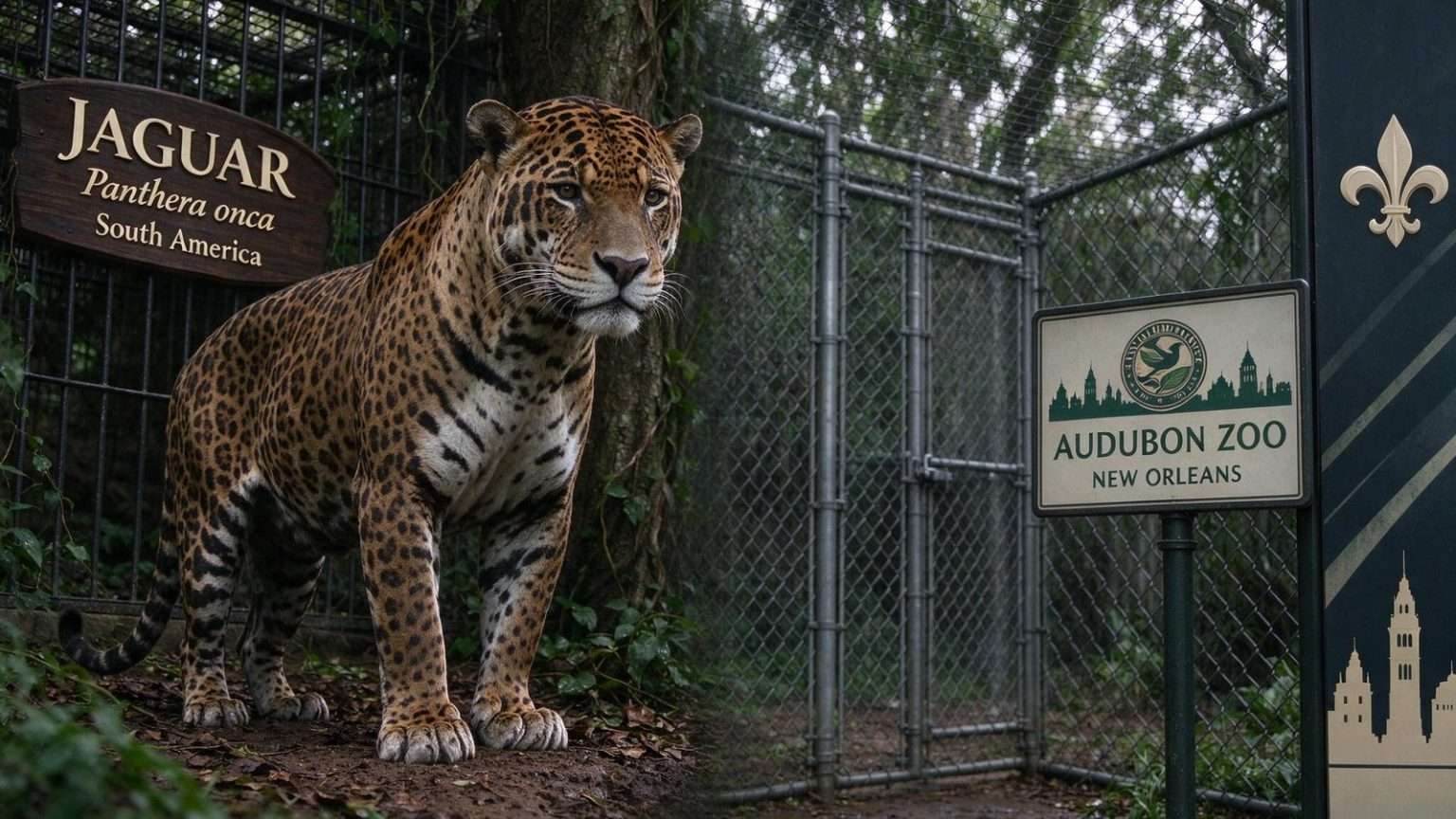
The death toll from a jaguar’s escape at the Audubon Zoo in New Orleans climbed to eight after an alpaca and a fox were found dead Sunday, the day after the big cat got out of its habitat and killed six other animals. The discovery of two more victims on Sunday morning confirmed that the damage from the escape was not limited to the initial overnight rampage, extending a crisis that unfolded at one of the Gulf South’s most visited cultural attractions. Zoo staff spent much of the weekend accounting for every animal in the collection that shares the sprawling Uptown campus with the big cat complex.
According to NOLA.com, the male jaguar broke free Saturday morning and killed four alpacas, one emu and one fox before zoo staff could contain the situation. The animals that died were housed in an area of the zoo adjacent to the jaguar’s habitat, within reach once the cat cleared the boundary of its own enclosure. Staff responding to the emergency worked to move the cat away from the rest of the animal collection and secure the perimeter while visitors were still being cleared from the grounds.
A veterinary team sedated the animal, and it was safely returned to its night house. The use of chemical immobilization rather than lethal force reflected the circumstances of the escape: the jaguar never left the zoo’s secure outer perimeter, and staff were able to maintain control of the situation throughout. The animal was monitored as it recovered from sedation and returned to an off-exhibit holding area where it could be observed closely in the days that followed.
No visitors or staff were hurt, and the zoo reopened Sunday. The reopening, less than 24 hours after the escape, came after officials confirmed that the public areas of the zoo were safe and that the jaguar was back in secure containment. Guests returning on Sunday found the zoo operating on its normal schedule, though the areas affected by the escape remained closed as staff assessed the damage and cared for surviving animals.
Escapes involving large predators are among the most serious incidents a zoo can face, and the fact that no person was injured was the single most important outcome for the institution. Accredited zoos in the United States operate under detailed emergency protocols that spell out exactly what happens when a dangerous animal is unaccounted for: guests are moved indoors or off the grounds, staff are staged at perimeter points, and animal care teams coordinate with veterinary staff to immobilize the animal as quickly as conditions allow. Those protocols appear to have functioned as designed in New Orleans.
Alabama and Mississippi Farms Lost Animals
The loss reached beyond Louisiana: the zoo had acquired its alpaca herd just months earlier, in March, from farms in Alabama and Mississippi. Those farms, part of a small but active camelid-raising community across the Gulf South, had supplied animals that were new additions to the zoo’s contact and exhibit areas. Alpacas are popular in zoo settings because of their calm temperament and approachability, and herds like the one assembled in New Orleans often come together through relationships with regional breeders rather than transfers from other zoos.
Sunday’s overnight victim was the zoo’s last living alpaca. That meant the entire herd acquired in the spring was wiped out in a span of roughly two days, a devastating outcome for the animal care staff who had spent months integrating the animals into the collection. The final animal’s death underscored how concentrated the losses were within one part of the zoo’s collection rather than spread across many species.
One injured fox continued to be monitored by zoo veterinarians. The animal represented the only known survivor among the victims attacked during the escape, and its treatment became a focal point of the recovery effort. Veterinary teams at large zoos routinely manage trauma cases ranging from puncture wounds to internal injuries, and the prognosis for such animals depends heavily on how quickly they are found and treated after an attack.
The foxes, emu and alpacas that died occupied enclosures along the same stretch of the zoo’s campus, and their placement near the jaguar habitat put them directly in the path of the escaped cat. Emus, large flightless birds native to Australia, and alpacas are both housed in open-style enclosures that are easy for visitors to view but depend entirely on the integrity of surrounding barriers for protection from predators.
How Did It Happen?
Zoo officials said it was not immediately clear how the jaguar escaped, but inspections found that the roof of the enclosure was “compromised.” That finding shifted the investigation away from the animals’ day-to-day handling and toward the physical condition of the habitat itself, a structure that houses one of the largest and most powerful predators in the Americas. Jaguars are exceptional climbers and can cover substantial vertical distances on fences, mesh and structural features that other cats might not attempt.
Initial findings ruled out keeper error as a factor, and a full review of the habitat was underway. Ruling out human error early in the process was significant for the staff involved, since investigations of escapes often scrutinize gate sequencing, latch protocols and shift-change procedures before turning to structural causes. A structural finding points instead to questions about inspection schedules, the age and materials of the habitat, and whether wear on the roof had been detected in earlier assessments.
The review is expected to examine when the roof was last inspected, what maintenance records show, and whether the design of the enclosure met the standards applied when it was built. Modern zoo habitats are engineered to account for the specific capabilities of the species they contain, and big cat enclosures are typically designed with climb-proof barriers, overhangs and secondary containment areas. Any gap between design intent and actual condition becomes the central question once an escape occurs.
Jaguars hold a distinctive place among the world’s big cats. They are the largest species in the Americas, powerfully built animals with jaws strong enough to pierce the shells of turtles and skulls of caiman, and unlike lions or leopards they are solitary animals that defend individual territories. That combination of strength and climbing ability is why facilities that house them must maintain containment systems with a much higher margin of safety than exhibits built for smaller carnivores.
The Audubon Zoo itself has been part of New Orleans life for more than a century, occupying a section of Audubon Park along the Mississippi River in the Uptown neighborhood. The zoo is accredited by the Association of Zoos and Aquariums, a designation that requires member institutions to meet rigorous standards for animal welfare, veterinary care, and emergency preparedness. Accreditation inspections and internal reviews are meant to catch exactly the kind of structural deterioration that the weekend investigation is now examining.
Emus and alpacas share a common vulnerability in zoo settings: neither species has meaningful defenses against a large predator. Alpacas are herd animals that rely on alertness and group behavior rather than strength, while emus can run quickly in open country but have no way to escape a climbing cat inside an enclosed exhibit. Their enclosures depend entirely on perimeter fencing, which is why containment design for mixed-species areas adjacent to predator habitats receives such close attention after incidents like this one.
For the Gulf Coast community, the incident resonated with the many small farms and breeders in south Alabama and south Mississippi that supply animals to zoos, petting farms and educational programs across the region. The loss of an entire alpaca herd, assembled only months earlier from farms in both states, touched people well beyond the zoo’s fence line. The animals represented months of work by keepers who had learned their temperaments and routines.
Zoo safety specialists note that containment failures rarely stem from a single cause. Investigators typically trace the animal’s exact path over and through the barrier, test the structural components involved, and compare findings against the original construction documents. The results often lead to physical reinforcement, revised inspection intervals, and sometimes changes to which animals can be housed in adjacent enclosures. Peers across the zoo industry routinely share the lessons from such reviews, because the entire accredited community depends on learning from each other’s failures.
The Audubon Nature Institute, which operates the zoo along with the Aquarium of the Americas and other facilities, faces the task of rebuilding both its containment infrastructure and public confidence. The zoo draws visitors from across Louisiana, Mississippi, Alabama and the broader Gulf Coast, and its handling of the investigation will be watched closely by the accrediting bodies that certify its operations. For now, the focus remains on the animals that were lost, the one fox still fighting to recover, and the structural questions that must be answered before the jaguar’s habitat reopens to public view.