Escambia County Primary Turnout Tops 27% as More Than 25,000 Vote in Person
Escambia County's primary turnout hit 27.23% of registered voters, with more than 25,000 residents voting in person on Election Day, outpacing Florida's statewide turnout of just over 25%.
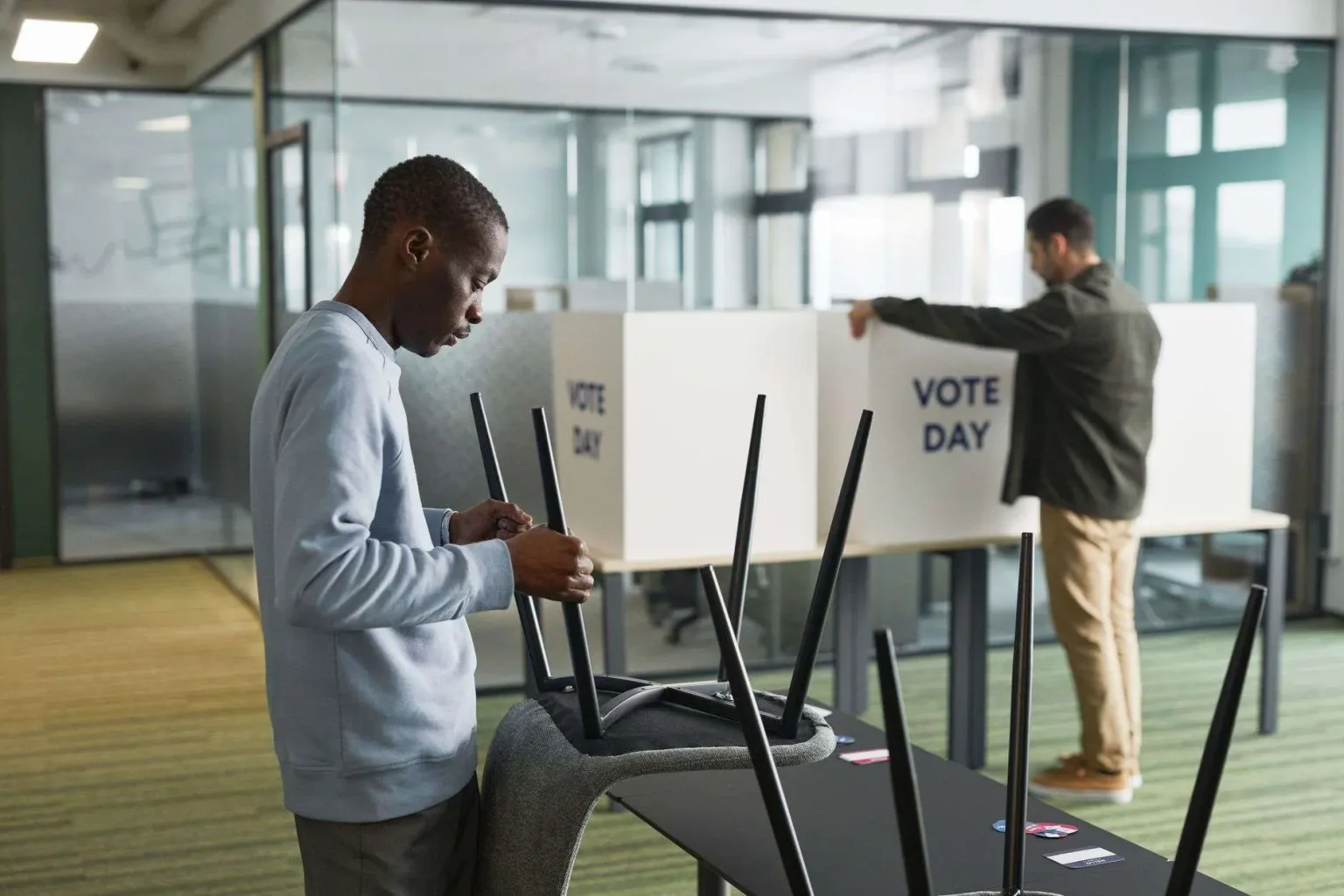
Escambia County election officials say more than a quarter of registered voters cast ballots in Tuesday’s primary election, with in-person voting on Election Day driving the strongest turnout of the three voting periods.
Turnout Numbers and How Voters Cast Ballots
According to complete but unofficial results from the Escambia County Supervisor of Elections, 27.23% of the county’s 55,619 registered voters participated in the primary. More than 25,000 residents showed up at the polls on primary day alone, making Election Day turnout the single largest share of the overall vote.
How Voters Cast Their Ballots
Of the ballots counted, 25,562 voters, or 45.96% of all participants, voted in person on Election Day. Another 15,209 voters, or 27.35%, returned ballots by mail, while 14,793 voters, or 26.4%, cast ballots during the early voting period at 10 sites around the county.
Escambia County’s Political Landscape
The near-even split between mail, early and Election Day voting reflects a pattern seen in recent Florida election cycles, as county election offices have expanded early voting locations and mail-ballot options in the years since the pandemic prompted a surge in absentee voting.
Party Breakdown
Registration data released alongside the turnout figures shows Escambia County’s electorate remains heavily Republican. Of the voters who cast ballots, 35,521 were registered Republicans, compared with 18,134 registered Democrats. An additional 4,252 voters had no party affiliation, and 712 were registered with other parties.
Florida holds closed primaries for most partisan races, meaning voters registered with no party affiliation are generally limited to nonpartisan contests and ballot measures unless a specific race is open to all voters. The party breakdown in Tuesday’s results underscores how that closed-primary system shapes which races draw the most participation in Escambia County.
How Escambia County Compares Statewide
Escambia County’s 27.23% turnout ran ahead of the statewide average. Florida election officials reported that just over 25% of registered voters cast ballots statewide, with roughly 3.36 million votes counted out of about 13.5 million registered voters across the state.
County election officials noted that Tuesday’s numbers remain unofficial until the results are certified.
Certification typically follows a canvassing period during which election officials review provisional ballots, resolve any discrepancies and finalize vote totals before results become official.
What a 27% primary turnout means
A primary drawing more than a quarter of registered voters is a respectable showing for a summer contest with no presidential race atop the ballot, and Escambia County’s 27.23% edged the statewide average of just over 25%.
The driver was Election Day in-person voting, which alone accounted for 45.96% of participants — more than mail and early voting combined — a reminder that, for all the expansion of alternatives, a large share of Floridians still vote the old-fashioned way on the day itself.
The more than 25,000 who showed up Tuesday made the difference between an average primary and one the county can point to as engaged.
The closed-primary math
Florida’s closed primaries shape who actually decides most races, and Escambia County’s party breakdown — 35,521 Republicans to 18,134 Democrats, plus 4,252 with no party and 712 other — shows why.
In a closed system, voters with no party affiliation are generally locked out of partisan primaries unless a race is open to all, so the Republican primary is where the real contest often lives in a county this red.
That dynamic explains both the turnout distribution and the kinds of races that drew the most participation: the ones Republicans settled in the spring and August, not the ones all voters could touch.
The numbers are a snapshot of how a heavily Republican Panhandle county actually exercises the franchise.
How the count is built
The near-even split among mail (27.35%), early (26.4%) and Election Day (45.96%) voting reflects the infrastructure Florida built after the pandemic’s absentee surge: 10 early-voting sites in Escambia County and a robust mail program.
Election officials noted the results remain unofficial until certification, a canvassing period in which provisional ballots are reviewed and discrepancies resolved.
That pause is routine but essential — it is when a 27.23% figure either holds or nudges, and when the county confirms that the 55,619 registered voters it started with produced a clean, final total.
For residents, the lesson is that election night is a snapshot, and certification is the photograph.
Why it matters regionally
Escambia County’s turnout running ahead of the state is a small point of civic pride and a larger signal about Panhandle engagement, where local primaries often decide more than the general election because the partisan balance is settled.
For the candidates who advanced, the 27% is the mandate they carry into November, and for the counties watching, it is a benchmark.
The combination of strong Election Day walking-in and a healthy mail-and-early mix suggests Escambia’s machinery is working, and the certification to come will confirm whether the more than 25,000 in-person votes were counted as cleanly as they were cast.
The human rhythm of Election Day
Behind the percentages are the routines of a county voting: the 10 early sites, the mail ballots sorted and scanned, the Election Day lines that, in Escambia, drew the most people.
A 27% primary is the product of those routines working in concert, and the certification to follow is when officials confirm the count survived provisional ballots and discrepancies.
For the more than 25,000 who voted in person, the day was the familiar one — a poll, a booth, a ballot — and for the county, it was a stress test passed.
The numbers will firm up at certification, but the engagement they reflect is already real, and it places Escambia ahead of a state that voted just over 25% in the same primary.
Turnout as a civic report card
A primary’s participation rate is, in a sense, a grade on civic health, and Escambia County’s 27.23% — ahead of the state’s 25% — is a passing mark for a low-salience summer election.
The mix of how people voted tells the rest of the story: a county that has embraced mail and early options without abandoning Election Day.
For election officials, the result is both a validation of the infrastructure built since the pandemic and a to-do list for certification.
For voters, it is proof that showing up — however one does it — still moves the count, and that a Panhandle primary can outpace the state even when the top of the ticket is quiet.
How Florida’s Election System Works
Escambia County, Florida, which sits at the western end of the Florida Panhandle, includes the cities of Pensacola, Century and Molino. The county has a long history of military presence, with Naval Air Station Pensacola, Corry Station and other installations providing a significant economic and cultural anchor for the region.
Florida operates a closed-primary system, meaning that voters registered without a party affiliation are generally restricted to nonpartisan races and ballot questions in primary elections. Republican and Democratic primaries are open only to voters registered with those parties, and the system shapes both turnout patterns and the kinds of races that draw the most competitive campaigns.
The Supervisor of Elections office in each Florida county is responsible for maintaining voter rolls, administering polling places, counting ballots and certifying results. The certification process typically follows a canvassing period in which provisional ballots are reviewed, signature issues resolved and any reporting discrepancies corrected before results become official.
Florida’s early voting period allows voters to cast ballots at designated locations in the days before an election without providing an excuse. The system expanded significantly after the 2020 election cycle, when many counties extended early voting sites and hours to accommodate the surge in mail ballot requests and to relieve pressure on Election Day polling places.
Florida’s closed-primary system means that the candidates who emerge from each party’s primary often face only nominal opposition in the general election. In counties with a strong partisan tilt, like Escambia, primary turnout is therefore often a better predictor of election outcomes than general-election turnout. The roughly 27% primary turnout is a useful benchmark for comparing engagement across similar Florida counties.
The 10 early-voting sites spread across Escambia County reflect the post-pandemic expansion of in-person early voting options in Florida. The arrangement gives voters in rural parts of the county access to early voting without long drives, while concentrating Election Day operations at the county’s precinct polling places. Both systems have been refined over multiple election cycles to balance access, security and the practical realities of running elections in a geographically large county.
Florida’s election infrastructure has been a focus of national attention in recent years, with changes to early voting, drop box availability and signature verification procedures drawing both praise and criticism. Escambia County’s election office has adapted to those changes while maintaining the routine elements of ballot counting and canvassing that have long defined Florida’s election administration. The county’s participation in the broader state primary offers a window into how those procedures work in practice.
County election offices in Florida are required to make results available to the public through their websites and through the state Division of Elections. Unofficial election night totals are updated as precincts report, and the canvassing process that follows ensures that provisional ballots and other outstanding votes are properly counted before certification. The certification process typically concludes within one to two weeks of Election Day, depending on the volume of provisional ballots and the complexity of any challenges.