

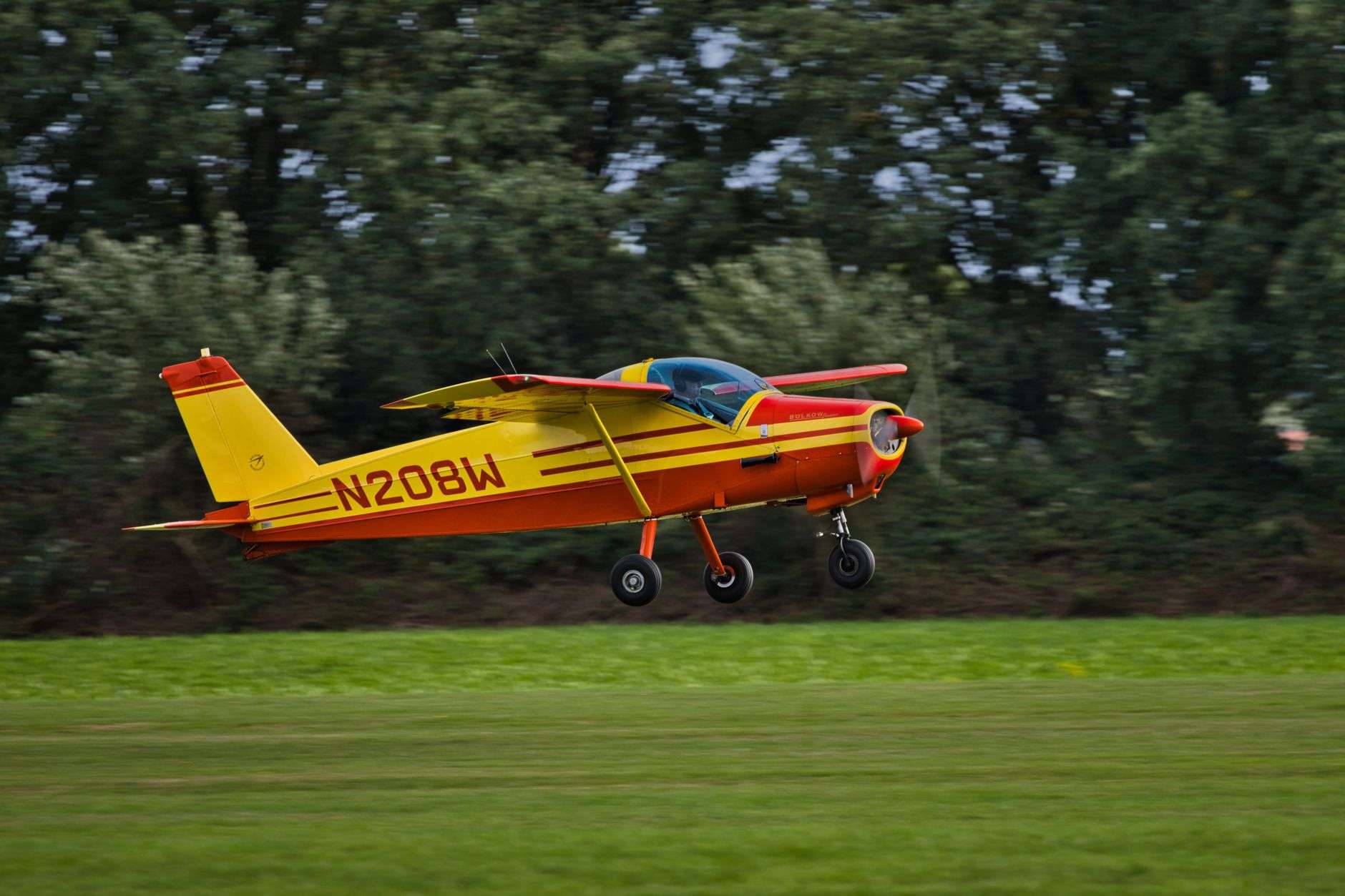
In June 2025, Fairhope’s airport became the starting line for one of the last great cross-country air races in general aviation. The 48th Annual Air Race Classic, an all-women competition with roots stretching back to 1929, launched from H.L. “Sonny” Callahan Airport on June 17, 2025, sending pilots on a four-day, roughly 2,500-mile journey to a finish in Spokane, Washington.
Among the competitors was a team with deep Gulf Coast ties: Katrina McLeod, a Coast Guard pilot and flight instructor who lives in Mobile, and her teammate Giovanni Gonzalez, a Naval Flight Officer in Pensacola and private flight instructor. Their pairing, and Fairhope’s role as host, offered a window into a remarkable aviation tradition and the women who keep it alive.
A Chance Meeting on a Lillian Airstrip
McLeod is the kind of person who is always ready for a new challenge. As a Coast Guard pilot, she trains others to fly the twin-engine turboprop aircraft the service uses for surveillance and search-and-rescue missions over the Gulf.
She met Gonzalez by chance at a small airstrip in Lillian, in south Baldwin County, where Gonzalez was preparing a small plane to tow an advertising banner up and down the beach, a familiar summer sight along the Alabama and Florida coast.
“Even though Giovanni and I haven’t flown together very much, we are extremely similar personality-wise and get along great in and out of the cockpit,” McLeod said before the race. “We know what to expect from each other based on our training background, and she has in-depth experience in detailed mission and flight planning.”
Gonzalez’s military background came from a very different kind of aircraft. Her fleet aircraft had been the EA-18G Growler, the Navy’s carrier-based electronic warfare jet. For the Air Race Classic, the pair traded that high-performance machine for a far cozier Piper Arrow, a four-seat, single-engine airplane with retractable landing gear that is comparable in size and performance to many of the other planes in the field.
How the Air Race Classic Works
Race organizers registered 96 women to compete in the 2025 event, ranging in age from teenagers to seniors and representing many walks of life. What they shared was the skill, confidence and passion to climb into a small airplane and fly it across the country.
The route included eight other airports between Fairhope and the terminus, as the finish line is officially called, in Spokane. Under the race rules, pilots fly only during daylight hours and only in weather clear enough for visual navigation, rather than relying on instruments.
Perhaps the most surprising feature to newcomers is that the fastest plane does not automatically win. The Air Race Classic is a handicap race. Before the competition, each aircraft flies a test course to establish its own optimum speed. During the race, each team’s performance on every leg is measured against that personal benchmark. The team that beats its own handicap by the widest overall margin takes the top prize. The system levels the playing field between different aircraft and rewards precise planning, smart use of winds and weather, and clean flying.
McLeod described the challenge candidly. “I believe it’s one of the last big cross-country general aviation distance races that’s left in the world,” she said. “The route takes days to complete, and the terrain is quite varied, so flying it in a small, single-engine piston plane is daunting, to be honest. We’ll first fly through the heat of the South, next across the Great Plains, and then go up and around a portion of the Rocky Mountains. Temperatures can drop suddenly, and thunderstorms can roll in or headwinds can be significantly stronger than what was forecast, which can throw off your flight plans for the day.”
A Tradition Dating to the Women’s Air Derby
Although 2025 marked the 48th Annual Air Race Classic, the tradition of all-women air racing is much older. It traces back to the 1929 Women’s Air Derby, a race from Santa Monica, California, to Cleveland, Ohio, whose field included Amelia Earhart and other pioneering aviators. The humorist Will Rogers famously nicknamed it the “Powder Puff Derby,” a name later adopted by the long-running All Women’s Transcontinental Air Race that followed in the postwar decades. The modern Air Race Classic carries that legacy forward.
That same year, 1929, a group of women pilots founded The Ninety-Nines, named for the 99 charter members who joined. Earhart became its first president. Today the organization has around 8,000 members worldwide, and McLeod is active in it. Her regional chapter is known as the Emerald Angels of the Gulf Coast.
Fairhope’s Second Turn in the Spotlight
The 2025 race was not Fairhope’s first. H.L. “Sonny” Callahan Airport was also part of the Air Race Classic in 2015, and the airport staff and city made such a good impression that organizers wanted to come back. This time Fairhope hosted the start rather than the finish, which meant more time in the spotlight and more visitors in town for a longer stretch.
“It’s 120 people coming into town, and they’ll be staying in the hotels, visiting all the shops and eating at the restaurants, so it’s an economic plus for the city as a whole,” said Ethan McDonald, one of the owners of Flightline First, the airport’s fixed base operator, or FBO. An FBO is the business at a general aviation airport that provides fuel, parking, hangar space and passenger and pilot services.
McDonald and others involved with airport operations were eager to show off the airport’s well-equipped terminal building, which had opened the previous October, and hoped the exposure would bring more aviation-related business to Fairhope.
The city-owned airport, named for former U.S. Rep. H.L. “Sonny” Callahan, who represented southwest Alabama in Congress for 18 years, serves private pilots, flight training, business aviation and visitors flying in to the Eastern Shore.
Race Week on the Eastern Shore
Several events surrounding the race were open to the public. The schedule included:
- Saturday, June 14, 2025: A barbecue on the airport grounds gave residents a chance to meet and mingle with the pilots. That same Saturday, local Girl Scouts took part in activities designed to help them learn skills and work toward badges in areas such as weather, navigation and reading certain aircraft instruments.
- Sunday, June 15, 2025: A formal banquet for participants.
- Tuesday, June 17, 2025, 8 a.m.: The racers took off for the Pacific Northwest. Spectators were invited to watch from a designated area on the west side of the airport, safely away from the fenced runway, as planes departed in groups of five over a period of one to two hours.
Inspiring the Next Generation of Pilots
The educational side of the race held special appeal for McLeod, who describes herself as something of a late bloomer. She did not become seriously interested in flying until well into her 20s. Today her devotion is undeniable, both in her Coast Guard career and in her volunteer work.
“I am also involved with a group called Women in Aviation, which every year puts on an event in Pensacola called Girls in Aviation Day,” she said. “The last couple of years, it’s been an awesome opportunity for me to go and set up a booth and talk to 300 or 400 girls in one day. You never know the impression those interactions will make on somebody.”
Women remain a small minority of pilots in the United States, which is part of why organizations like The Ninety-Nines and Women in Aviation International put so much energy into outreach. Events such as Girls in Aviation Day and scouting activities tied to races like the Air Race Classic give girls a chance to sit in cockpits, talk to working pilots and picture themselves in the left seat.
For Aspiring Aviators: What to Know
For readers inspired by the race, the Gulf Coast offers plenty of ways to explore aviation:
- Take a discovery flight. Many flight schools at regional airports offer introductory flights with an instructor, a low-commitment way to see whether flying is for you.
- Connect with pilot organizations. The Ninety-Nines and Women in Aviation International both have local and regional chapters that welcome students and aspiring pilots.
- Look for youth programs. Scouting groups, the Civil Air Patrol and events such as Girls in Aviation Day introduce young people to aviation careers.
- Visit a local airport. General aviation airports such as Fairhope’s often host fly-ins and open houses where the public can see aircraft up close.
As McLeod put it, you never know the impression a single conversation might make. Some of the girls she has met at booths and events may one day line up on a runway for an Air Race Classic of their own.