

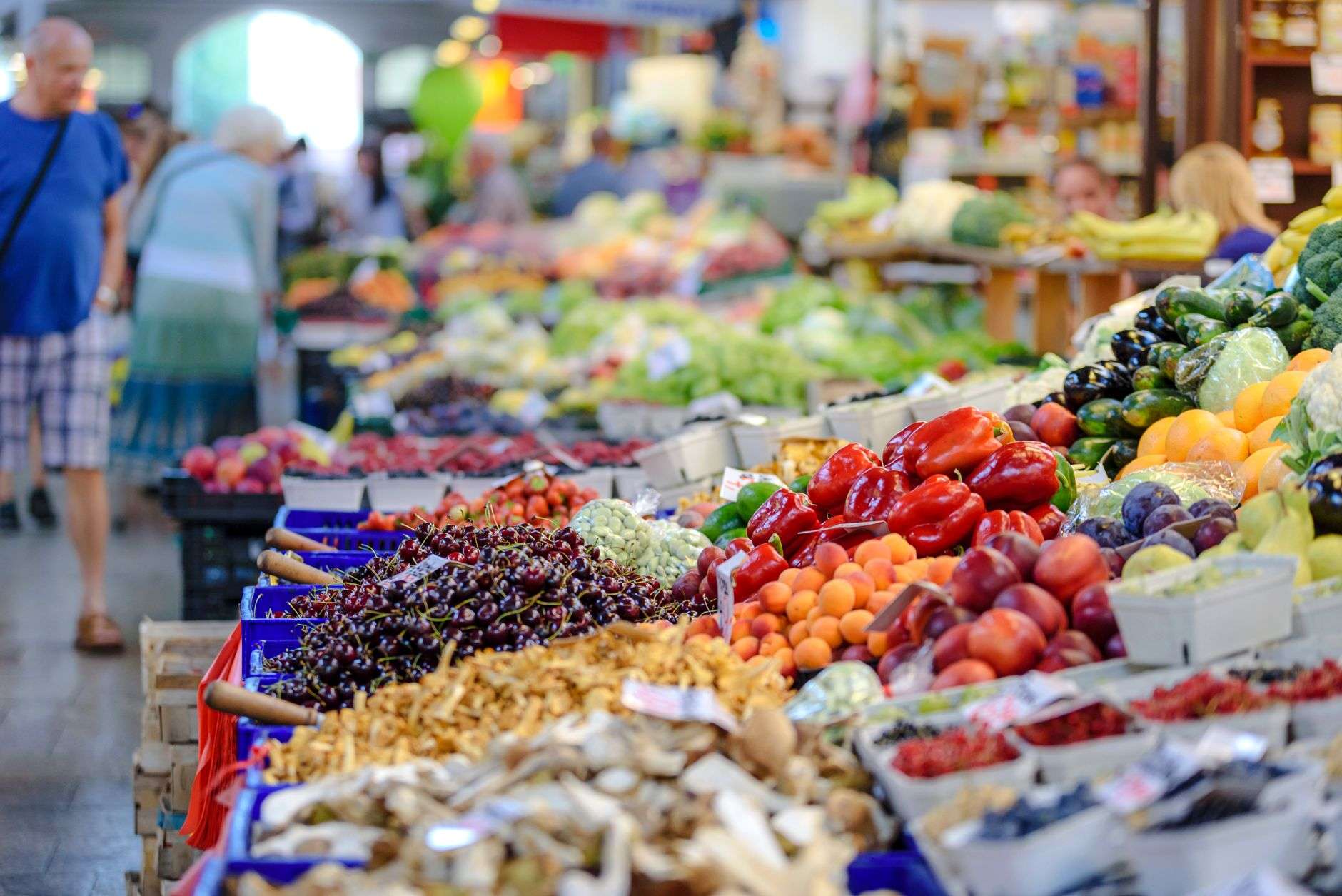
The Fairhope Farmers Market reopened Thursday, Sept. 10, starting a fall season that will run every Thursday afternoon through Nov. 12 in the lot behind the Fairhope Public Library.
Market hours are 2 to 6 p.m. The site sits at the corner of Bancroft Street and Magnolia Avenue in downtown Fairhope, a short walk from the central business district. Vendors are offering fresh produce, baked goods and handcrafted items, and city officials say the lineup will grow as the season progresses.
“It’s going to be a good season,” said Beth Ann Greisinger, community outreach coordinator for the City of Fairhope. “We’re going to have more vendors join us as our season progresses, more farmers and seasonal vegetables. We’re going to have some live music and free face painting for the kids the next couple of weeks, so it should be a really good time.”
Counting the Sept. 10 opening, the fall run covers 10 Thursdays before it closes out on Nov. 12.
Where To Find It And When
The market’s location behind the public library is a practical one. The library grounds are public, centrally placed and already a destination for foot traffic, which lets the market operate without shutting down a commercial street or displacing downtown parking for an entire afternoon. Shoppers coming from the surrounding downtown blocks can reach it on foot, and the Bancroft Street frontage keeps vehicle access straightforward for anyone driving in from farther out in Baldwin County.
The Thursday afternoon window is also a choice with consequences. A 2 to 6 p.m. slot catches retirees and parents early and commuters at the end of the workday, and it avoids competing directly with the Saturday-morning markets that dominate the regional calendar. For growers, a weekday afternoon market is often the second or third selling day of the week rather than the anchor, which is one reason vendor rosters at midweek markets tend to shift from week to week.
The city notes that some vendors rotate throughout the season and posts weekly updates on the market’s Facebook page, so the mix of tables on any given Thursday is not fixed. Greisinger said live music and free face painting for children are planned for the next couple of weeks; the city has not announced dates beyond that.
What Is Actually In Season Right Now
Mid-September on the upper Gulf Coast is a transitional moment in the growing calendar, which is part of why a fall market fills out gradually rather than opening at full strength.
Late-summer crops are finishing. Cool-season planting, meanwhile, is underway or just completed: Alabama Cooperative Extension System planting guidance for south Alabama puts collards in the ground from July into mid-September, kale and mustard through late August and early September, turnips from mid-August into October, and radishes from Sept. 1 through mid-October. Broccoli, cabbage and Brussels sprouts go in earlier, in late summer, to mature in the cooler weeks ahead. Spinach, Swiss chard and lettuces are September plantings.
That sequence explains Greisinger’s remark about “more farmers and seasonal vegetables” arriving as the season progresses. Much of what defines a Gulf Coast fall market — collards, turnip and mustard greens, kale, radishes, carrots — is only beginning to come out of the ground when the market opens in early September, and reaches its stride in October and November.
The other signature of a Baldwin County fall arrives later still. Satsumas, the cold-hardy mandarins grown along the upper Gulf Coast for more than a century, are harvested entirely by hand, with early-maturing varieties picked from late September through October and standard varieties from late October into December. Mobile and Baldwin counties are the two centers of Alabama satsuma production; the state ranks third nationally, with more than 100 acres in cultivation. A market running through Nov. 12 falls squarely inside that window.
A Producer-Focused Market
The Fairhope market is organized around vendors who grow or make what they sell. The city describes its offerings as fresh produce, baked goods, plants, local honey and handmade items from Baldwin County farmers and makers, and it requires vendors to meet City of Fairhope requirements and approvals before setting up.
That distinction matters more than it may appear. Markets that allow resellers can be stocked reliably every week, because a vendor can simply buy wholesale produce and bring it. Markets built around producers cannot — their inventory is hostage to weather, planting dates and harvest timing. The tradeoff is that a shopper at a producer-focused market can ask the person behind the table where a crop was grown and get a real answer.
Prospective vendors can apply through the city, and the market is coordinated through the City of Fairhope’s community outreach office. Greisinger can be reached at 251-928-1474.
Benefits For Older Shoppers
The market participates in the Senior Farmers Market Nutrition Program, a federally funded benefit administered in Alabama through the Department of Agriculture and Industries’ Farmers Market Authority.
The program issues qualifying seniors a $50 benefit card that can be spent on fruits, vegetables, honey and fresh-cut herbs bought directly from approved growers at participating markets and farm stands. It cannot be used at grocery stores or with vendors who are not certified for the program. Eligibility is limited to Alabama residents over 60 who meet the income guidelines, applications must be submitted online through the Farmers Market Authority rather than by phone or mail, participants must reapply each year, and cards are issued first come, first served. For the 2026 program year, benefits are valid from May 1 through Nov. 27. The Farmers Market Authority can be reached at 1-877-774-9519.
The program is designed to work in both directions. Seniors on fixed incomes get produce they might otherwise skip, and the money stays with local growers rather than leaving the county through a wholesale chain.
Why Markets Matter In Baldwin County
Baldwin County is one of Alabama’s largest counties by land area and remains substantially agricultural even as its population has grown rapidly along the Eastern Shore and the beach communities. Direct-to-consumer sales fill a specific gap for growers in that landscape.
A farmer selling wholesale receives a fraction of the retail price and has to meet volume, packing and scheduling requirements that a small operation often cannot. Selling at a market removes the intermediaries entirely: the grower sets the price, keeps the full margin and can move quantities too small to interest a distributor. For operations working a few acres, or for someone with a surplus of figs or peppers or eggs, a Thursday afternoon table may be the only viable outlet.
Markets also serve as a low-cost proving ground. Bakers, jam makers and small food producers use them to test recipes and build a customer base before committing to a storefront or a wholesale account, and a number of established Gulf Coast food businesses began at a folding table under a canopy.
For shoppers, the appeal is more immediate. Produce picked that morning or the day before has not spent a week in a distribution chain, and the shortened interval shows up in both flavor and shelf life. A market is also one of the few remaining retail settings where a buyer can talk directly to the person who grew the food.
What To Expect Through November
Shoppers planning a first visit should go with flexible expectations rather than a fixed list. Early in a fall season, the produce tables are thinner than they will be in October, and the balance tilts toward baked goods, honey, plants and handcrafted items. As cool-season crops mature and more growers join, the produce share grows.
Arriving early in the four-hour window is generally the best strategy for anyone hunting a specific item, since popular produce moves first. Cash remains useful at any farmers market, though many vendors now accept cards or mobile payment. Reusable bags are worth bringing.
The Fairhope Farmers Market runs from 2 to 6 p.m. each Thursday behind the Fairhope Public Library, at the corner of Bancroft Street and Magnolia Avenue, through Nov. 12.