Fairhope Forum Brings Medicaid Debate to Baldwin County Voters
A League of Women Voters forum in Fairhope drew Baldwin County doctors, lawmakers and residents into the statewide Medicaid debate.
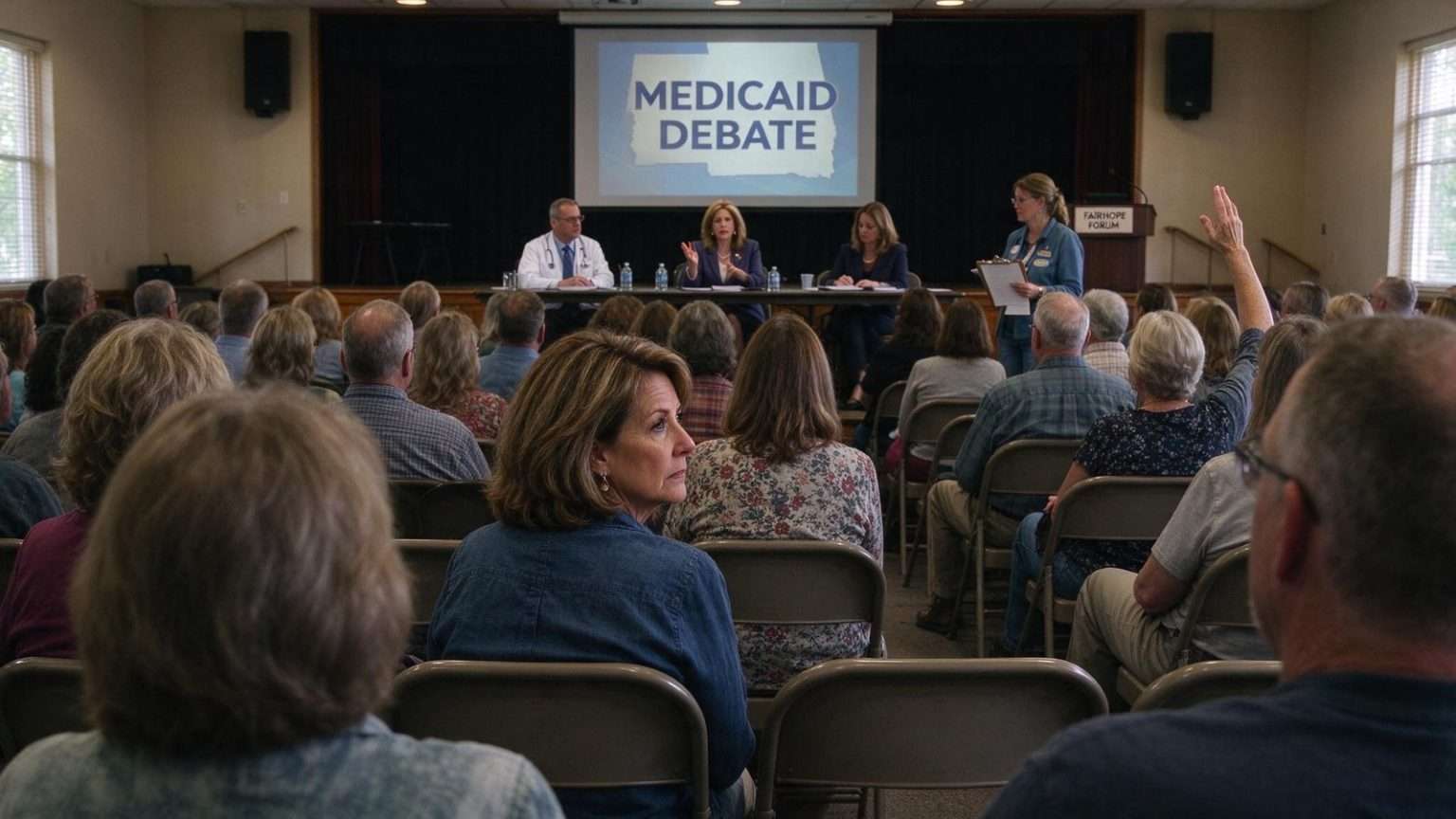
FAIRHOPE, Alabama — A public forum held in Fairhope this week put Baldwin County residents face to face with the ongoing statewide argument over expanding Medicaid, drawing local physicians, a state senator and a policy analyst before an audience of concerned voters. The event was one of the few occasions in recent memory where the Medicaid debate — usually conducted in Montgomery committee rooms and Birmingham policy circles — was argued out in person before a Baldwin County audience, and it reflected the county’s growing weight in state politics. As Baldwin’s population has surged past 200,000, its voters have become a constituency that statewide officeholders cannot treat as an afterthought.
A Local Venue for a Statewide Fight
The event, sponsored by the League of Women Voters, gave Baldwin County residents a chance to hear directly from people on different sides of the Medicaid expansion debate. Among the speakers were local physicians who described the strain uninsured patients place on area medical practices, alongside a policy analyst who argued that Alabama is leaving billions of federal dollars on the table by not expanding the program. The League’s sponsorship lent the evening a deliberate neutrality: the organization’s forums are structured around information rather than advocacy, letting attendees hear the strongest available versions of each position.
The analyst told the Fairhope audience he believes the political climate around Medicaid expansion will shift after this year’s statewide election, predicting that Alabama’s leadership will eventually find a path to accept an expanded version of the program for low-income and disabled residents. His argument followed the arc the expansion debate has taken across the South: states that initially refused the federal offer have, one by one, negotiated their own versions as federal dollars kept flowing to their neighbors and their own rural hospitals kept closing.
Doctors Describe the Local Impact
Physicians who spoke at the forum focused on what the coverage gap means for Baldwin County patients specifically, describing cases in which working residents in industries such as construction and food service earn too much to qualify for existing Medicaid but too little to afford private insurance. Baldwin County’s economy is built on exactly those industries — construction, hospitality, healthcare, retail and the service trades that support the coast’s tourism economy — which means the coverage gap is not an abstraction along the Eastern Shore. It describes a large share of the county’s actual workforce.
That gap, they said, often means delayed care and more expensive emergency room visits at local hospitals. When a patient with untreated diabetes or an undiagnosed heart condition finally reaches the emergency department, the cost of care is multiples of what routine treatment would have been — and hospitals unable to collect payment shift those costs onto insurers, employers and taxpayers. For the county’s healthcare providers, the economics of an uninsured population show up in staffing decisions, service lines and, increasingly, the survival of smaller facilities.
Petitions Meet a Firm Position
Attendees at the forum collected signatures on petitions addressed to the governor and to a state senator representing part of Baldwin County, though the senator, reached separately by phone, said he did not expect the petition drive to change his position on the issue. The exchange captured the hard reality of the expansion debate in Alabama: public pressure campaigns have mounted for years, but the state’s elected leadership has remained committed to resisting the federal offer, viewing expansion as an open-ended obligation the state would eventually have to fund despite heavy initial federal support.
Opponents of expansion argue that the program already strains the state budget, that federal matching terms could change, and that able-bodied adults should not be added to a system that critics describe as structurally fragile. Supporters counter that the federal government has committed to covering the overwhelming majority of expansion costs, that the money is already being collected from Alabama taxpayers and sent to other states, and that a healthier, insured workforce is the foundation of economic growth in a county like Baldwin, where healthcare and construction are among the largest employers.
A Senator From Mobile Makes Her Case
A state senator representing Mobile who attended the Fairhope forum said she hopes state leadership reconsiders its stance, framing the debate as one with real consequences for working families across both Mobile and Baldwin counties. Her presence at a Baldwin County event was itself notable — the bay that separates the two counties has long divided their politics, but on the Medicaid question the interests of the two urban centers of South Alabama align. Hospitals, clinics and safety-net providers on both sides of Mobile Bay draw from the same population and bear the same uncompensated-care burden.
Her argument mirrored the case expansion supporters have carried across the state for years: that the program is fundamentally about work and workers, that rural and suburban hospitals alike are losing ground to uncompensated care, and that federal dollars earmarked for coverage will keep flowing to every neighboring state that participates while Alabama declines. Opponents in the Legislature have remained skeptical of the long-term costs, pointing to the possibility that the federal matching rate could someday be reduced and leave the state holding a bill it cannot pay. Between those positions sit the counties — like Baldwin and Mobile — where the human cost of the coverage gap is tallied daily in emergency rooms, free clinics and unfilled prescriptions.
That shared interest across county lines is quietly changing the politics of the issue. South Alabama’s healthcare systems, chambers of commerce and municipal leaders have increasingly found common ground on the question, and forums like the one in Fairhope give that coalition a public platform. Whether it changes minds in the Statehouse remains the open question — but the coalition is broader than it was a few years ago, and both parties to the debate know it.
For the forum’s audience, the evening offered something increasingly rare in a polarized policy fight: a direct, in-person argument over the facts. Questions from attendees ranged from the program’s cost to its effect on rural hospitals to what expansion would mean for people who already buy subsidized insurance on the federal marketplace. The physicians’ testimony — grounded in daily practice rather than talking points — carried particular weight with the crowd, several of whom said afterward that the coverage gap was more visible to them than any argument in Montgomery.
Why the Debate Matters in Baldwin County
The stakes of the Medicaid argument are concrete in Baldwin County. The county’s rapid growth — among the fastest of any county in Alabama — has been driven by jobs in construction, healthcare, manufacturing and the service sector, precisely the employment mix most likely to leave workers in the coverage gap. Hospitals in Fairhope, Daphne, Foley and Bay Minette serve a population spread across a large rural and suburban footprint, and the county’s smaller facilities face the same financial pressures that have already forced rural hospital closures elsewhere in the state.
Alabama’s decision not to expand Medicaid under the Affordable Care Act has left the state with one of the nation’s narrowest Medicaid eligibility thresholds — a limit so low that many working parents cannot qualify regardless of how little they earn. That is the structural fact behind the Fairhope forum’s discussion: the adults the expansion would cover are, in many cases, people who work full-time in industries that keep the Gulf Coast economy running. The League of Women Voters’ decision to bring the question to Baldwin County voters reflects a growing recognition that the program’s fate will be decided not only in legislative chambers but by the voters who send the legislators there.
What Comes Next
Both sides of the debate agree on one thing: the question is not going away. Federal matching funds for expansion remain on the table for states that choose to participate, rural hospital finances continue to deteriorate without a broader insured base, and the political calculation in Montgomery shifts with each election cycle and each neighboring state that reaches its own compromise. Advocates on the Gulf Coast say they intend to keep organizing — more forums, more petitions, more conversations like the one in Fairhope — in the belief that the case for expansion is strongest when made face to face.
For Baldwin County residents who filled the room, the forum delivered what such evenings are meant to deliver: a clearer picture of where their own representatives stand, a better understanding of what the program would actually mean for their neighbors, and a reminder that the coverage gap has names, faces and local addresses. The petition drive’s ultimate impact on the statehouse remains to be seen — but the arguments made in Fairhope will outlast the signatures it collected.
The League of Women Voters’ forum also modeled the kind of discussion the expansion debate has rarely had in Alabama — one where the questions came from the audience rather than a campaign script, and where a physician who treats the uninsured and an analyst who tallies the federal dollars could be questioned side by side. Attendees left with material they could verify on their own and a list of exactly which elected officials to contact. If the political climate does shift after this year’s election, as the analyst predicted, evenings like this one will be part of the reason why.