Fairhope Revisits Short-Term Rental Ban Amid Rise of Airbnb
Fairhope officials are reconsidering a 2007 ban on short-term rentals in residential neighborhoods as home-sharing sites like Airbnb grow in popularity.
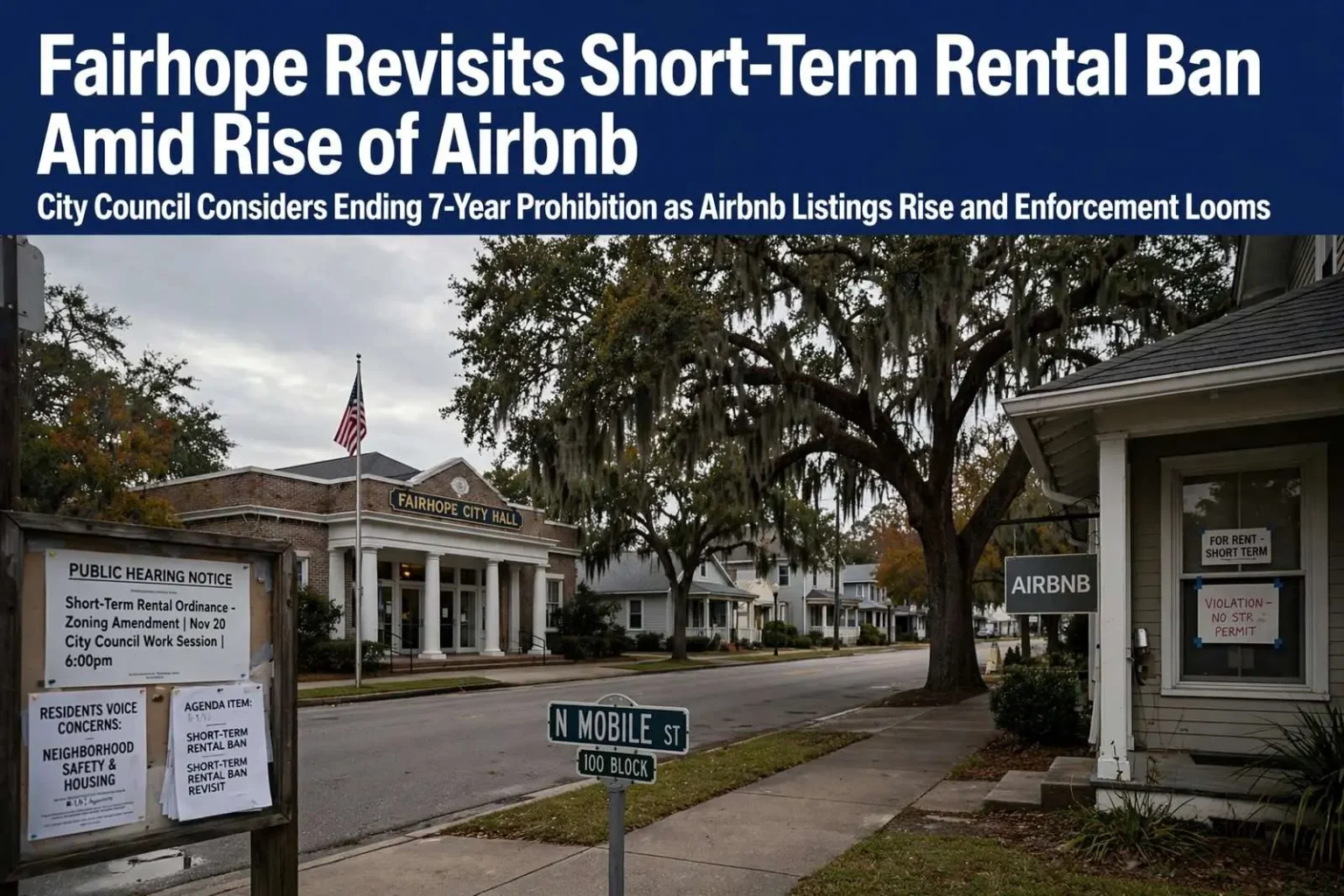
A debate that first divided Fairhope’s city council in 2007 is resurfacing, as officials research whether to once again allow short-term vacation rentals in residentially zoned neighborhoods.
Seven years ago, the council voted 3-2 to amend the city’s zoning ordinance, defining any rental under a month as a short-term rental and banning the practice outright in residential areas. At the time, property owners argued the rentals supported Fairhope’s tourism economy, while neighbors worried about a party atmosphere and safety concerns tied to renters whose backgrounds weren’t known.
The issue resurfaced this fall after growing complaints about homeowners skirting the existing ban. Mayor Tim Kant told the council in August that he and Police Chief Joe Petties were likely to begin working with City Attorney Marion “Tut” Wynne to subpoena property owners in clear violation of the ordinance, saying bringing a few cases before a judge tends to send a message quickly.
Word of the mayor’s intentions prompted a different reaction from some residents. Council President Jack Burrell said several people approached him asking the city to consider changing the ordinance instead of simply enforcing it, suggesting the city could regulate short-term rentals through business licensing and lodging tax collection rather than banning them outright. Burrell raised the idea during the council’s Nov. 20 work session, acknowledging that longtime homeowners in single-family neighborhoods never expected to live next door to a rotating cast of short-term renters.
Currently, short-term rentals are prohibited in any area zoned R-1 or R-2, though they are allowed in limited circumstances under R-3 and in every other zoning classification. Anyone legally operating a short-term rental must hold a city business license, collect lodging taxes and pay commercial property tax rates, assessed at 20 percent rather than the 10 percent rate applied to owner-occupied homes.
Burrell pointed to the rise of Airbnb as a driving force behind renewed interest in short-term rentals nationally. Councilwoman Diana Brewer said she became aware of local Airbnb listings about a year ago and noted that after news coverage of the mayor’s enforcement plans in August, several hosts stopped renting out of fear they could face legal trouble.
Kant cited a specific dispute on North Mobile Street that helped prompt the renewed enforcement push, along with an earlier controversy in the bluff neighborhoods near North Bayview and Summit streets, where residents pushed back hard against short-term rentals in their area. Bed-and-breakfast owners have also raised concerns that loosening the ordinance could create new competition for their established, licensed businesses.
How a zoning change would work
Any change to the short-term rental rules would amend Fairhope’s zoning ordinance. Under Alabama law, zoning amendments require public notice and a public hearing before a city council can vote, and in Fairhope proposed zoning changes typically go first to the city Planning Commission for a recommendation before reaching the council.