

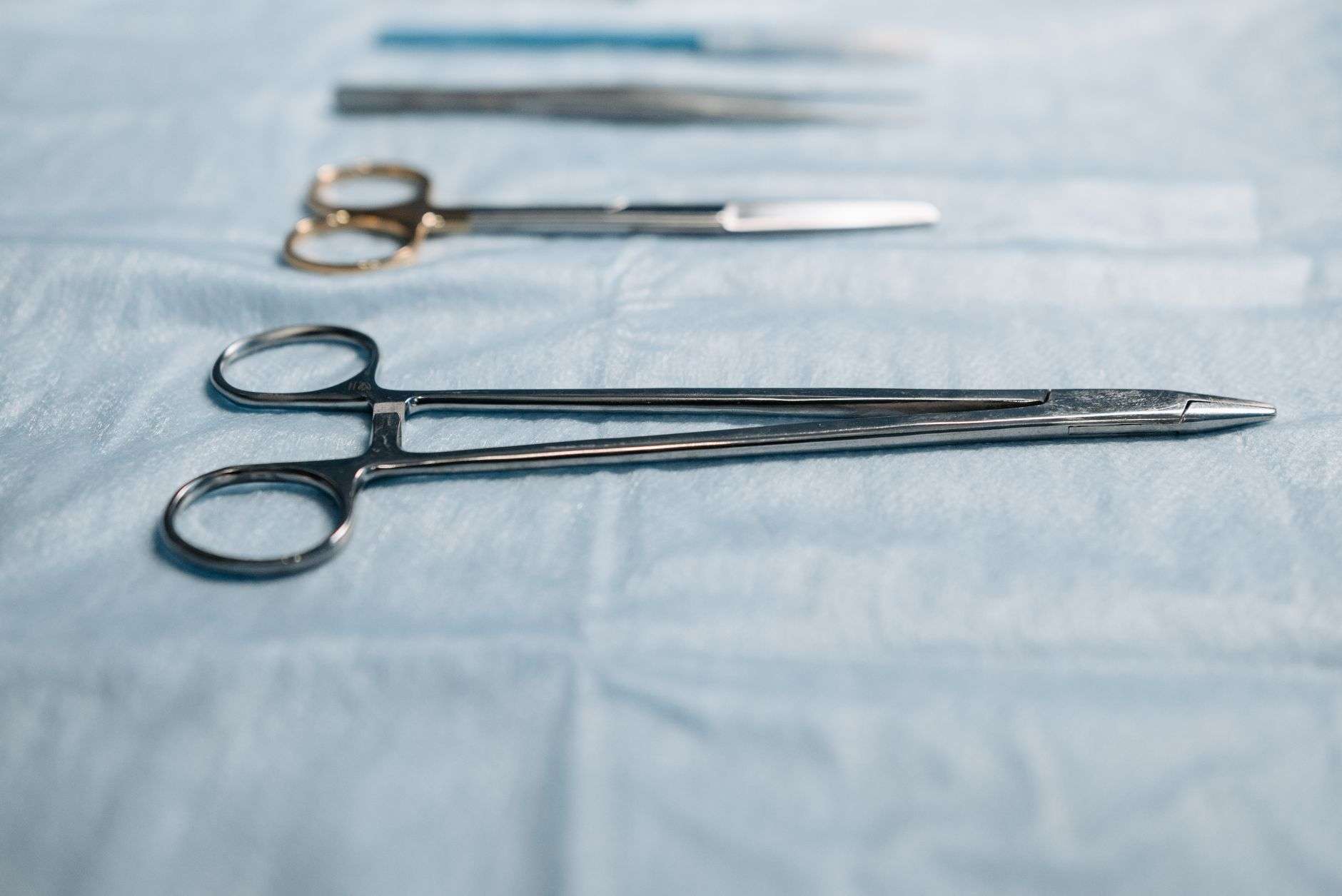
A Gulf Coast medical device company is racking up intellectual property wins, and its founders say the growth reflects Alabama’s expanding role in the medical technology industry. Simparo Surgical, backed by the Hatch Fairhope innovation hub in Baldwin County, announced it has received its fourth U.S. patent, this time for a device engineered to make one of hand surgery’s more complex procedures faster and more predictable. The announcement places the small Baldwin County firm among a growing roster of Alabama startups building protectable, patent-backed technology rather than relocating to the established biotech corridors of Boston, Minneapolis, or Silicon Valley.
A new tool for treating thumb arthritis
The patent, issued June 23, covers a suture-locking mechanism the company calls the Falcon Suture Clutch. The device is designed for use during thumb carpometacarpal (CMC) reconstruction, a procedure surgeons perform to treat severe arthritis or instability where the base of the thumb meets the wrist. The CMC joint, though small, bears an outsized share of the workload in every hand: it is the saddle-shaped joint that lets the thumb swing, pinch, and grip against the fingers, and when it wears out, the loss of function touches nearly everything a patient does with that hand.
The condition, which involves the joint between the metacarpal bone and the trapezium, is one of the most common sites of hand arthritis, particularly among older adults and people who perform repetitive gripping or pinching motions. The patient population is broad — everyone from retirements-age patients with progressive joint wear to workers whose trades demand constant forceful gripping — and surgical reconstruction is typically reserved for patients whose pain and weakness persist after splinting, injections, and therapy have been exhausted.
According to a news release from the company, the Falcon Suture Clutch uses a one-way cinching design that lets surgeons make controlled, incremental tension adjustments during the repair. Tensioning is the delicate step in thumb reconstruction: the surgeon must suspend and stabilize the thumb’s base with just enough tightness to restore stability, without over-tightening the joint or letting the repair loosen over time. A one-way mechanism that holds each increment of tension as it is applied gives the surgeon fine control at the moment it matters most.
That marks a departure from many traditional approaches to basal joint reconstruction, which often require harvesting a tendon from a second surgical site, drilling tunnels into bone, and relying on approximation-based tensioning methods that can lengthen procedure time and add technical complexity in the operating room. The classic techniques, refined over decades, work — but they ask a great deal of the surgeon, the patient’s anatomy, and the clock, since a second harvest site means a second area of surgical trauma and recovery.
Streamlining a complex procedure
By simplifying the tensioning step, Simparo Surgical says its device is intended to reduce the number of variables surgeons must manage mid-procedure, potentially shortening operating time and creating more consistent, repeatable outcomes for patients undergoing the surgery. Consistency is the quiet objective behind much of surgical device innovation: procedures performed the same way with the same tools tend to produce more predictable recoveries, fewer complications, and results that surgeons can counsel patients about with confidence.
The Falcon Suture Clutch adds to the company’s growing patent portfolio, which now includes four issued patents covering its broader suture tensioning system and related orthopedic applications. Four issued U.S. patents represents years of engineering, testing, and prosecution before the patent office, and it builds a defensive wall around the company’s core technology that matters as much as any single device — competitors cannot simply re-engineer the tensioning approach without infringing the portfolio.
“This patent is a milestone not just for our team, but for what Alabama is building: a place where medical innovation is developed, protected, and delivered to the surgeons and patients who need it,” said Chris Harber, CEO of Simparo Surgical. The statement frames the patent less as an endpoint than as proof of concept — both for the device itself and for the statewide infrastructure now supporting medical device companies through their early, capital-hungry years.
Built with homegrown support
Simparo Surgical is backed by Innovate Alabama, the statewide public-private partnership charged with growing entrepreneurship and innovation across the state, and is supported locally by Hatch Fairhope, a Gulf Coast innovation hub that works with early-stage companies in the Baldwin County area. The two organizations bracket the company’s support system: one providing statewide resources and network for scaling deep-technology startups, the other providing the local workspace, mentorship, and community that lets a founding team build a company without leaving the Eastern Shore.
Hatch Fairhope has become a focal point for the Fairhope area’s startup community, hosting early-stage companies across sectors and connecting founders to the capital and expertise that a small coastal city does not naturally supply. For a medical device company, access to that kind of ecosystem — plus the proximity to Mobile’s medical community across the bay — offers a workable substitute for the dense biotech clusters where such firms traditionally take root.
Harber said he wants the company’s success to demonstrate what is possible when Alabama-based startups get backing to develop technology at home rather than relocating to larger biotech hubs. The pattern he describes is familiar across the Southeast: promising medical technology companies launch locally, then move their operations — and their payrolls — to Boston or the Bay Area where venture capital and industry talent concentrate. Keeping Simparo Surgical in Baldwin County is, in the company’s telling, part of the point.
“When you choose Simparo, you’re choosing innovation that was built right here at home — and helping demonstrate what Alabama’s investment in companies like ours can achieve,” Harber said. The message is aimed at both surgeons and institutional buyers: adopting the device is presented as an investment in Alabama’s own innovation economy, a pitch that resonates with the state’s hospitals and physician networks that increasingly prefer to support homegrown suppliers.
Innovate Alabama’s involvement reflects the state’s recent push to reverse the outward migration of homegrown technology companies. Created as a statewide public-private partnership, the organization funds grants for startups, supports innovation districts, and works to connect university research to commercial development — the full pipeline a medical device company needs between a clinical insight and a product on a surgical tray. For Simparo Surgical, that backing arrived at the stage where most hardware startups either secure institutional support or stall.
Company officials say they expect the Falcon Suture Clutch and related technology to continue expanding Simparo Surgical’s footprint in the orthopedic device market as more surgeons adopt the tensioning system for hand and wrist procedures. Adoption in surgical devices typically builds surgeon by surgeon — a hand specialist tries the device, achieves consistent results, and introduces it to colleagues — which makes each new patent and product extension part of a longer commercial arc rather than a single launch.
The broader orthopedic device market rewards exactly the kind of focused innovation Simparo represents. Large manufacturers dominate total joint replacement and trauma hardware, but smaller companies have historically found openings in specialized niches — like basal thumb reconstruction — where the incumbent tools are decades old and surgeons are receptive to instruments that simplify a demanding technique. A suture tensioning platform that spans multiple procedures gives a company like Simparo a way to grow from that niche outward.
For Baldwin County, the company’s trajectory adds to an economic development story the county has been telling with increasing confidence: that its fast-growing population and quality of life can support not just residential and retail growth, but knowledge-economy employers in engineering, software, and now medical technology. A four-patent surgical device company operating out of Fairhope is the kind of anchor example economic developers cite when recruiting similar founders.
For patients, the ultimate measure of the Falcon Suture Clutch will be made in operating rooms and therapy visits — whether thumb reconstruction performed with the device delivers the reliable, durable outcomes the design promises. The patent protects the idea; the company’s next task is the adoption that proves it. With Innovate Alabama’s backing, Hatch Fairhope’s support, and a growing portfolio behind it, Simparo Surgical has assembled the pieces to make that case from its home ground on the Gulf Coast.
The regulatory and commercial path ahead is well marked for a device of this class. Surgical instruments marketed through the FDA’s established pathways for such products must demonstrate substantial equivalence to legally marketed predecessors, and Simparo’s engineers will continue refining manufacturing, sterilization, and packaging as volumes grow. Each of those steps — like the patent itself — is a checkpoint the company has now passed once before, and the team says the fourth U.S. patent gives it confidence in the road ahead.