Mobile County Family Health Dietitians Help Residents Put New Dietary Guidelines to Work at Home
Family Health dietitians at the Mobile County Health Department offer in-person and telehealth counseling to help residents of all ages follow the 2025-2030 Dietary Guidelines and eat more whole foods.
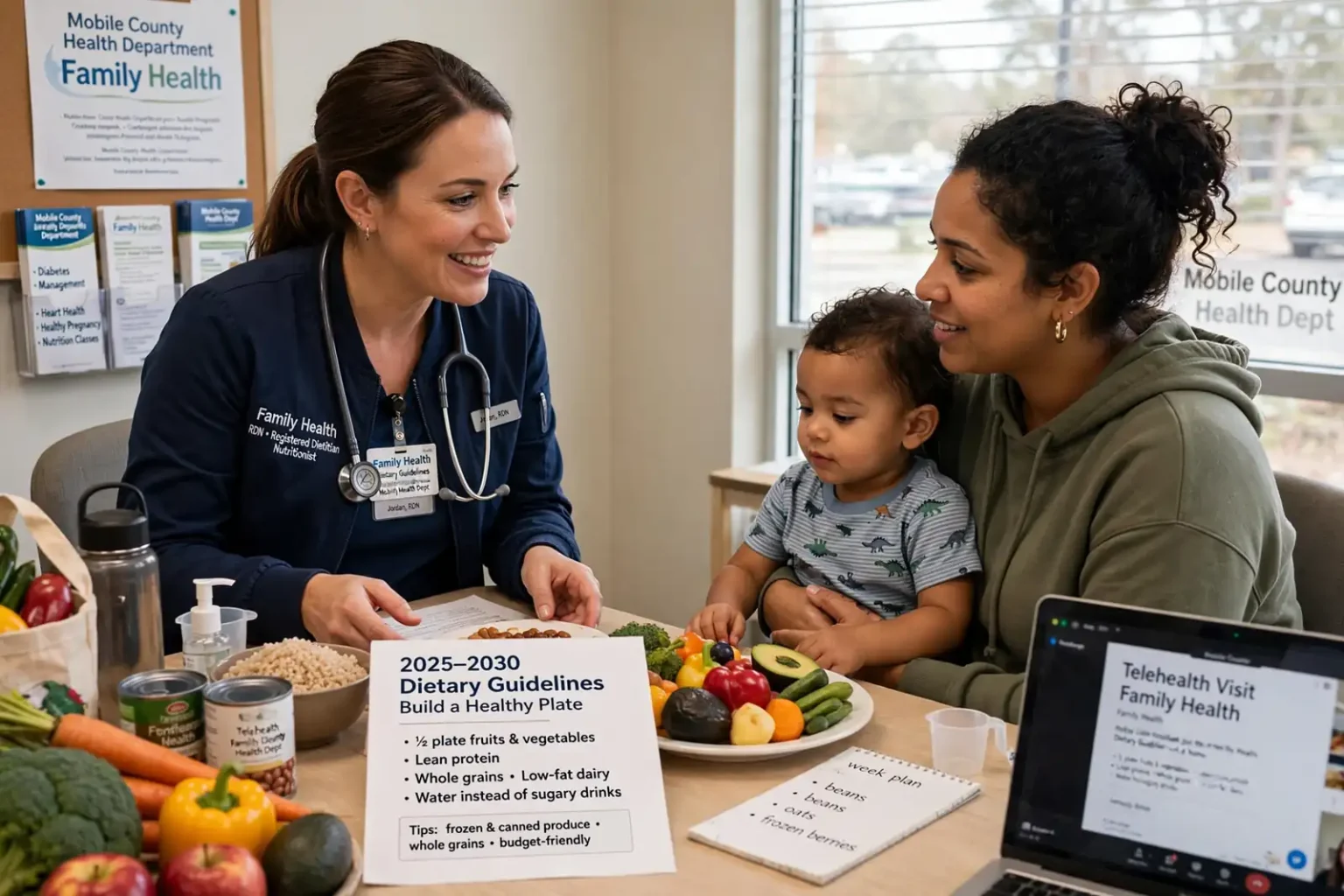
MOBILE, Ala. — Residents who want help turning the federal government’s newest Dietary Guidelines into everyday meals can now lean on a team of registered dietitian nutritionists at Family Health, the primary care arm of the Mobile County Health Department. The program is encouraging families across the county to build their plates around whole, minimally processed foods, and it offers one-on-one counseling for children and adults alike, either face to face or through telehealth visits.
The push comes as health officials across the country work to translate the updated federal advice into practical steps. Locally, the message from Family Health is straightforward: modest, consistent changes at the kitchen table can pay off in better energy, steadier blood sugar and improved control of blood pressure over time.
Help Close to Home for Mobile County Families
For many households, the hardest part of eating well is not knowing what to do, but figuring out how to do it on a real schedule and a real budget. That is where the Family Health dietitians come in. Their counseling sessions are personal, built around a patient’s health history, food preferences, cultural traditions and grocery budget rather than a one-size-fits-all menu.
A health department official said the dietitians are ready to help residents shape the new federal advice into meals that fit their daily lives, their wallets and their medical goals. The official added that small, ongoing adjustments in eating habits can have a lasting effect on how people feel and on how well they manage chronic conditions such as diabetes and hypertension.
Services are open to patients of all ages, so parents can seek guidance for a picky toddler, a teenage athlete, an expectant mother or an older relative living with a long-term illness. Because visits can happen by telehealth, residents who have trouble arranging transportation or time away from work may still be able to take part.
Conditions the Dietitians Commonly Address
According to the health department, the Family Health nutrition team works with patients on a range of needs, including:
- Weight management, along with diabetes and prediabetes
- Heart health concerns, such as high cholesterol and elevated blood pressure
- Chronic kidney disease, where diet often plays a central role in care
- Pregnancy nutrition, covering the months before conception, the pregnancy itself and the period after delivery
How to Book a Nutrition Appointment
Residents interested in counseling can schedule a visit by calling Family Health’s Central Appointments line at 251-690-8889. Callers should have their referral on hand when they phone, since the program asks for one when booking.
Health officials also encourage people who already see a doctor, nurse practitioner or nutritionist to bring up the new federal guidance at their next visit. A provider who knows a patient’s medications, lab results and medical history is in the best position to recommend an eating plan that is safe and realistic. For residents who do not have a nutrition professional of their own, Family Health is positioned to fill that gap.
What the 2025-2030 Dietary Guidelines Emphasize
The USDA and the federal Department of Health and Human Services, known as HHS, jointly issued the 2025-2030 edition of the Dietary Guidelines for Americans on Jan. 7, 2026. The two agencies share responsibility for the document, which is written for the general public and for the professionals who advise them. The core theme of the new edition is a call to eat real food, meaning foods that are whole and packed with nutrients relative to their calories.
Under the guidance, the foundation of a healthy diet includes:
- Protein foods
- Dairy
- Vegetables and fruits
- Healthy fats
- Whole grains
At the same time, the guidelines advise Americans to cut back on refined carbohydrates, added sugars and highly processed foods. Those three categories tend to supply a large share of calories in the typical American diet while offering relatively little in the way of fiber, vitamins and minerals.
Why the Guidelines Matter Beyond the Kitchen
The Dietary Guidelines are updated every five years under federal law, and each edition is meant to reflect the current body of nutrition science. Their influence reaches well beyond individual households, and they are written to apply to Americans at every stage of life, from infancy through older adulthood. Federal food and nutrition programs, including school breakfast and lunch programs and the WIC program for women, infants and young children, draw on the guidelines when setting nutrition standards. Health professionals and educators also use them as a reference when counseling patients and teaching students about food.
Because of that reach, a new edition can gradually shape what appears on cafeteria trays, in public health campaigns and in the advice people hear at checkups. Family Health’s effort is meant to bring that national guidance down to the level of a single family’s grocery list.
Practical Steps Families Can Start This Week
The health department has highlighted several simple ways to begin moving toward a diet centered on real food. None of them requires special equipment or expensive specialty products.
- Make produce the star. Aim to cover roughly half of the plate with vegetables and fruits in a variety of colors. Fresh produce is great, but frozen and canned options count too.
- Pair every meal with protein. Good choices include eggs, chicken or turkey, fish and shellfish, beans and nuts.
- Trade refined grains for whole ones. Swap white bread, crackers and boxed breakfast items for whole-grain versions.
- Rethink your drink. Reach for water or beverages without added sugar in place of sodas and other sweetened drinks.
- Cook more often. Prepare meals at home when possible, and when dining out, look for menu items built around nutrient-rich ingredients.
Tips for Stretching a Grocery Budget
Eating well does not have to mean spending more. Frozen vegetables and fruits keep for months, cut down on waste and are often less expensive than fresh items that are out of season. Canned beans, canned fish and canned vegetables are shelf-stable sources of nutrition; choosing low-sodium versions, or rinsing canned vegetables and beans before use, can help limit salt. Buying staples such as oats, brown rice and dried beans in larger quantities can also lower the cost per serving.
Planning meals for the week before heading to the store helps shoppers avoid impulse purchases of packaged snacks. Cooking a larger batch of a simple dish, such as a pot of beans and vegetables or a sheet pan of roasted chicken and produce, can provide lunches and dinners for several days.
Diet and Chronic Disease in Everyday Life
Nutrition is closely tied to many of the chronic conditions that affect Alabama families, including type 2 diabetes, heart disease and high blood pressure. Diet is not the only factor in these illnesses, since genetics, physical activity, sleep, stress and access to care all play a part. Still, the food people eat day after day is one of the factors they can most directly influence.
For someone living with prediabetes, for example, steady changes such as choosing whole grains, adding vegetables and limiting sugary drinks can support healthier blood sugar levels. For people managing high blood pressure, cooking at home gives more control over sodium. Patients with kidney disease often need individualized guidance on nutrients such as protein, potassium and phosphorus, which is one reason professional counseling can be so valuable.
Special Considerations During Pregnancy
Nutrition needs shift before, during and after pregnancy. Expectant mothers often need more of certain nutrients, and new mothers may have different needs while recovering from delivery or breastfeeding. A registered dietitian nutritionist can help women sort through that advice and build a plan that supports both parent and baby.
What a Registered Dietitian Nutritionist Brings to the Table
The credential of registered dietitian nutritionist, often shortened to RDN, signals that a professional has completed accredited education and supervised practice in nutrition and has passed a national credentialing exam. RDNs must also keep up with continuing education to maintain the credential. That training prepares them to provide medical nutrition therapy, which is nutrition care designed to help manage specific diseases and conditions.
Unlike general wellness advice found online, a session with an RDN is tailored to the person in the room. A dietitian may review what a patient typically eats in a day, talk through obstacles such as long work shifts or limited cooking space, and set a few achievable goals rather than an overwhelming list of rules. Follow-up visits allow the plan to be adjusted as a patient’s health and circumstances change.
A Community Effort, One Plate at a Time
Health officials frame better eating as something that strengthens not only individual households but the wider community. When more residents are able to prevent or control chronic illness, families spend less time managing complications, children grow up around healthier habits and neighborhoods become more resilient overall.
For residents ready to take the first step, the path is simple: talk with a trusted health care provider about the new federal guidance, try one or two of the practical changes above, and call Family Health Central Appointments at 251-690-8889, referral in hand, to set up a personal nutrition session.