

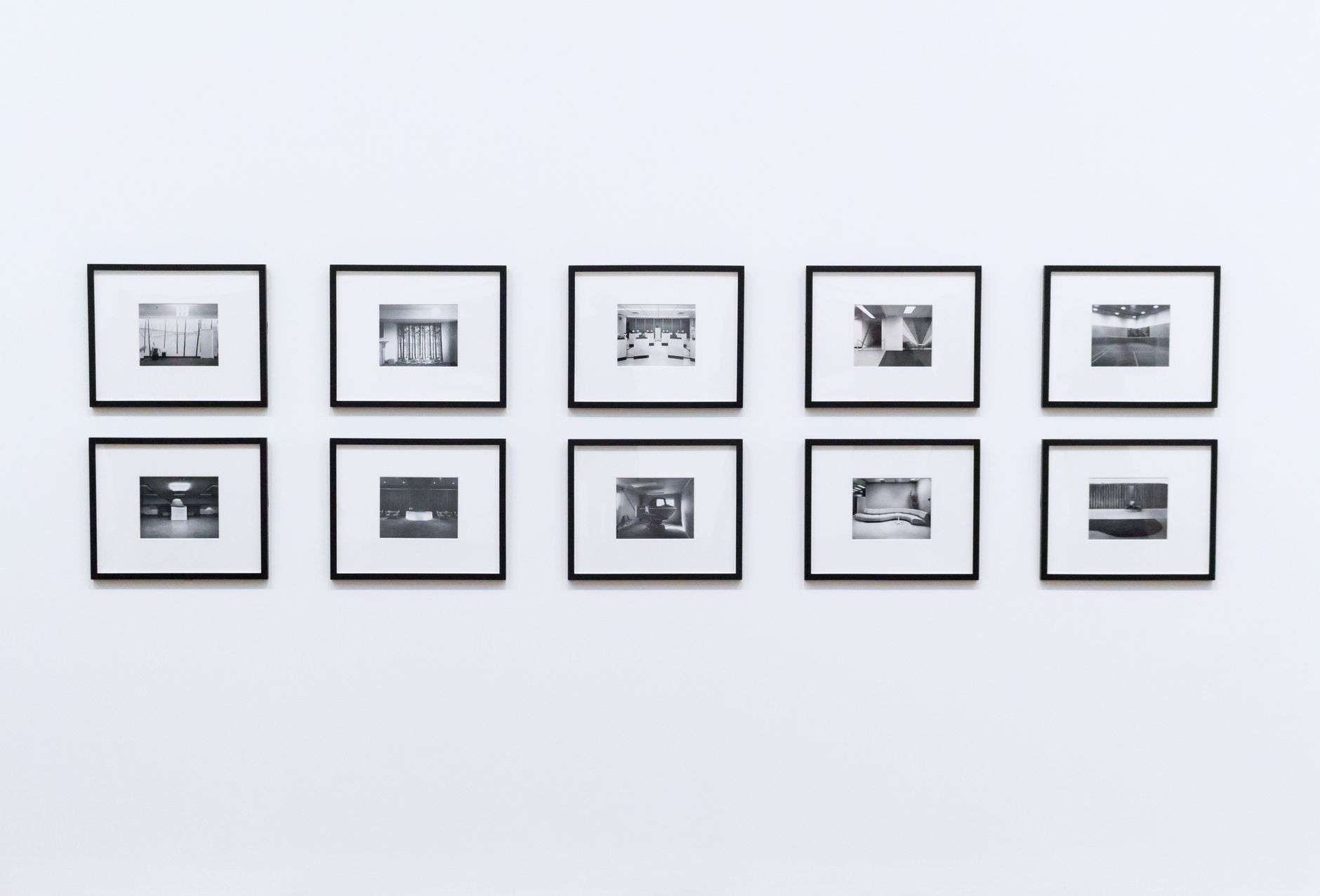
A downtown Mobile gallery space best known today as the Alabama Contemporary Art Center once operated under the name Space 301, and in the summer of 2010 it opened its walls to a rare four-person show built around a single family. “Personal Interiors,” which went on view at the Conti Street venue, paired the work of veteran figurative painters Alan Feltus and Lani Irwin with a joint project by their two sons, Tobias and Joseph, who exhibited together under the name Feltus/Feltus.
The exhibition ran through July 3, 2010, giving Gulf Coast gallery-goers roughly a month to see the work in person. Space 301 kept regular public hours of Wednesday through Saturday from 10 a.m. to 5 p.m. and Sunday from noon to 5 p.m., with extended evening hours offered on the second Friday of each month — a scheduling pattern common to many small and mid-sized arts venues that coordinate with a city’s broader “gallery night” or “art walk” traditions to draw evening foot traffic downtown. Admission to the show was free, and the building was wheelchair accessible, consistent with the venue’s identity as a publicly oriented, noncommercial contemporary art space rather than a for-profit commercial gallery.
Two Painters, One House, Two Distinct Visions
Alan Feltus and Lani Irwin are married painters who have spent decades working side by side while maintaining sharply individual styles, a dynamic that made “Personal Interiors” more than a simple joint show. Feltus has built a national reputation as a figurative painter working in a neoclassical vein, rendering quiet indoor scenes in warm, earthy tones that often include small narrative props such as letters, envelopes, and prints tucked into the compositions. His paintings have been shown at major American institutions, including the Hirshhorn Museum and Sculpture Garden in Washington, D.C., the Arkansas Museum of Fine Arts in Little Rock, the National Academy of Design in New York, the Oklahoma City Museum of Art, and the Wichita Art Museum in Kansas.
Irwin, born in Annapolis, Maryland, in 1947, brings a different sensibility to the same domestic subject matter. After an itinerant childhood that included time studying in Munich and Grenoble, she earned both her bachelor’s and master’s degrees in fine art from American University in Washington, D.C., where she met Feltus in 1972; the two married the following year. Irwin’s paintings have entered the collections of institutions such as the Hirshhorn Museum, the National Museum of American Art, and the Corcoran Gallery of Art. Her work is often described as populated by mannequins, puppets, toys, and enigmatic female figures arranged in tableaux that resist tidy interpretation — imagery she has said draws on the medieval and early Renaissance frescoes of Assisi, particularly those attributed to Giotto and Simone Martini in the town’s basilica.
That connection to Assisi is not incidental. After Feltus stepped away from a university teaching post in the mid-1980s, the couple relocated to Italy in 1987 and settled into a stone house near Assisi, in the Umbria region, where they have continued to paint largely outside the pressures of the commercial gallery circuit typical of major U.S. art markets. It was in that Umbrian household that their sons, Tobias and Joseph, grew up surrounded by working artists and, eventually, began collaborating on projects of their own.
A Second Generation Takes a Different Medium
Where their parents work primarily in oil paint, Tobias and Joseph Feltus turned to photography and film for the “Personal Interiors” showing, presenting their joint work under the collaborative name Feltus/Feltus. According to descriptions of the show, the brothers built unusual characters and staged what was described as “self-portraits of others,” a phrase that suggests images exploring identity and the human condition through invented or borrowed personas rather than straightforward likeness. Pairing a photography-and-film collaboration by the next generation alongside the paintings of Feltus and Irwin gave visitors a chance to see how the same household — and, implicitly, the same fascination with interior life, domestic space, and human presence — could produce strikingly different bodies of work across two mediums and two generations.
Exhibitions that juxtapose an established artist couple with their children’s collaborative work remain relatively unusual in the gallery world, and shows built around family lineage tend to draw interest precisely because they let audiences trace shared visual instincts — an interest in interior settings, staged tableaux, or invented personas, in this case — as they are reinterpreted by a new generation working in different tools. For Mobile audiences in 2010, “Personal Interiors” offered a rare opportunity to see that kind of intergenerational dialogue without traveling to a major coastal art market.
Space 301 and Downtown Mobile’s Arts District
The building that housed the exhibition, at 301 Conti Street in Mobile’s historic Cathedral Square area, has operated under several names over the years as its parent nonprofit organization evolved; it now does business as the Alabama Contemporary Art Center. Cathedral Square itself sits on ground with a long civic history: the area began as part of Mobile’s eighteenth-century Catholic burial ground before the graves were relocated in the early nineteenth century and the site was redeveloped, eventually becoming the landscaped public square recognizable today alongside the Cathedral Basilica of the Immaculate Conception. The surrounding blocks form part of downtown Mobile’s historic core, an area that has been the focus of ongoing preservation and revitalization efforts for decades, blending commercial, civic, and cultural uses within walking distance of the Mobile riverfront.
As a nonprofit contemporary art space, the venue has historically relied on a mix of exhibitions, educational programming, and community events to fulfill a mission of making contemporary visual art accessible to a broad regional audience — a model shared by comparable nonprofit “kunsthalle”-style institutions across the country that do not maintain permanent collections but instead rotate temporary exhibitions, often drawing on touring shows, regional artists, or, as with “Personal Interiors,” artists with a personal or historical connection to the area. Free admission and accessible hours, as offered for this exhibition, are typical strategies such organizations use to lower barriers to entry and build local audiences for contemporary art, which can otherwise feel inaccessible to visitors unfamiliar with commercial gallery culture.
Why Family-Based Exhibitions Matter for Regional Arts Scenes
Small and mid-sized cities across the country have increasingly used exhibitions with a personal or biographical hook — multi-generational family shows, husband-and-wife retrospectives, or artist-couple pairings — as a way to draw broader public interest to contemporary art beyond a niche audience of collectors and critics. Such framing gives casual visitors an accessible entry point: rather than approaching abstract or unfamiliar work cold, audiences can follow a narrative thread, in this case a family working across two generations and two different sets of tools, painting versus photography and film, while still being rooted in shared thematic territory around interior space and human presence.
For a regional gallery like the one on Conti Street, mounting a show featuring artists with international exhibition records — work held by institutions such as the Hirshhorn Museum and the Corcoran Gallery of Art — also serves a practical curatorial purpose, signaling ambition and drawing visitors who might not otherwise make a special trip to a mid-sized downtown gallery. Community arts organizations in Gulf Coast cities including Mobile have long used this kind of programming, alongside local artist showcases, to sustain year-round visitor interest between larger, marquee exhibitions.
Visiting Hours and Accessibility
The exhibition’s published schedule — Wednesday through Saturday during standard daytime hours, Sunday afternoons, and an extended evening slot on the second Friday of the month — reflects hours common among small nonprofit galleries balancing limited staffing with the goal of reaching both daytime and after-work visitors. Second-Friday extended hours in particular are a well-established practice in many downtown arts districts nationally, often timed to coincide with broader monthly “art walk” events that encourage visitors to move between multiple galleries, restaurants, and shops in a compact walkable area. Free admission and wheelchair accessibility, both noted for “Personal Interiors,” remain standard features that nonprofit community art centers frequently highlight to underscore their public-service mission, distinguishing them from commercial galleries that may charge admission or occupy less accessible historic buildings.
Part of a Broader Regional Arts Landscape
By 2010, downtown Mobile’s arts institutions sat within a broader Gulf Coast cultural landscape that included the Mobile Museum of Art in Langan Park, university galleries at the University of South Alabama and Spring Hill College, and a growing number of independent studios and small galleries scattered through the historic district. A nonprofit exhibition space devoted specifically to contemporary work, distinct from the more encyclopedic, collection-based mission of a traditional art museum, filled a particular niche in that ecosystem — one focused on rotating, often experimental or thematically driven shows rather than a permanent collection spanning centuries of art history. That distinction is common nationally: many mid-sized American cities support both a traditional encyclopedic museum and a separate, smaller contemporary or “kunsthalle” space, each drawing a somewhat different segment of the local audience.
While the specific critical reception and attendance figures for “Personal Interiors” were not documented in the surviving record of the show, its pairing of an internationally exhibited painter couple with their sons’ photography-and-film collaboration stands as a notable example of the kind of ambitious, family-centered programming that helped define downtown Mobile’s contemporary art scene in the early 2010s, in the years before the venue’s eventual rebranding as the Alabama Contemporary Art Center.