

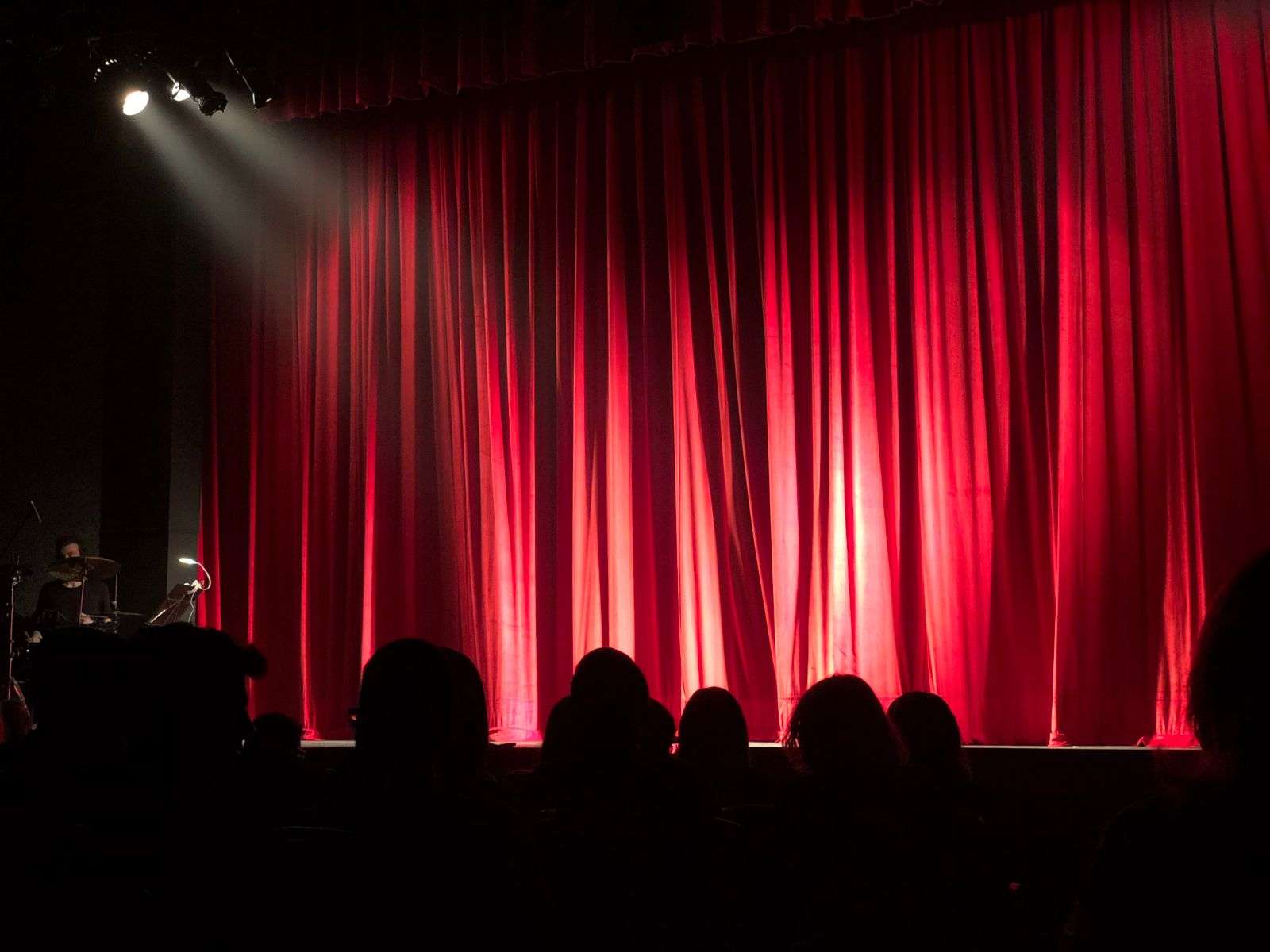
A downtown Mobile gallery scheming to survive, a ghost with a grudge, and an outsider artist who may not exist at all — that was the setup for Artbruted , a new comedy by local playwright Danielle Juzan that premiered this month at Space 301, the performance and exhibition venue operated by the Centre for the Living Arts in the heart of downtown Mobile. The play ran for a short weekend engagement, with performances Friday and Saturday, May 7 and 8, at 8 p.m., and a Sunday matinee on May 9 at 2 p.m.
Tickets were $15, and patrons were directed to reserve seats through Cindy Phillips, the Centre's box office contact, at 251-208-5677 or by email at [email protected]. A Comedy About Art, Money and Deception Artbruted centers on Marian, the owner of a struggling contemporary art gallery who cannot make rent. With help from the ghost of her deceased business partner, Mark, Marian hatches a scheme: she passes off the sculptures of a local soccer mom as the raw, untutored work of a supposedly illiterate "outsider" artist from the fictional town of Dead Mule, Mississippi.
A local art critic takes the bait, and the plot follows how long the ruse can hold up — and what it costs everyone involved when the truth threatens to surface. According to the Centre for the Living Arts, the play was billed as a witty and thoughtful examination of art's real versus perceived value — a theme that has long animated debates in the contemporary art world, where a piece's price tag and critical reception often hinge as much on the story behind the artist as on the work itself.
By setting that debate inside a comedy, Juzan gave Mobile audiences a chance to laugh at the art world's pretensions while still asking a serious question: what actually makes a piece of art valuable, and who gets to decide? Artbruted was directed by Dr. Ivan H. Davidson, and the cast featured Tracie Collier, Cannon Tucker, Kerri Chimento, Danielle Juzan herself, and Michael Green. The production marked the play's world premiere, giving Mobile theatergoers a first look at a work written specifically for a local stage by a member of the local arts community.
What "Outsider Art" Really Means The premise of Artbruted plays directly off a real and well-documented movement in the art world known as outsider art, or by its French name, art brut — literally "raw art." The term was coined by French artist Jean Dubuffet in the 1940s to describe work created by self-taught artists operating entirely outside the traditions and institutions of the mainstream art world: people with no formal training, often working in isolation, sometimes in psychiatric institutions or otherwise on the margins of society.
Background and Context
Dubuffet prized this work precisely because it was untouched by academic convention, arguing that it carried a rawer, more authentic form of creative expression than art produced within the establishment. Over the following decades, the term "outsider art" emerged in the English-speaking world as a broader umbrella for self-taught and visionary artists, and the category has since become a recognized (if still debated) niche within galleries, museums and the broader art market.
That history is exactly what gives Artbruted 's title its double meaning and its comic engine: a gallery owner exploiting the market's fascination with "authentic" outsider artists by manufacturing a fake one. It is a premise that pokes fun at how easily reputation, backstory and marketing can shape what critics and collectors decide to value — a tension that has followed the outsider art category since Dubuffet first defined it.
The Centre for the Living Arts and Space 301 The performance took place at Space 301, the venue operated in downtown Mobile by the Centre for the Living Arts, a nonprofit organization dedicated to presenting contemporary visual and performing arts to the Gulf Coast region. Housed in a landmark building in Mobile's historic downtown, the Centre served as a hub for exhibitions, film screenings, lectures and live performances, positioning itself as a gathering place where audiences could encounter work that might not otherwise find its way to south Alabama.
Downtown Mobile's arts scene has leaned heavily on venues like Space 301 to support local artists, writers and performers alongside touring exhibitions and other programming. For a local playwright, having a new work staged at a venue with the Centre's visibility and downtown location offered a meaningful platform — the kind of opportunity that smaller, emerging theatrical voices in a mid-sized city often have to work hard to find.
Local Theater in Mobile Mobile has a long-running community theater tradition, anchored by companies and venues that have given local writers, actors and directors room to develop new work outside the commercial pressures of larger markets. Original, locally written comedies like Artbruted occupy a particular niche in that ecosystem: unlike revivals of established scripts, a world premiere carries no built-in audience expectations, and its success depends entirely on the strength of the writing, the cast's chemistry and the director's vision for bringing a brand-new story to life for the first time.
Background and Context
That local pipeline of playwrights, directors and actors matters for a community's cultural life well beyond the run of any single show. New plays test out fresh ideas, give performers material tailored to their strengths, and often reflect back on the community that produced them — in this case, folding a fictional Mississippi outsider artist and a Mobile-area soccer mom into a story that pokes gentle fun at the contemporary art world from the inside.
A Short Run With a Modest Price of Admission At $15 a ticket for a three-performance run, Artbruted reflected the kind of accessible pricing typical of community and regional theater, aimed at making a night of live entertainment affordable for local audiences rather than positioning itself as a prestige or tourist-driven event. The single-weekend schedule — two evening shows and one matinee — is also a common format for smaller nonprofit venues staging original work, allowing a production to test its material with a live audience without the costs and logistics of an extended run.
For patrons who wanted more information or wished to reserve seats ahead of time, the Centre for the Living Arts directed inquiries to its box office contact, a common practice for smaller venues that rely on direct phone and email outreach rather than large-scale ticketing platforms to manage attendance for limited engagements. Why Local Premieres Matter Stories like Artbruted 's brief run at Space 301 are easy to overlook in the broader sweep of a city's news, but they represent an important thread in Mobile's cultural fabric.
A nonprofit arts center giving a local playwright a stage, a director shaping an original script for the first time, and a cast of area performers bringing new characters to life together form the kind of grassroots creative activity that sustains a city's arts scene between its bigger, more heavily publicized cultural events.
Whether or not a given production goes on to a longer life beyond its debut, premieres like this one give playwrights the chance to hear their words performed in front of an audience for the first time — and give Mobile theatergoers a chance to see something built specifically for their community, rather than imported from somewhere else.
Wider Significance for Coastal Alabama
This story is part of a broader set of changes playing out across Mobile, Baldwin and the wider Gulf Coast region. Local residents, businesses and government agencies have been watching developments like this one closely, because decisions made in Mobile and Baldwin counties often ripple outward into neighboring communities across south Alabama, Mississippi and the Florida Panhandle. Public meetings, council work sessions and state legislative hearings have all carried echoes of the underlying concerns, with stakeholders ranging from neighborhood associations to industry groups weighing in on what the outcomes will mean for daily life along the Gulf Coast. Reporters and editors in the region have worked to document how these issues affect ordinary people, from commuters on Interstate 10 to families visiting the public libraries and parks that anchor so many of the Port City’s neighborhoods. The deeper context often emerges over months rather than days, as projects move from announcement to planning to construction, and as the people most directly affected find their voices in the public record. Continued coverage remains important, both for accountability and for the historical record, and the unfolding situation is one that warrants attention from anyone with a stake in the future of south Alabama.
Looking ahead, observers across the region expect the conversation to continue evolving. Local officials have signaled their intent to monitor outcomes closely, and community organizations have indicated they will remain engaged as new information becomes available. The intersection of state policy, local implementation and on-the-ground impact is precisely where stories like this one tend to develop their lasting significance. For Mobile and Baldwin residents, the practical effects will play out over time, in everything from tax bills and utility rates to traffic patterns and the availability of public services. Following the developments requires patience and attention to detail, but it is also a reminder of how civic life in coastal Alabama continues to be shaped by decisions that begin far from the neighborhoods they ultimately touch. Residents who want to stay informed can do so by following local government meetings, attending public hearings when significant issues arise, and reading the regional reporting that tracks how these stories progress from one phase to the next.
Local news organizations continue to follow this story closely, and updates are expected as more details emerge. The developments have generated discussion across the region, with attention from both longtime residents and newcomers who are following the issue for the first time. Community leaders have emphasized the importance of staying engaged with local government and participating in public meetings when significant decisions are being made. As the situation continues to unfold, residents are encouraged to remain informed through reliable local reporting and official city and county communications channels. The story remains active, and additional information is anticipated in the coming days and weeks as the relevant agencies and stakeholders complete their work.