

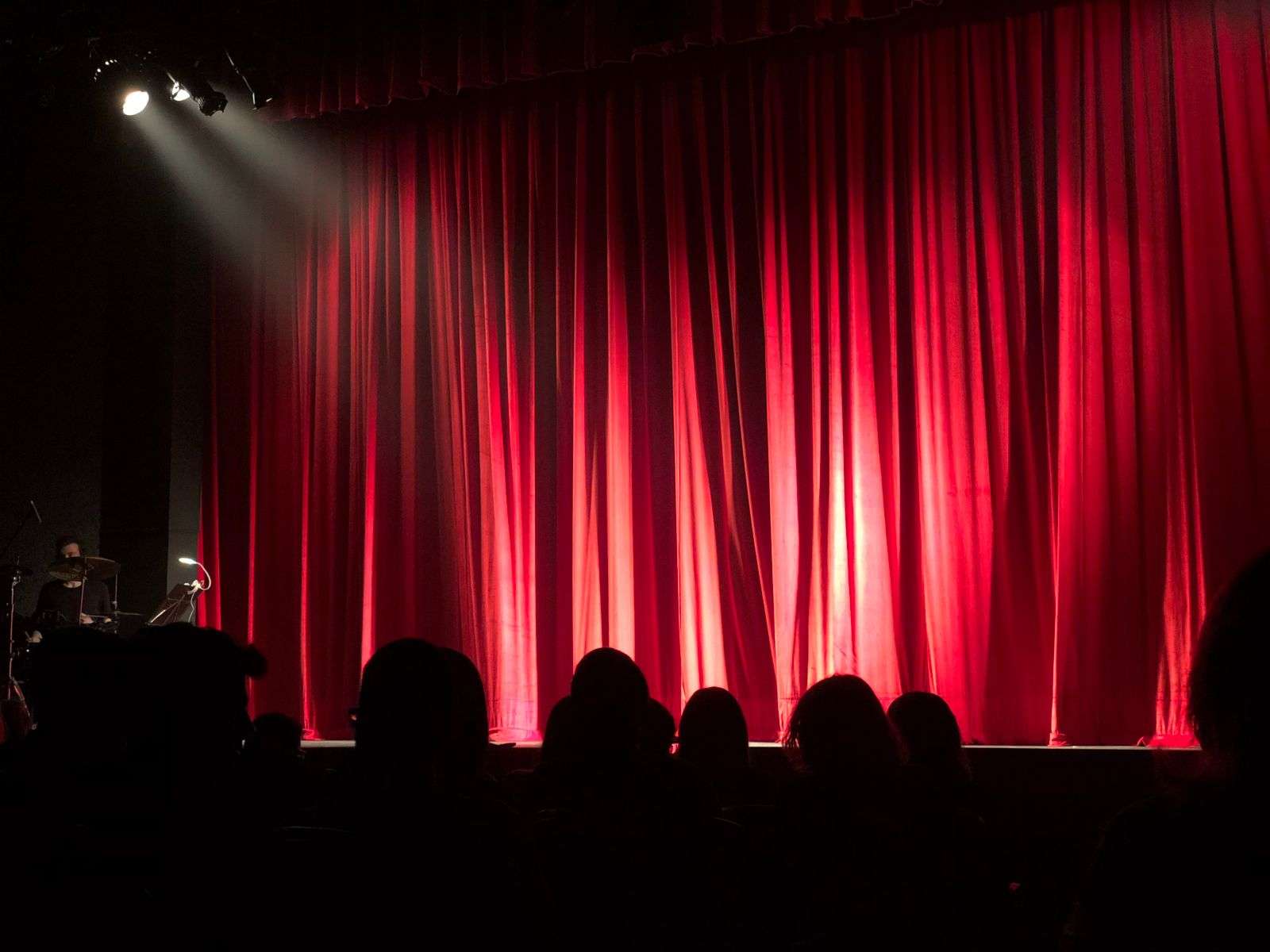
Chickasaw Civic Theatre (CCT) opens its 2010 production season this week with a staging of Mary Chase’s Pulitzer Prize-winning comedy “Harvey,” a fixture of the American stage since the 1940s that centers on one of theater’s most beloved odd-couple friendships: an amiable Elwood P. Dowd and his six-foot-tall invisible companion, a rabbit-like creature named Harvey that only Elwood can see.
The show is scheduled to run at the Chickasaw playhouse with performances on January 8, 9, 15, 16 and 17, giving South Alabama theatergoers two full weekends to catch the production. The play is directed by Leonora Harrison, and reservations can be made online or by calling the theater at (251) 457-8887.
A Pulitzer-winning comedy with staying power
“Harvey” has held a place in American theatrical tradition for more than 80 years. Mary Chase’s play premiered on Broadway on November 1, 1944, at the 48th Street Theatre and went on to run for 1,775 performances, an extraordinary tally for the era. The following year, Chase received the 1945 Pulitzer Prize for Drama, an honor that cemented “Harvey” as one of the defining American comedies of the mid-20th century.
The plot follows Elwood P. Dowd, a mild-mannered and unfailingly polite man whose closest friend is Harvey, a “pookah” — a creature from Celtic folklore said to be roughly six feet tall and shaped something like an oversized white rabbit, visible only to Elwood. Elwood’s genteel eccentricity becomes a source of mounting embarrassment for his socially ambitious sister, who eventually tries to have him committed to a sanitarium to preserve the family’s standing. What follows is a gentle, often absurd comedy of mistaken identity and misunderstanding, as doctors, family members and townspeople are drawn one by one into questioning what, exactly, they believe they can and cannot see.
Beyond its original Broadway run, “Harvey” became, in the words of theater historians, a staple of amateur and community theater companies across the country, prized for its blend of whimsy, warmth and gentle social satire. Its most widely recognized adaptation came in 1950, when Hollywood turned the play into a feature film starring James Stewart as Elwood and Josephine Hull, who won an Academy Award for her performance as his sister. The play has also seen a string of high-profile professional revivals since the late 1980s, at companies including Washington, D.C.’s Woolly Mammoth Theatre and Minneapolis’s Guthrie Theater, helping introduce the material to new generations of audiences even as it has remained a dependable choice for community and regional playhouses like CCT.
Chickasaw’s community theater tradition
Chickasaw Civic Theatre has been part of the cultural life of Chickasaw, Alabama, since 1963, when the group staged its first season with productions of “Our Town,” “Charley’s Aunt,” “The Mousetrap” and “Sabrina Fair.” What began as a small dramatic troupe expanded a decade later with its first musical, “The Boyfriend,” in 1973, and the organization has since built a repertoire that includes Broadway staples such as “Camelot,” “South Pacific,” “The Sound of Music” and, in more recent years, contemporary titles like “A Gentleman’s Guide to Love and Murder.”
Over its history, the theater has called several different venues home, starting in the Gulf Homes auditorium before moving through a former bottling plant and a scout hut. In 1973 the company settled into a space on Lange Drive next to Chickasaw City Hall, where it remained for more than three decades. In 1996, the theater’s home was renamed the Lola Phillips Playhouse in honor of the troupe’s longtime director, who was known for describing the venue as “the last of the intimate theaters” — a nod to the close, personal relationship between performers and audience that has long defined community theater in small Southern towns. CCT formally organized as a nonprofit charitable organization in 2000, a structure common among community playhouses that allows them to rely on ticket sales, memberships and local donations to fund productions rather than commercial investment.
Community theaters like CCT typically operate with an all-volunteer cast and crew, drawing local residents — teachers, retirees, students and working professionals alike — to fill roles both on stage and behind the scenes in directing, set construction, costuming and box-office duties. That volunteer model is part of what makes small-town theater distinct from professional or touring productions: it depends on a rotating pool of community members willing to donate their evenings and weekends to rehearsals in exchange for the chance to bring a script to life for their neighbors.
Chickasaw: a small city with an industrial past
The city of Chickasaw sits in east-central Mobile County, in Alabama’s southwestern corner, a short distance north of downtown Mobile. Its origins trace back to World War I, when the Tennessee Coal, Iron and Railroad Company purchased land along the Mobile River to build a shipyard and the housing needed to support its workforce, complete with water and sewer infrastructure that was advanced for its time. When the war ended before the yard could reach full production, many of those workers moved on, leaving behind a smaller community than planners had originally envisioned.
The shipbuilding industry that shaped the town’s identity returned in 1939, when the Gulf Shipbuilding Corporation, a subsidiary of the Waterman Steamship Corporation, reactivated the yard just ahead of the United States’ entry into World War II. During the war, the Chickasaw yard turned out dozens of vessels for military and merchant use, and the surrounding neighborhoods built to house shipyard workers later became part of the Chickasaw Shipyard Village Historic District, which is listed on the National Register of Historic Places.
Chickasaw also holds a notable place in American constitutional law: the 1946 U.S. Supreme Court case Marsh v. Alabama originated there in 1943, after a Jehovah’s Witness was arrested for distributing religious literature on the sidewalk of the company-owned town. The Court’s ruling — that a privately owned town open to the public could not restrict free speech rights any more than a municipally owned one — remains a foundational case in First Amendment law and is still taught in law schools today.
The town incorporated as a municipality in 1946, after the Leedy Investment Company began selling shipyard-era properties to residents and former workers, and it has functioned since as a close-knit suburb within the greater Mobile metropolitan area. According to the most recent decennial census figures, Chickasaw is home to several thousand residents, with employment concentrated in education, healthcare, retail and manufacturing. Despite its modest size, the city has maintained municipal parks, recreational programming and cultural institutions such as CCT that give residents reasons to gather close to home rather than driving into Mobile for entertainment.
Chase’s other work and the rise of “pookah” lore
Mary Chase, a Denver-born playwright and former journalist, wrote “Harvey” after drawing on Irish folklore surrounding the pookah, a shapeshifting spirit said to bring both mischief and good fortune to those it chooses to appear before. While she wrote numerous other plays and screenplays over her career, none matched the popularity of “Harvey,” which remains her best-known and most frequently produced work. The character of Harvey himself — never shown on stage, since he is visible only to Elwood and, at certain moments, to the audience’s imagination — has become something of a shorthand in American pop culture for the idea of an imaginary or unseen friend taken seriously by the people around him.
That staging choice, leaving Harvey unseen throughout the production, is itself part of what makes the play a perennial favorite for theater companies working with modest budgets: it requires no elaborate puppetry or special effects, relying instead on the cast’s performances to convince an audience that an invisible six-foot rabbit is very much in the room. For community theaters like CCT, that combination of a recognizable title, a manageable production budget and reliably strong local ticket interest makes “Harvey” a natural choice for launching a new season.
What to expect at the theater
For audiences unfamiliar with “Harvey,” the appeal lies less in spectacle than in character — the gentle comic tension between Elwood’s unwavering belief in his invisible friend and the escalating panic of those around him who fear he has lost his grip on reality. The play’s humor is warm rather than biting, and its themes — about kindness, nonconformity and the value of seeing the good in people even when the world insists on being practical — have helped it endure across generations of audiences who first encountered it on Broadway, on film or in a hometown playhouse much like CCT’s.
Community theater productions such as this one typically offer a more intimate viewing experience than larger commercial venues, with smaller houses that put audiences close to the action and ticket prices generally well below those of touring Broadway shows. For local residents, these productions also serve a civic function beyond entertainment, offering a low-cost cultural outlet and a chance to see friends, neighbors and local students perform.
Those interested in attending “Harvey” during its run at Chickasaw Civic Theatre are encouraged to reserve seats in advance, either online or by calling the box office at (251) 457-8887, particularly given the show’s limited run of five performances spread across two weekends. As with most community theaters, seating capacity is limited, and popular titles like “Harvey” — with its broad name recognition from the classic film adaptation — often draw strong local interest.
CCT’s decision to open its season with a classic like “Harvey” reflects a common approach among community playhouses: leading with a well-known, audience-tested title to draw in patrons before introducing less familiar or more ambitious works later in the season. For a theater with deep roots in a small Mobile County city, productions like this one continue a tradition of homegrown performance that has given Chickasaw residents a place to gather, volunteer and create together for more than six decades.