FBI Director James Comey Visits Mobile, Warns of Shifting Terror Threat
During a Mobile field office stop, FBI Director James Comey described a transformed terrorism threat and praised the region's local-federal law enforcement ties.
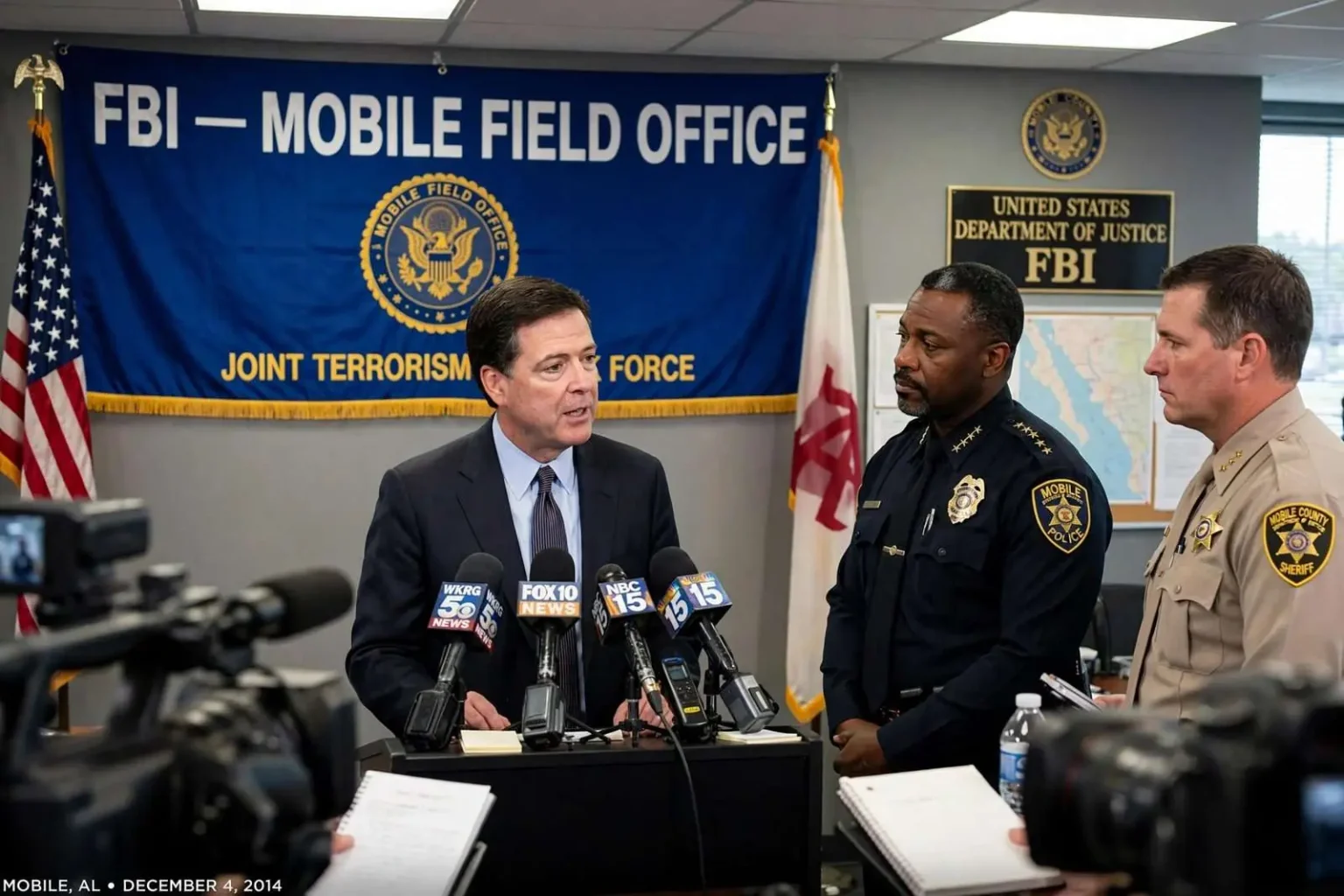
FBI Director James Comey brought a national security message to the Gulf Coast during a December 2014 stop at the bureau’s Mobile field office, using a news conference with local reporters to describe how the terrorism threat facing the United States had shifted and why local law enforcement had become central to countering it.
The Mobile visit, which followed an earlier stop in Birmingham, was Comey’s 54th of a planned 56 stops at FBI field offices around the country during his first 18 months leading the bureau. He said the tour was designed to learn what agents in each region needed, and that he had found a “transformed terrorism threat” compared with his previous government service in 2005. Likening the fight against al-Qaida to treating cancer, he said the core organization had been dramatically weakened since the death of Osama bin Laden, but that smaller extremist groups had spread into ungoverned corners of the globe.
One of the bureau’s biggest concerns, he said, was the growing number of Americans traveling abroad to join groups such as the Islamic State. He noted that the recruits came from all walks of life and spanned a wide range of ages. The issue was not abstract for the region: Comey pointed to a young man who had grown up in Daphne and traveled to Somalia to fight for an extremist faction before his death. “Their going there is worrisome,” Comey said. “Their coming back some day is more worrisome. There will be a terrorism diaspora.”
Flanked by law enforcement officials from across the area, Comey stressed that the first sign of a threat in a community like Mobile would most likely be noticed by a local police officer or sheriff’s deputy rather than a federal agent. Every field office, he said, operates a Joint Terrorism Task Force pairing federal agents with local officers. “It is nobody’s part-time job in Mobile or anywhere else,” he said, praising what he called a “fired-up law enforcement community.”
Mobile Police Chief James Barber echoed that assessment, saying his officers and the FBI interact daily at the working level and regularly among commanders. He described the Southern District of Alabama as having one of the strongest interagency relationships in the country.
Comey also emphasized the role of the public, saying that in nearly every homegrown terrorism case reviewed over the previous 15 years, someone had noticed something beforehand. He urged residents to report anything suspicious, assuring them that investigators work discreetly and take care not to harm the innocent.
During the wide-ranging session, the director touched on the tension between privacy and law enforcement access to digital data, changes to federal drug sentencing, and an unsolved local kidnapping case that had drawn national attention. On that case, he said only that he had been briefed in Washington and understood public frustration over the lack of information, adding that secrecy sometimes serves the investigation.
The Daphne connection
The Daphne man Comey described was Omar Hammami. He joined the Somali militant group al-Shabab and was killed in Somalia in 2013. Comey, a former deputy U.S. attorney general, became FBI director in September 2013.