Mobile Historic Commission Honors St. Mary Catholic Renovation and Oakleigh Research
The Mobile Historic Development Commission honored the St. Mary Catholic Church renovation and research into Oakleigh's Cook's House at its annual awards.
MOBILE, Alabama – The Mobile Historic Development Commission handed out its annual preservation awards during a Dec. 1 ceremony, honoring a major church renovation and a research project that rewrote the understood history of one of Mobile’s best-known historic properties.
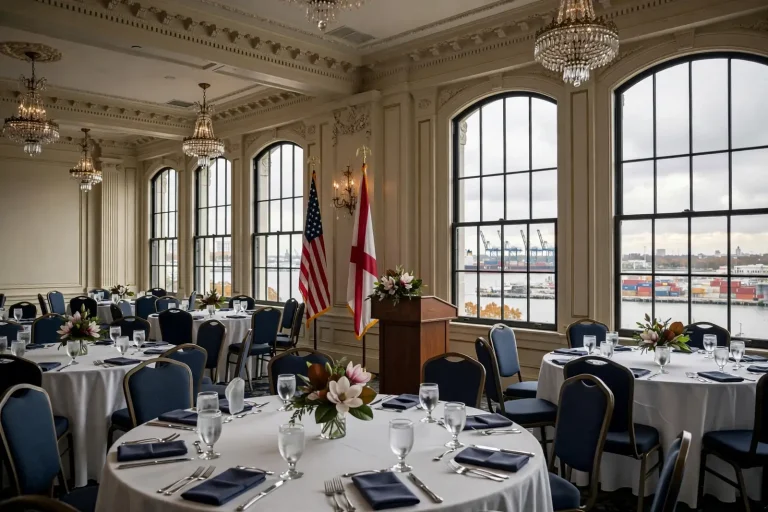
The ceremony, held at a restored Mediterranean Revival home in the Leinkauf Historic District, drew Mobile Mayor Sandy Stimpson along with commission leadership and local preservation figures. The evening’s host home itself was marking its own centennial, having been designed by architect William March and built in 1914 for a local physician in the Flo Claire neighborhood.
Research Award Honors Oakleigh Mansion Discovery
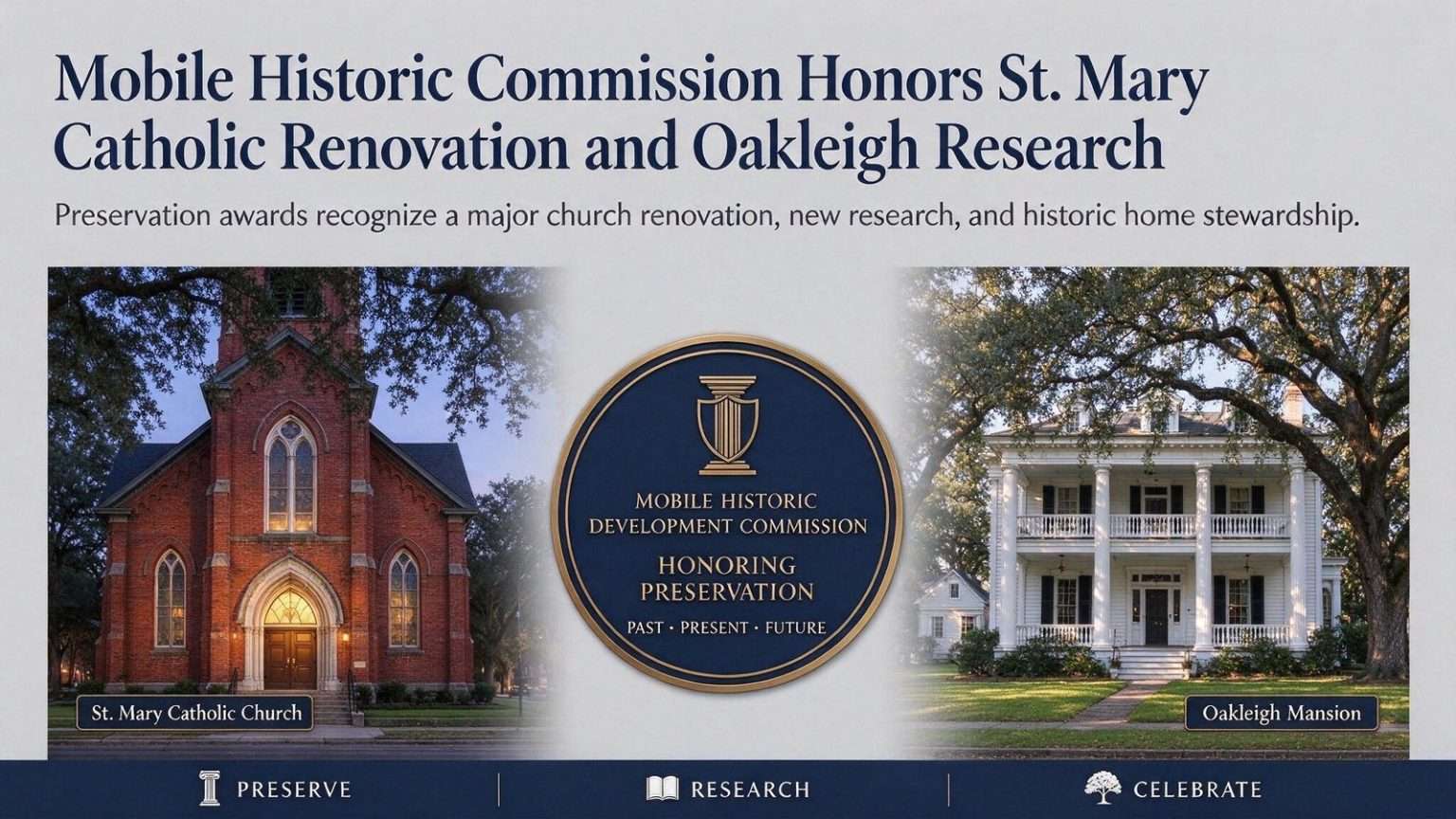
Among the top honors, the commission’s Gould Research Award went to the preservation and program director for the Historic Mobile Preservation Society and the commission’s assistant director for their research into the origins of the Cook’s House at Oakleigh Mansion. The small structure had long been assumed to be either a detached kitchen or servant quarters, but the pair’s research determined it was more likely built as a barracks for Union soldiers stationed in the area following the Civil War, a finding that reshaped how historians understand the property’s post-war use.
The commission’s Hitchcock Award, reserved for especially significant preservation projects and not awarded every year, went to St. Mary Catholic Church in Midtown Mobile in recognition of its roughly $1.2 million renovation. A commission vice president who helped present the awards said there was no question the parish had earned the honor. Parishioners celebrated the completed renovation with a special service the following weekend.
An architectural historian with the Alabama Historical Commission received the Samuel Eichold Award, named for a Mobile physician and preservation advocate who died in 2006, while a past commission president received a certificate of commendation for his years of service.
Banner and Shield Program Honors History
The ceremony also included the commission’s ongoing banner and shield recognition program, awarding markers to 10 homeowners across the Church Street East, Leinkauf, Oakleigh Garden and Old Dauphin Way historic districts. To qualify, a home must be at least 75 years old and located within one of Mobile’s seven designated historic districts, or individually listed on the National Register of Historic Places. Each banner displays the names of both the home’s original and current owners, while the accompanying shield bears the symbols of the six flags that have historically flown over Mobile.
Commission officials said the markers serve a practical purpose beyond recognition, noting that a banner and shield display can add roughly $10,000 in value to a historic home, comparable to the curb-appeal boost of a mature live oak tree. Homeowners must apply and pay a $125 fee, with a commission committee reviewing applications twice a year. Commission leaders said they hope to see more historic district homeowners apply for the distinction in the years ahead.