

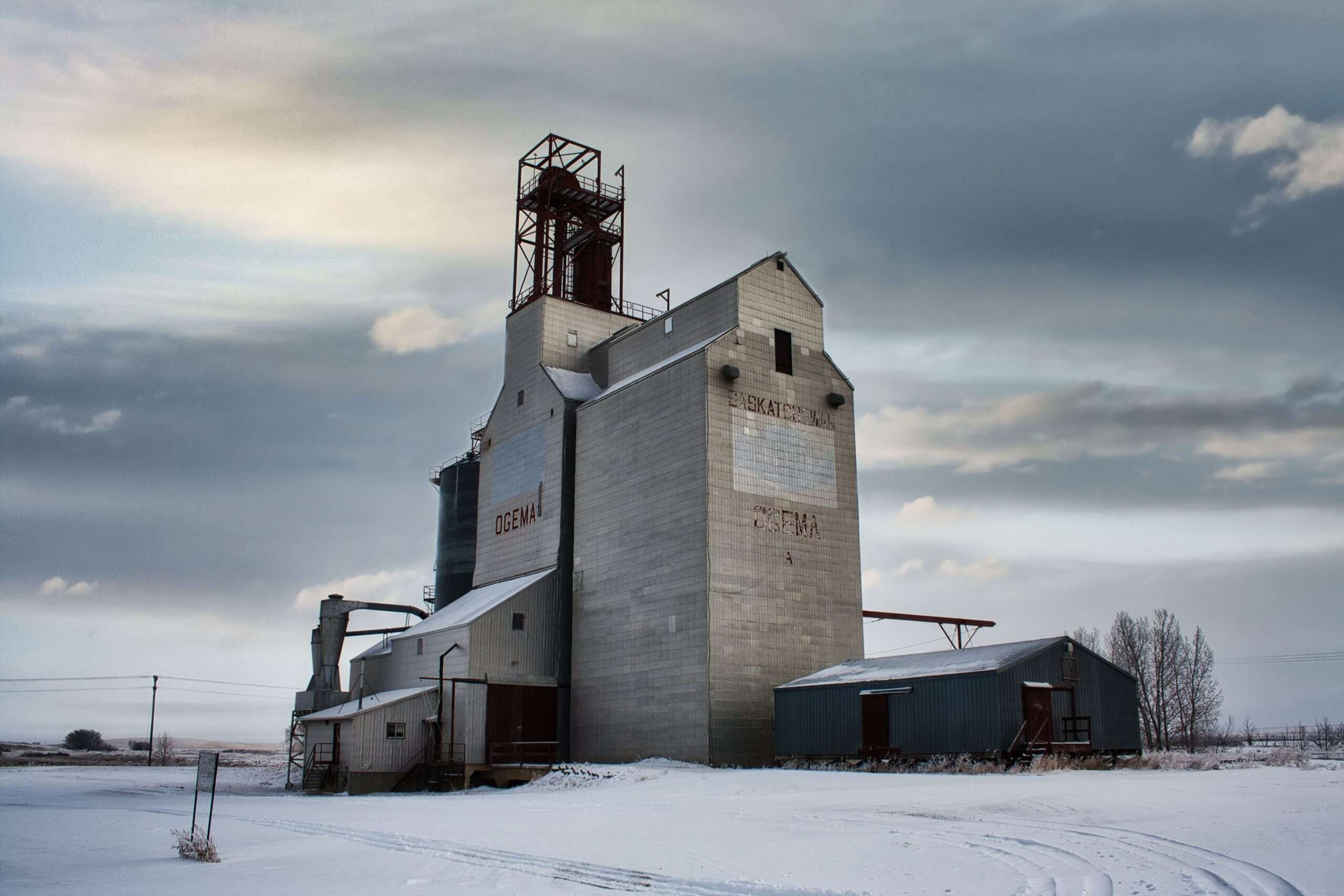
A fire destroyed the office building and warehouse at Tensley Grain in Walnut Hill on Tuesday evening, leveling a longtime agricultural business just across the state line from south Alabama in Escambia County, Florida.
The blaze broke out at the facility on Arthur Brown Road, and the structures were already heavily involved in flames by the time the first firefighters arrived on scene. Fire at a grain operation poses particular dangers for responders — stored grain, dust, equipment and fuel concentrate in and around the same buildings — and crews on Tuesday evening faced a fully involved fire rather than an early-stage one, leaving containment rather than rescue of the structures as the realistic goal.
Crews worked to contain the fire to the office and warehouse buildings, and the effort succeeded in sparing the property’s elevated grain storage silos, which were not damaged in the blaze. Keeping fire off the silos mattered both for safety and for the business itself: the tall steel structures hold the grain that is the heart of a country elevator’s operation, and their survival leaves the facility’s core function standing even as its offices and storage buildings were lost.
No injuries were reported among employees, responders or bystanders, and fire officials say the investigation into what sparked the fire was just getting underway in the hours afterward. Additional details, including a possible cause and the extent of the financial loss, are expected as investigators complete their work at the scene.
A business known by two names
Tensley Grain has operated under that name for a number of years but is still known to many longtime residents by its former name, Escambia Grain, a reflection of how central the business has long been to the agricultural community straddling the Alabama-Florida line.
Businesses that change hands but keep their customer base often carry two names for a generation, and in rural farming country the older name sticks. For farmers who have hauled grain to the site for decades, the switch from Escambia Grain to Tensley Grain changed the sign more than the service — the scales, the pits, the elevators and the relationships remained the same across the ownership change.
Businesses that change hands but keep their customer base often carry two names for a generation, and in rural farming country the older name sticks. For farmers who have hauled grain to the site for decades, the switch from Escambia Grain to Tensley Grain changed the sign more than the service — the scales, the pits, the elevators and the relationships remained the same across the ownership change.
That continuity is the quiet story behind every rural fire like this one. A country elevator is not just a business but a fixture of the crop calendar: neighbors measure the season by when the dryers start running and the trucks start lining up on the road outside. When the building burns, the community loses a landmark it never had to think about, and only then realizes how much of the year’s routine ran through it.
The days after such a fire are spent on logistics as much as grief. Owners contact insurance adjusters and equipment suppliers; customers call to ask whether deliveries are still happening and where to bring grain; and the staff begins the careful work of reconstructing records, accounts and contracts from whatever survived. Neighboring businesses often step in informally, lending space or equipment, because in a farming community the elevator’s customers are everybody’s neighbors.
What a country elevator does
Grain elevators and feed and seed operations like this one serve as a hub for area farmers, offering storage, drying and handling services for corn, soybeans and other row crops grown throughout the Florida Panhandle and adjoining Alabama counties.
The work is seasonal and unforgiving in its timing. At harvest, trucks line up at the scales with loads that must be weighed, sampled, tested for moisture and either dried to storable levels or moved out quickly; a dryer running around the clock is the difference between grain that keeps and grain that spoils in the bin. Through the rest of the year, the same operation sells seed, feed and supplies to farms across the area and stores grain until markets and buyers call for it.
Losing the office and warehouse disrupts that chain at exactly the wrong time of year if harvest is approaching. Offices hold the scales, records and contracting paperwork; warehouses hold seed, equipment and bagged product. Farmers who depended on the facility for drying and storage in the coming season face immediate questions about where their crops will go, and neighboring elevators in Atmore, Flomaton, Century and farther afield become the fallback — at the cost of longer hauls on rural roads never designed for heavy grain traffic.
Insurance typically covers a portion of a fire loss, and the surviving silos give the business something to rebuild around. Country elevators have weathered such losses before on the Gulf Coast, where lightning, equipment fires and summer heat make fire a persistent occupational hazard, and communities usually rally around operations that anchor the local farm economy.
Walnut Hill and the state-line economy
Walnut Hill is an unincorporated community in far northern Escambia County, Florida, sitting just south of the Alabama state line and closely tied both economically and socially to the small towns on the Alabama side, including nearby Century, Florida, and the Atmore and Flomaton areas of Alabama.
Fire response in a rural county unfolds differently than in a city. Water must be shuttled by tanker from fill sites; mutual-aid departments are summoned by radio across wide distances; and a commercial fire at an agricultural facility adds hazards — dust, machinery, stored fuel, and the sheer scale of the buildings — that small volunteer-based departments train for but face only rarely. That the fire was contained to the structures where it started, with the silos saved and no one hurt, represents the kind of outcome rural fire chiefs point to when they argue for funding, equipment and training across county and state lines.
The scale of the loss will become clearer as investigators and the business’s owners complete their assessments. Warehouse contents, office records, and the building structures themselves all factor into a claim, and agricultural facilities present valuation questions of their own — the replacement cost of specialized grain-handling infrastructure is far above what comparable square footage would suggest.
State lines barely register in daily life in this corner of the Gulf Coast. Residents of Walnut Hill shop, worship, attend school events and visit doctors in Atmore or Century depending on which is closer, and farmers’ fields can straddle the boundary in a way that makes the line an administrative detail rather than a dividing one. Emergency response follows the same pattern — volunteer departments in the rural north Escambia County communities assist one another and their Alabama counterparts as a matter of routine, which is how a Tuesday evening fire becomes an all-hands event for a handful of small departments.
The agricultural web that surrounds the burned facility stretches across both states. Row crops and timber dominate the landscape of northern Escambia County and neighboring Escambia and Conecuh counties in Alabama, with peanuts, corn, soybeans and cotton planted in rotation on family farms that have worked the same ground for generations. Businesses like Tensley Grain sit at the center of that economy — the place where the harvest goes, where seed comes from, and where the season’s success is finally measured at the scale.
The road ahead for the farming community
Agriculture remains a significant part of the local economy in this rural stretch of the Panhandle, and the loss of a grain business’s office and warehouse can ripple through the surrounding farming community, disrupting storage and logistics during harvest and leaving farmers to adjust their plans in midseason.
The immediate effects are practical. Trucking schedules change; drying capacity shrinks; feed and supply deliveries may slow while the business regroups. Farmers who contracted grain for delivery will want answers about where to take it, and the business’s staff — who know their customers by name and field — face the work of rebuilding records and routines from a ruin.
Communities like Walnut Hill have watched businesses burn and rebuild before, and the survival of the silos offers a starting point: the infrastructure that handles grain can outlast the buildings that house the people and paperwork. What the coming weeks will determine is whether the facility resumes operation during the coming harvest season and how quickly the surrounding farms can reroute the work that flowed through Arthur Brown Road for so many years.
Investigators will work to determine the cause in the days ahead, and the fire departments that responded will account for the cost in fuel, hours and wear. For now, the farming community on both sides of the state line is left with the same arithmetic every rural fire leaves behind: gratitude that no one was hurt, relief that the silos survived — and a long list of what has to be rebuilt.