

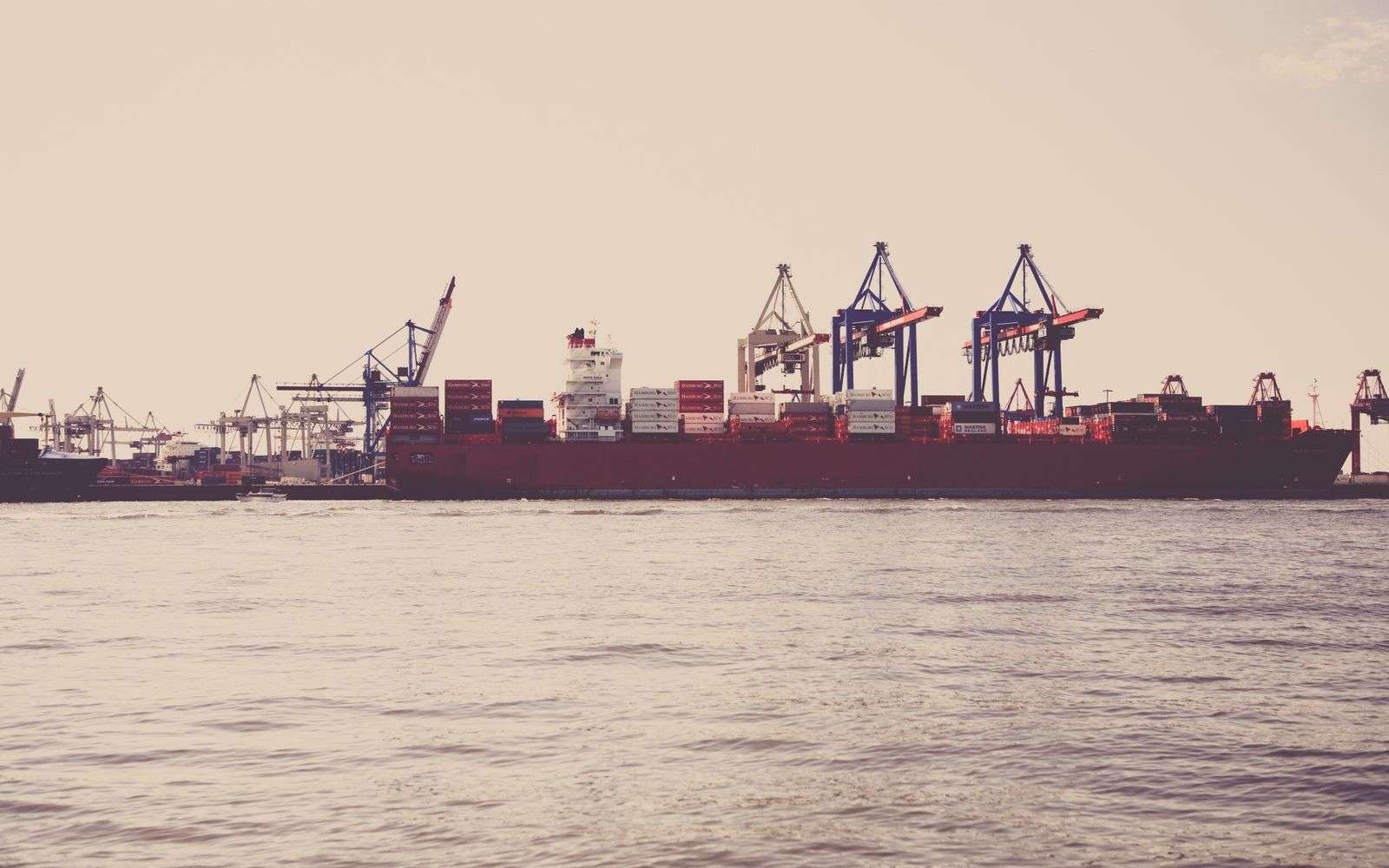
Fitch Ratings has upgraded the Alabama Port Authority’s bond rating, pointing to stronger debt coverage, modest leverage and a broadening mix of revenue sources at the Port of Mobile. The upgrade marks a vote of confidence from the credit markets in the direction of Alabama’s seaport, and it arrives as the Port Authority works through a capital program that is reshaping its facilities for the next generation of cargo.
The agency raised its rating on roughly $221.6 million in outstanding dock facility revenue bonds to “A-” from “BBB+” and assigned a stable outlook, according to a July 24 report. The Port Authority also carries about $93.9 million in parity debt that Fitch does not rate. An upgrade of two full notches is a significant move in the ratings world, and it translates directly into borrowing costs: the higher the rating, the lower the interest rate investors demand.
“This recognition reflects the thoughtful approach our leadership team and board have taken to growing the Port,” Alabama Port Authority Director and CEO Doug Otto said. “We’re continuing to invest in modern facilities and infrastructure while maintaining a strong financial foundation. That puts us in a position to better serve our customers and continue driving economic development across Alabama.”
Fitch said the upgrade reflects the Port Authority’s improved financial position, greater revenue diversification over recent years and continued execution of major capital projects without taking on additional borrowing. All three factors speak to the same underlying discipline: a port that has grown its business while strengthening the balance sheet that funds it.
What the rating means
Bond ratings are the shorthand of public finance. Revenue bonds like the Port Authority’s dock facility bonds are repaid not from taxes but from the revenues the facility generates, so a rating is effectively a judgment about the reliability of those revenues. Fitch’s move from “BBB+” to “A-” moves the Port Authority deeper into investment-grade territory, a category that widens the pool of institutional investors willing to hold its debt and improves the terms it can command when it returns to the market.
The stable outlook signals that Fitch expects the improved position to hold over the near term, neither deteriorating nor improving quickly enough to force another action. For the Port Authority’s finance team, the rating functions as both validation and obligation: the credit was earned through coverage, leverage and diversification, and keeping it means keeping those metrics healthy.
The roughly $93.9 million in parity debt that Fitch does not rate sits alongside the rated bonds with equal claim on the Port’s revenues. Rating agencies typically note unrated parity obligations in their analysis because they affect the total debt burden, and Fitch’s report accounted for that leverage in reaching its conclusions.
Coal, steel and the exposure question
Alabama remains the second-largest exporter of metallurgical coal in the United States, and the Port’s operations continue to lean heavily on coal and steel, which together account for a substantial share of its revenue and cargo tonnage. The connection is structural: the Port sits at the southern end of a logistics chain that runs from Alabama’s coal mines and steel mills to the Gulf of Mexico and the world’s steelmaking markets.
Fitch’s report noted that performance in those commodities depends on global market conditions and could expose the Port to swings in demand. Metallurgical coal tracks worldwide steel production, which rises and falls with construction cycles and industrial policy half a world away. When global steel demand slumps, the tonnage moving across the Port’s docks can fall quickly, and with it the revenue that services the bonds.
That exposure is the central risk in the Port Authority’s credit story, and it is the reason diversification — not just growth — dominates the upgrade rationale. A port that depends on two commodities is a leveraged bet on those commodities; a port with growing container business, general cargo and other revenue lines is a portfolio.
Containers as the diversification engine
At the same time, growth in the Port’s container-handling capacity is expected to support long-term expansion while gradually reducing its dependence on coal and steel. Containerized cargo — the boxed goods of global trade, from consumer products to agricultural exports — behaves differently from bulk commodities, spreading across many customers, markets and seasons rather than concentrating in a few industries.
Building that capacity has been the focus of the Port Authority’s capital program, with investments in terminals, equipment and infrastructure designed to capture a larger share of container traffic on the Gulf. Every container line added diversifies the revenue base, and every year of container growth trims the percentage share that coal and steel represent, even if their absolute tonnage holds steady.
Fitch pointed to the Port’s efficient rail, highway and water access, along with limited regional competition, as factors that help offset commodity-related risk — and said the shift toward containers and other business lines has added further revenue protection. The Port’s inland connections matter enormously: rail lines and interstate highways carry Alabama’s manufacturing output to the docks, and the barge system links the state’s river system to the Gulf.
The competitive geography helps as well. Between New Orleans and the Florida panhandle, few deepwater ports compete directly for Mobile’s hinterland, giving the Port a durable franchise in its region. That limited competition, combined with the diversification underway, underpins Fitch’s confidence that the Port’s revenues can weather commodity cycles.
Customer relationships and rate flexibility
That diversification, combined with long-standing relationships with major customers, gives the Port Authority greater financial stability and some flexibility to adjust rates, according to Fitch. In the port business, contracts with steamship lines, terminal operators and cargo owners are the bedrock of revenue, and the tenure of Mobile’s customer relationships signals the kind of reliability rating agencies prize.
Rate flexibility is the quieter advantage. A port that must compete on price to hold its traffic has little room to raise revenues when costs rise; a port whose customers are committed and whose service is differentiated can adjust tariffs modestly without driving business away. That pricing power, even at the margin, strengthens the coverage metrics that bondholders watch.
For the state, the upgrade carries meaning beyond the docks. The Port of Mobile is an economic engine for Alabama — a gateway for the state’s exports, a link in the supply chains of its manufacturers and an employer in its own right and through the industries that cluster around it. Cheaper capital and stronger credit make the Port a better instrument for the state’s broader trade ambitions.
The capital plan ahead
The Port’s capital plan remains substantial, with most spending scheduled for 2026 and 2027. Fitch expects that work to be funded primarily through grants and federal and state support, along with internally generated cash, rather than new debt — an approach that protects the leverage profile even as the Port invests heavily.
Funding major projects through grants and internal cash rather than borrowing is unusual among American ports, many of which finance terminal expansions with substantial bond issues. For Mobile, the strategy reflects both disciplined management and the availability of federal and state support for port infrastructure, and it allows the Port to grow capacity without stretching the coverage that earned the upgrade.
Fitch said it could raise its infrastructure assessment further once the Port Authority completes its remaining projects over the next several years. Completed capital projects, in the agency’s framework, demonstrate execution — the ability to deliver facilities on plan — and reduce the uncertainty that tempers a credit rating while construction is underway.
A downgrade, on the other hand, could follow if persistent volatility in coal and steel tonnage — or additional borrowing — causes debt service coverage to weaken without state support. The conditions Fitch set out are the mirror image of the upgrade case: the same commodity concentration that diversification is eroding remains the swing factor, and the same discipline about debt remains the guardrail.
For now, the trajectory points the other way. A two-notch upgrade, a stable outlook and a capital plan financed without new debt have given the Alabama Port Authority one of the stronger credit stories on the Gulf — and given Alabama’s exporters a seaport positioned, financially and physically, for the trade of the next decade.
The Port of Mobile’s role in Alabama’s economy
The Port of Mobile is one of the oldest Gulf seaports in America, and its fortunes have tracked the state’s economy for more than two centuries. Cotton once ruled its docks; today the cargo mix runs from Alabama-made automobiles and steel to forest products, chemicals, coal and containerized goods of every description. What has not changed is the port’s function as the state’s gateway to global trade — the point where Alabama’s production meets the world’s markets.
That function makes the Port Authority’s creditworthiness a matter of broad economic interest. Manufacturers across the state depend on the Port’s rail, highway and barge connections to move exports competitively, and the industries clustered around Mobile’s waterfront — terminal operators, stevedores, warehouses, trucking and rail operations — draw their business from the cargo moving across the docks. A port with cheaper capital and stronger facilities is better positioned to win the shipping lines whose services anchor a region’s trade connectivity.
The metallurgical coal trade illustrates the stakes. Alabama’s coal mines ship much of their export volume through Mobile, and the steel industry that coal feeds depends on the same logistics chain. Every element of that chain — the mines, the mills, the railroads, the port — shares an interest in the trade’s health, which is why the commodity concentration Fitch flagged is not merely a bondholder’s concern but a statewide economic variable.
How ratings moves ripple through public finance
An upgrade of this size sends practical signals well beyond the bond desk. For the Port Authority, it lowers the cost of any future borrowing and expands the universe of investors who can hold its paper. For the agencies and governments that partner with the Port, a stronger credit reflects well on the public entities behind it and can ease the terms of the grants and cooperative agreements that fund public infrastructure.
Rating agencies look at port credits through a consistent lens: the diversity and durability of cargo revenues, the strength of the service area economy, the leverage and coverage on the balance sheet, the capital plan’s demands, and the quality of management. Mobile’s two-notch improvement suggests progress on most of those dimensions at once — revenues diversifying, coverage strengthening, capital spending disciplined and management executing.
The competitive implications matter as well. Gulf ports are in a race for container traffic as shipping lines consolidate services and cargo volumes grow, and the ports that can finance modern facilities at reasonable cost hold a durable advantage. Mobile’s upgraded rating and debt-light capital plan put it in that company, backing the container capacity investments that Fitch expects to carry the Port’s long-term growth.
None of that guarantees calm waters — commodity markets, global trade cycles and hurricanes all remain facts of Gulf Coast life. But credit ratings measure resilience, and on July 24, Fitch concluded that the Alabama Port Authority has built more of it: a broader revenue base, a manageable debt load and a plan to grow without borrowing its way there. For Alabama’s gateway port, that judgment is worth more than its letter grade — it is the financial foundation under the next phase of the Port’s expansion.