Flood Insurance Claim Deadline Extended for Mobile-Area Storm Victims
Alabama homeowners hit by the late April flooding now have an extra 30 days to file National Flood Insurance Program claims for storm damage.
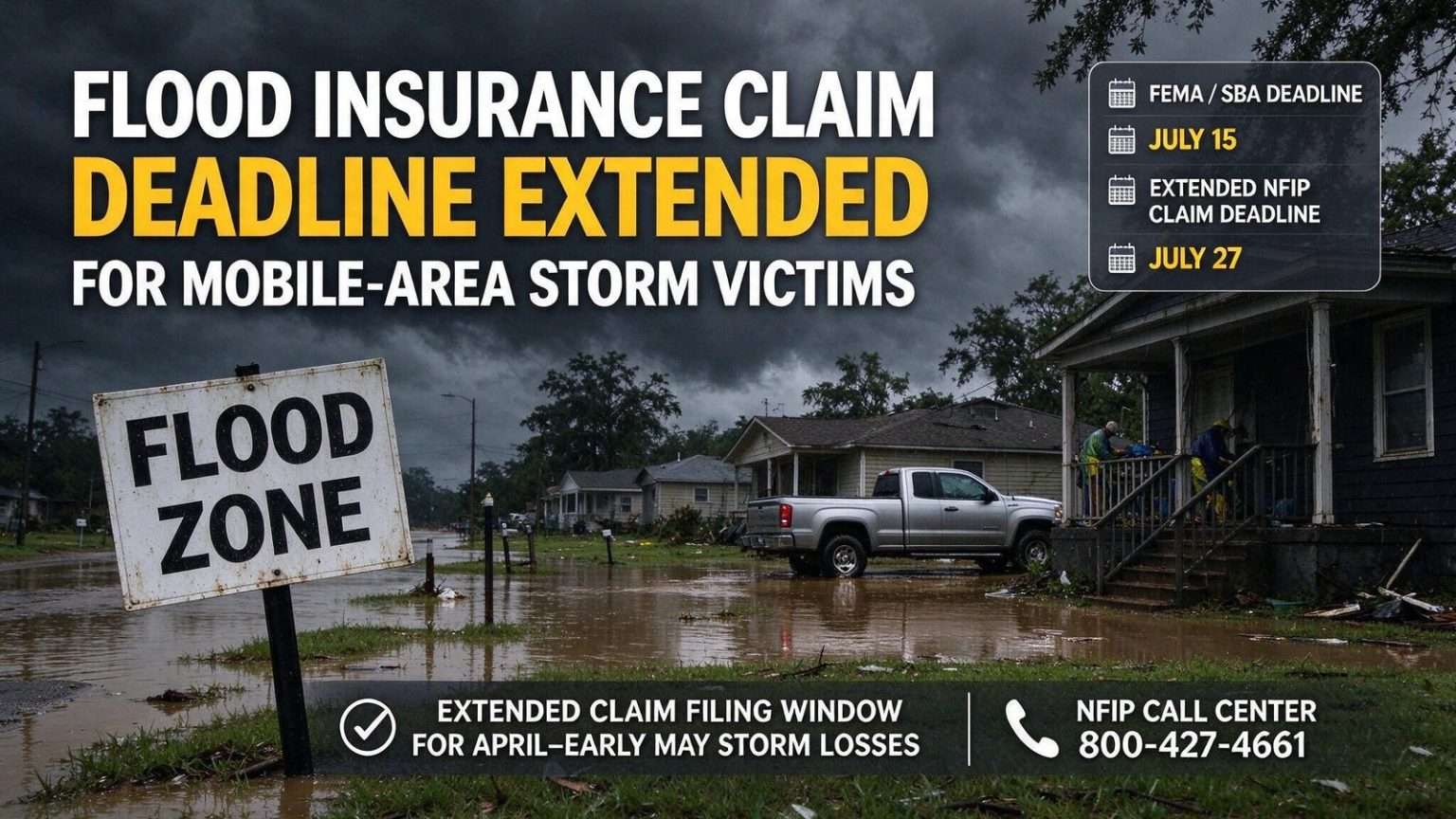
Homeowners across the Mobile area who suffered flood damage during the severe storms that struck between late April and early May are getting extra time to file insurance claims. The National Flood Insurance Program has agreed to extend its usual claim-filing window by 30 days for anyone covered under a flood policy who lost property during that stretch of storms, giving affected Alabama residents additional breathing room as they work through repairs.
Under normal rules, flood insurance policyholders must file a claim within 60 days of the date their property was damaged. With so many households dealing with extensive water damage from the spring storms, the program opted to waive that standard timeline and add a full extra month.
In practical terms, a homeowner whose loss occurred on April 28 now has until July 27 to get a claim filed rather than facing a late-June cutoff. For families still pulling out drywall, waiting on contractors or sorting through ruined belongings, the difference between the two deadlines can determine whether a legitimate claim gets paid at all.
The extension covers both Standard Flood Insurance Policies written directly through the Federal Emergency Management Agency and those issued by private insurance companies participating in the federal program’s Write Your Own initiative, meaning the vast majority of flood policyholders in the region are covered by the change.
How the National Flood Insurance Program Works
The National Flood Insurance Program, administered by FEMA, has been the backbone of flood coverage in the United States since its creation in 1968. Standard homeowner insurance does not cover flood damage, which leaves the NFIP — and the private insurers who write NFIP policies under the Write Your Own program — as the primary financial protection for Gulf Coast homeowners whose properties take on water.
Participation in the program is tied to community-level floodplain management: local governments adopt and enforce building and zoning standards designed to reduce future flood risk, and in exchange residents gain access to federally backed policies. That structure matters in south Alabama, where communities along Mobile Bay, Dog River, Three Mile Creek and the creeks and bayous of Baldwin County flood repeatedly even outside hurricane season, as the spring storms demonstrated.
The 60-day claim-filing rule exists in part because flood claims depend on timely documentation of damage, but disaster-scale events frequently overwhelm contractors, adjusters and cleanup crews, leaving policyholders unable to complete the paperwork on schedule. Extensions like this one have become a standard federal response when a storm event is broad enough to strain the normal timeline across an entire region.
Not every deadline tied to the storms has moved, however. Residents still hoping to register for FEMA disaster assistance or apply for low-interest recovery loans through the U.S. Small Business Administration need to do so by July 15, a date that has not been extended.
The distinction matters because the three programs serve different purposes and run on separate clocks. Flood insurance pays according to the policy a homeowner purchased, up to its limits. FEMA disaster assistance, available only in areas where a federal disaster declaration has been issued, provides grants for essential repairs and temporary housing needs that insurance does not cover. Small Business Administration disaster loans — available to homeowners as well as businesses — offer low-interest credit for rebuilding beyond what insurance and grants reach, and the SBA application is often a required step in the federal recovery chain before other aid can be considered.
Homeowners who miss the July 15 registration deadline for those programs may lose access to assistance entirely, even if their insurance claim remains open under the extended deadline. Recovery officials urge anyone with storm damage from the late-April-through-early-May period to register with FEMA and the SBA first, then work the insurance claim in parallel rather than sequentially.
Filing a Claim: What to Expect
For those working through a flood claim, the process starts with a call to the insurance agent or company that issued the policy. An adjuster is typically expected to reach out within a few days of a claim being filed; homeowners who don’t hear back within that window are encouraged to follow up directly with their insurer rather than wait.
The adjuster’s job includes documenting damage to the home and its contents well enough to prepare a repair estimate, and ultimately issuing what’s known as a Proof of Loss form. That signed document is required before any payment can be issued, and a claim isn’t considered complete until both the policyholder and insurer agree on the damage amount and the form has been submitted.
Preparation makes the adjuster visit faster and more accurate. Homeowners are advised to photograph or video all damaged areas before cleanup begins where possible, keep receipts for temporary repairs and emergency purchases, set aside damaged items when an insurer asks for inspection, and maintain a running inventory of lost furnishings and belongings with their approximate values. Flood policies generally distinguish between coverage on the structure and coverage on contents, and each category is documented separately through the claim.
The Proof of Loss step is where delays most often develop. Disagreements over repair estimates, missing documentation and disputes over whether particular damage was caused by flooding — as opposed to wind or other perils flood policies exclude — can hold up the signed form and, with it, payment. Policyholders who hit an impasse with their insurer can ask questions through the program’s support channels while working toward resolution.
Homeowners with general questions about flood coverage, the claims process or the extended deadline can reach the National Flood Insurance Program’s call center at 800-427-4661, including through relay service for those who need it.
The call center can walk policyholders through the mechanics of the extension, explain what documentation the program expects and clarify the difference between the insurance claim and the FEMA and SBA deadlines that remain fixed at July 15. Staff can also direct callers to relay options for residents who are deaf, hard of hearing or have speech disabilities.
Why the Deadline Matters on the Gulf Coast
The spring storms that prompted the extension were part of a pattern south Alabama residents know well: multi-day rain events that flood streets, back up drainage systems and push water into homes miles from any bay or riverfront. Coastal counties in Alabama have some of the highest numbers of repetitive-loss flood properties in the country, and each event adds new households to the ranks of first-time flood claimants unfamiliar with the program’s procedures.
Recovery specialists note that the 30-day extension should not be read as permission to wait. Adjuster backlogs, contractor scarcity and Proof of Loss disputes all take time, and policyholders who file early preserve their ability to appeal a low estimate or supplement a claim if additional damage surfaces during repairs. Filing also starts the clock on the adjuster contact window, which is often the longest single waiting period in the process.
For homeowners who did not carry flood insurance during the storms, the recovery options narrow to the FEMA and SBA channels, where the July 15 registration deadline now carries even greater weight. Those residents are encouraged to register before the cutoff even if their damage appears minor, because federal assessors may identify eligible losses that are not obvious in the weeks after a flood.
Officials expect the extended window to absorb the majority of outstanding claims from the spring event. Once a policyholder’s Proof of Loss is signed and the damage amount is agreed upon, payment follows through the issuing insurer — whether FEMA itself or the private company that wrote the policy — and the homeowner can move forward with contractors on the repair work the storms interrupted.
The extension also reflects lessons federal agencies learned from earlier Gulf Coast disasters, when strict filing windows left thousands of legitimate claims unpaid because homeowners were still displaced, uninsured contractors were scarce and adjusters were backlogged for months. After those events, policymakers built more flexibility into the program’s disaster response, and deadline extensions for large-scale events are now a routine part of the recovery toolkit.
Insurance agents in the Mobile area have been passing the extension along to clients, but officials caution that word-of-mouth is uneven. Renters who carried NFIP contents policies, owners of second homes and buyers whose policies were issued through mortgage servicers may not hear about the extended window through local channels, making the call center the most reliable source for confirming where a particular policy stands.
Another practical note for claimants: flood policies typically include coverage for certain measures taken to protect the property and for debris removal, and the adjuster’s documentation should capture those categories along with structural and contents damage. Homeowners who reimburse themselves out of pocket for pumps, tarps, dumpsters and cleaning should keep every receipt, because some of those expenses can be folded into the claim when the Proof of Loss is finalized.
Residents navigating the process for the first time are also encouraged to keep a written log of every call, adjuster visit and estimate — including dates, names and reference numbers for the claim. When the eventual payment amount is disputed or supplemented, that record becomes the backbone of the policyholder’s case, and it shortens the conversations that resolve disagreements over the damage amount.
The spring storm event was a reminder of how broadly flooding reaches across the Mobile area, hitting homes well outside mapped flood zones where insurance was optional rather than required by mortgage lenders. For those households, the extended NFIP window and the fixed July 15 deadline for FEMA and SBA programs together define the recovery calendar — insurance claims by late July, assistance registration by mid-July, and repairs in the months that follow.