Mobile Nonprofit’s Losses Climb Past $46,000 in Stolen Credit Card Case
What began as an $8,000 credit card theft from a Mobile nonprofit has grown to more than $46,000 as investigators dig deeper into the fraud.
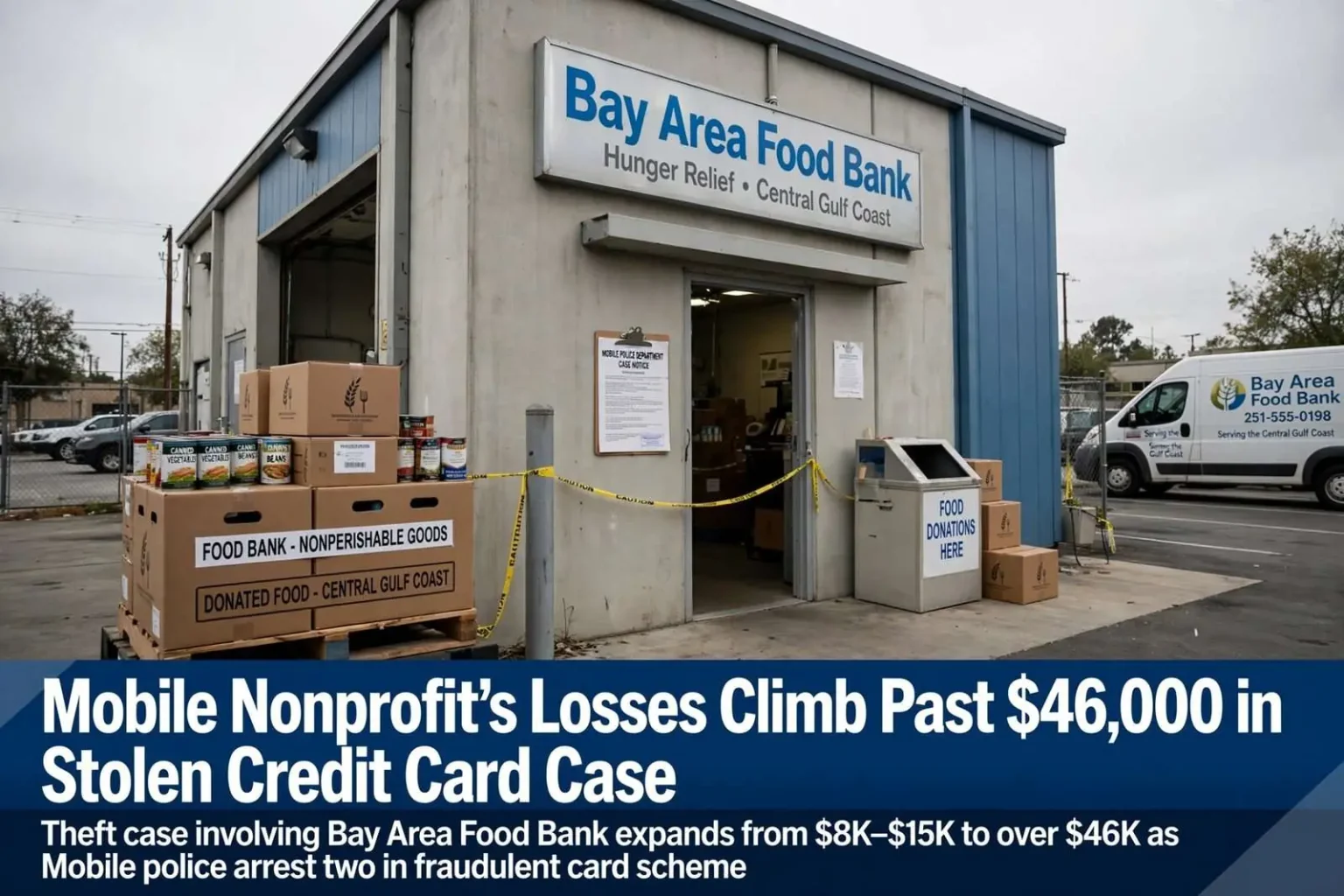
A theft case involving a local hunger-relief nonprofit has turned out to be far larger than first believed, with Mobile police now saying the organization’s losses top $46,000.
Investigators initially estimated the damage from three stolen credit cards belonging to Bay Area Food Bank at somewhere between $8,000 and $15,000, but a deeper look into the fraudulent charges pushed that figure well beyond $46,000 within a matter of days.
The widening estimate reflected the way modern card fraud investigations unfold. Early figures are drawn from the charges that are immediately visible, and only as detectives trace every transaction, interview witnesses and review merchant records does the true scale emerge. In this case, each day of digging added thousands of dollars to the tally.
For a food bank, the discovery was a double blow: the organization lost money it had counted on, and the loss involved funds donated by the community specifically to feed hungry families. Bay Area Food Bank distributes food to pantries and partner agencies across the central Gulf Coast, an operation where every dollar translates directly into meals.
The Arrest
Police arrested 21-year-old Ricky Glenn Jr. earlier this week in connection with the theft. According to a Mobile Police Department spokesperson, Glenn took the stolen cards to a local gas station and recruited people there to run charges on the cards in exchange for cash, a scheme that allowed the fraudulent spending to spread quickly before it was detected.
The method is a familiar one to fraud investigators. Rather than making purchases personally, the person holding stolen cards recruits others to swipe them, paying out a fraction of each transaction in cash and pocketing the rest. The approach multiplies the number of people touching the cards, spreads the activity across many small transactions and muddies the trail for anyone reviewing statements.
Gas stations fit the scheme because they host a steady stream of customers, often have staffed registers around the clock and process a high volume of card transactions that individual fraudulent charges can hide within. By the time the bank’s fraud detection systems flagged the pattern, the cards had been used extensively.
Glenn now faces a first-degree theft charge along with 20 separate counts of fraudulent use of a credit card. The combination reflects both the initial theft of the cards themselves and the long series of illegal transactions that followed, each count representing a separate alleged use.
First-degree theft is a felony under Alabama law, typically applied when the value of stolen property crosses a statutory threshold. Fraudulent use of a credit card is likewise a criminal offense that can be charged repeatedly, once for each unauthorized transaction, which allows prosecutors to capture the full scope of the conduct in the indictment.
He was already free on bond tied to that theft charge and separate drug charges at the time of his arrest. Court records in such cases typically treat a new offense committed while on release as a factor in any later bond proceedings, and the accumulation of charges can significantly raise the stakes a defendant faces.
A Second Arrest
A second arrest followed shortly after. Glenn’s cousin, 21-year-old Derry Glenn, was also taken into custody after police say he used one of the stolen cards to make a $595 purchase.
The arrest of a relative highlighted how the scheme’s reach extended beyond the person who originally took the cards. Every person who swipes a stolen card is exposed to charges, regardless of how small their individual transaction may have been, and investigators routinely add names as they work through merchant records.
Mobile police said the investigation remains active as they continue working to determine the full scope of the fraudulent charges and identify anyone else who may have benefited from using the stolen cards.
Detectives in cases like this typically reconcile the cards’ full transaction history against receipts, surveillance footage and witness statements, building a picture of who used the cards, where and when. That work determines whether additional arrests follow and how many counts each defendant ultimately faces.
No additional arrests had been announced as of the latest update from police, though investigators indicated more charges could follow as the case develops. The gas station recruitment scheme means the pool of potential defendants includes everyone who agreed to run charges for cash, some of whom may have participated repeatedly.
The Cost to a Nonprofit
Because Bay Area Food Bank relies on donated funds to support its hunger-relief work across the region, a loss of this size represents a significant setback for an organization that depends heavily on every dollar reaching the people it serves.
Food banks operate on some of the leanest budgets in the nonprofit world. Donations of food and money arrive from individuals, churches, businesses and food drives, and the organization’s mission is to convert that support into distributed meals as efficiently as possible. Money lost to fraud is money that cannot purchase food, pay for trucking or keep warehouse operations running.
The organization serves a broad swath of the central Gulf Coast, supplying food to charitable pantries, church ministries and feeding programs that in turn hand groceries to families in need. In that chain, the food bank functions as the hub — sourcing, storing and shipping the food that hundreds of smaller organizations distribute in their own communities.
A loss exceeding $46,000 in that context represents more than an accounting entry. It can mean fewer pallets of food moving through the warehouse in a given month, postponed purchases of staple items or cuts to the programs the budget was meant to support. Nonprofits that experience fraud often also absorb the indirect costs of auditing, card-account changes and heightened financial controls in the aftermath.
Insurance and bank fraud protections can recover some losses, but the process takes time, and stolen funds are rarely made whole immediately. In the interim, the organization must cover the gap while the legal case works its way through the courts.
Why Nonprofits Are Targets
Food banks and similar nonprofits are frequent targets for this type of fraud precisely because financial oversight can be stretched thin at organizations that operate with lean staffs and rely on trust among a small circle of people handling accounts.
A charity’s culture works against it in these situations. Nonprofits tend to run on goodwill, with employees and volunteers granted access to accounts and purchasing tools in the interest of getting work done. The same openness that makes a food bank efficient in distributing aid can make it slow to notice a card being misused.
Card fraud against charities also carries a painful optics problem. Donors who learn that contributions were stolen often respond by tightening their giving, even though the theft harmed the organization rather than arising from mismanagement. Communicating clearly about what happened — and what controls have been strengthened since — becomes part of the recovery.
Community leaders have previously noted that even relatively small lapses in card security can snowball quickly once stolen numbers start circulating, which appears to be part of what allowed this case to grow so far beyond its initial estimate in such a short window of time.
Security experts generally advise nonprofits to treat purchasing cards like cash: limiting who holds them, reviewing statements weekly, setting transaction alerts and requiring dual approval for unusual charges. None of those measures is costly, but each requires the kind of administrative attention that small organizations struggle to spare.
The Legal Road Ahead
With Ricky Glenn Jr. facing a first-degree theft charge and 20 counts of fraudulent use of a credit card, and Derry Glenn charged in connection with a $595 purchase, the case now moves into the court system, where prosecutors will weigh the evidence gathered by Mobile police investigators.
Felony cases in Mobile County begin in district court for preliminary proceedings before moving toward possible indictment and trial in circuit court. Along the way, defense attorneys review the transaction evidence, and plea negotiations are common in fraud cases where the documentary trail is extensive and largely indisputable.
The fact that the lead defendant was already on bond for other charges when arrested will likely factor into proceedings as well. Alabama courts take new offenses committed while on release seriously, and prosecutors frequently cite them when arguing for detention or enhanced conditions.
For the food bank, the criminal case’s outcome will not by itself restore the lost money, though restitution is sometimes ordered when defendants are convicted. Any recovery would arrive only after the legal process runs its course, long after the fraudulent charges first appeared on the organization’s statements.
In the meantime, the organization continues its core work of collecting and distributing food across the region — the work the stolen funds were meant to support. Hunger relief does not pause for a fraud investigation, and the pantry partners, church ministries and feeding programs that depend on the food bank expect their shipments regardless of what the organization is dealing with behind the scenes.
The case stands as a reminder of how quickly a crime against a charity can escalate. Three stolen cards, one gas station and a recruiting pitch turned a modest theft into a five-figure loss — and turned a handful of bad decisions into more than two dozen criminal counts.