

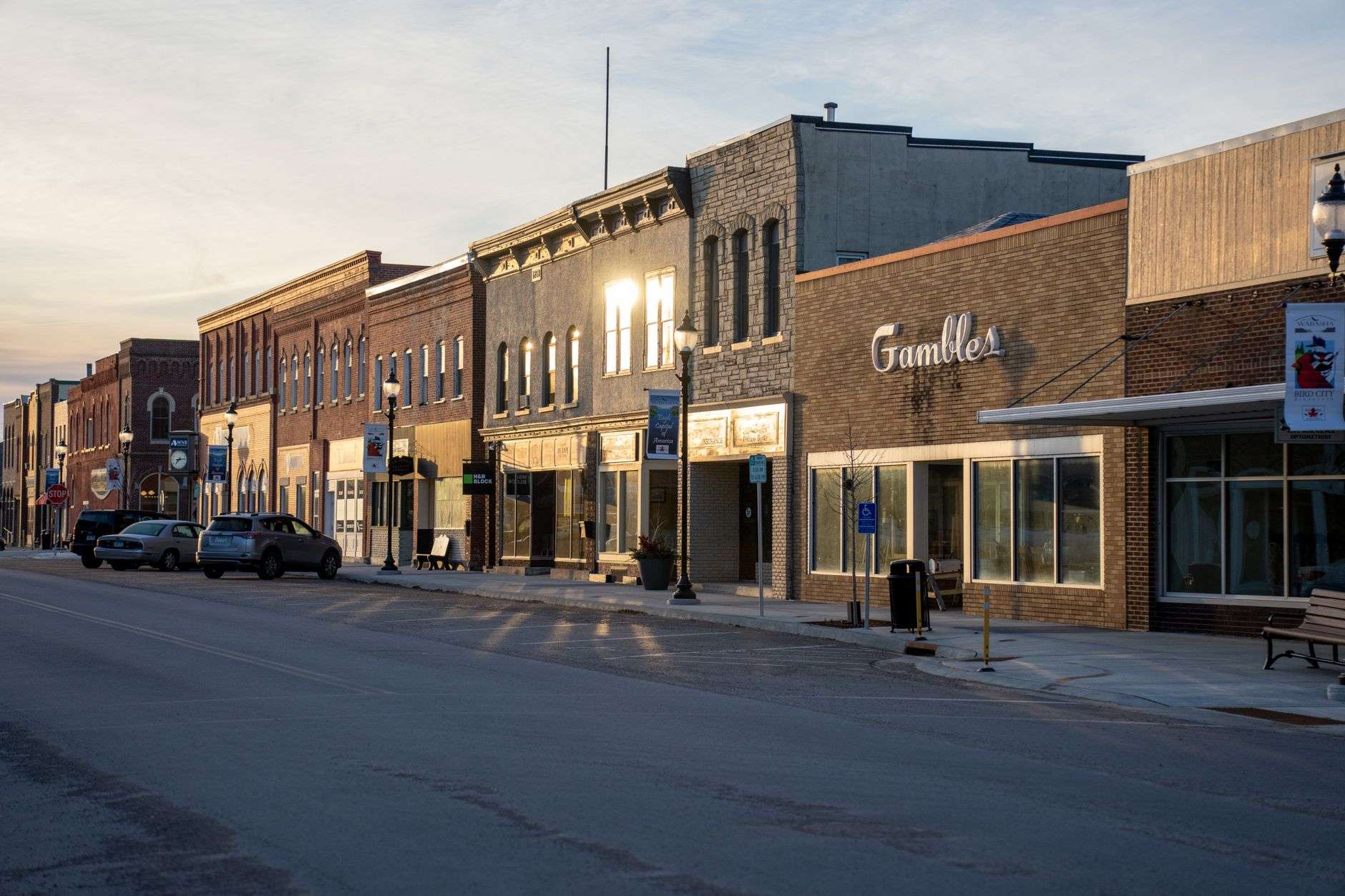
Foley Main Street has launched a new community membership initiative, “Friends of Downtown Foley,” inviting residents and supporters to help fund public art, live music and gathering spaces in the city’s historic downtown district. The program is designed to turn the recent momentum in downtown Foley into a lasting, community-supported effort, according to organizers.
Foley sits just a few miles from the Gulf Coast’s beaches and has long served as a gateway to the shoreline. Generations of travelers heading south toward the water have passed through the city, stopping along its traditional commercial corridors before continuing on to the shore. But city officials and business leaders say Foley has increasingly become a destination of its own, with growth that has made it one of the busier population centers in Baldwin County. New neighborhoods, schools, retail centers and civic facilities have followed residents to the area, and the city’s role has shifted from that of a pass-through town to that of a full-service community with an identity apart from the beach.
Foley Main Street has stated the city’s population now exceeds the combined populations of Gulf Shores and Orange Beach, a point organizers cite as evidence of the area’s rapid growth. The comparison is striking to long-time observers of Baldwin County, where the beach cities have historically captured most of the region’s attention and tourism dollars. Foley’s climb up the population rankings reflects a broader pattern across the county, one of the fastest-growing counties in Alabama, as families and businesses seek room to grow within reach of the coast.
“Foley Main Street is on a mission to make our downtown a vibrant and welcoming destination in the region,” said Wes Abrams, president of the Foley Main Street Community Foundation. “But to do that, we need more than just plans—we need a family. This program isn’t just about a donation; it’s about becoming part of the heartbeat of our town.”
What the membership program will fund
Through the Friends of Downtown Foley program, the Foundation is seeking to fund a set of projects intended to make the historic district safer and more visually appealing. Organizers say the initiative will prioritize artistic crosswalks and murals that combine pedestrian safety with local creativity. Decorative crosswalk treatments have become a signature tool of downtown revitalization programs across the country, marking crossings clearly for drivers while signaling to pedestrians that a district is designed for walking, browsing and lingering rather than simply passing through.
The priority list also includes enhanced community spaces designed to give neighbors places to gather. In towns like Foley, where the historic district sits within walking distance of neighborhoods and the city’s park system, small improvements to sidewalks, seating, shade and open space can determine whether a downtown trip becomes an afternoon. Public art installations are on the list as well, meant to turn everyday corners of downtown into spots for discovery — the kind of details that give visitors a reason to photograph, share and return.
Live music performances that showcase local talent throughout the district round out the program’s priorities. Organizers view regular programming as the complement to physical improvements: painted crosswalks and murals draw people downtown, but events and music give them a reason to stay, dine and shop. The combination of capital projects and programming mirrors the approach that successful main street organizations in the Southeast have used to build repeat visitation in historic commercial cores.
How donors participate
Contributions to the Foundation are tax-deductible, and donors will have the opportunity to vote on which projects move forward, giving the community a direct say in how the downtown area develops. That voting element is what organizers say distinguishes Friends of Downtown Foley from a conventional annual fund or capital campaign. Instead of leaving allocation decisions entirely to a board, the program treats members as stakeholders with a ballot, an approach designed to build the sense of ownership Abrams described.
The structure also reflects the Foundation’s role as the fundraising arm of Foley’s downtown revitalization effort. Because the Foundation is a community organization rather than a municipal department, contributions from residents, business owners and companies flow directly into downtown projects without competing with the city’s broader budget obligations. Tax-deductible status allows individual donors and small businesses alike to participate at whatever level fits their means, and organizers have emphasized that the program depends on broad participation rather than a handful of large gifts.
Organizers point to the Foundation’s existing record as evidence the model works. The group says it has already put more than $154,000 in grant funding back into the local economy, money that has gone toward crosswalk improvements, mural projects and support for small businesses downtown. Those earlier investments are visible in the historic district today, and Foundation leaders describe the membership program as the next step — a way to keep a steady stream of projects moving rather than waiting for grant cycles to open.
A familiar model for Alabama downtowns
The effort follows a pattern seen in downtown revitalization programs across the country, in which local foundations pair grant dollars with community fundraising and volunteer involvement to restore and animate historic commercial districts. Alabama has its own network of such efforts, including designated Main Street Alabama communities that follow the national model of organizing downtown work around economic vitality, design, promotion and community partnerships. Communities that have sustained these programs over decades tend to share a common trait: they treat downtown investment as a continuing community project rather than a one-time renovation.
Such programs typically aim to balance preservation of older buildings and streetscapes with new investment in public gathering spaces, art and events. The goal is not to remake a downtown but to keep its historic character intact while making it active and economically healthy. In Foley’s case, the historic district’s traditional scale and walkability are assets that newer commercial development along the city’s highway corridors cannot replicate, which is why organizers frame the membership program as an investment in something the community would struggle to rebuild if it were lost.
For local businesses, the program’s benefits are practical. Crosswalk and streetscape improvements extend the distance shoppers are willing to walk, murals and public art generate foot traffic and social media visibility, and live music events put potential customers on the sidewalk during evening hours that would otherwise be quiet. Foundation organizers have pointed to the connection between downtown appearance and business performance as a central justification for the initiative.
How to get involved
Residents and business owners interested in joining Friends of Downtown Foley can visit the Foley Main Street website or contact Executive Director Darrelyn Dunmore at 251-270-0089 for more information. Organizers have encouraged anyone with an interest in downtown’s future — from long-time residents to newcomers still learning the city — to consider membership as a way to plug into the effort early, while the project list is taking shape.
The timing matters, according to the Foundation, because Foley’s growth is not slowing. Every new roof in the city represents another household that will eventually look for places to eat, shop, gather and bring visitors, and organizers argue that the historic downtown is the natural home for that activity if it is prepared to receive it. The membership program is designed to build that capacity now, with projects rolling out as donations accumulate and members cast their votes.
Update: how the money will be allocated
Update (Aug. 1, 2026): Foley Main Street has provided additional detail on how contributions to the Friends of Downtown Foley program will be allocated. According to the Foundation, local art and music initiatives will receive 75 percent of all donations made through the program, with those initiatives also gaining a direct voice in voting on which future projects move forward.
The allocation guidance gives prospective donors a clearer picture of where their money will land. Three-quarters of every contribution is now earmarked for the art and music side of the program — the murals, installations, crosswalk art and live performances that make up much of the initiative’s public face — while the remainder supports the broader set of gathering-space and district improvements on the Foundation’s priority list. The decision to give the art and music initiatives a voting role as well reinforces the program’s stated emphasis on community direction rather than top-down planning.
For a city that spent decades defined by what lay an exit away — the sand and surf of the Gulf — the program represents another marker of Foley’s evolution into a destination with a center of its own. Whether the historic district can convert its momentum into the kind of sustained, community-funded vibrancy the Foundation describes will depend on how many residents answer the call to join what organizers are calling the heartbeat of the town. The Foundation’s track record to date, and the more than $154,000 already returned to the local economy, offer organizers’ best argument that they can.