

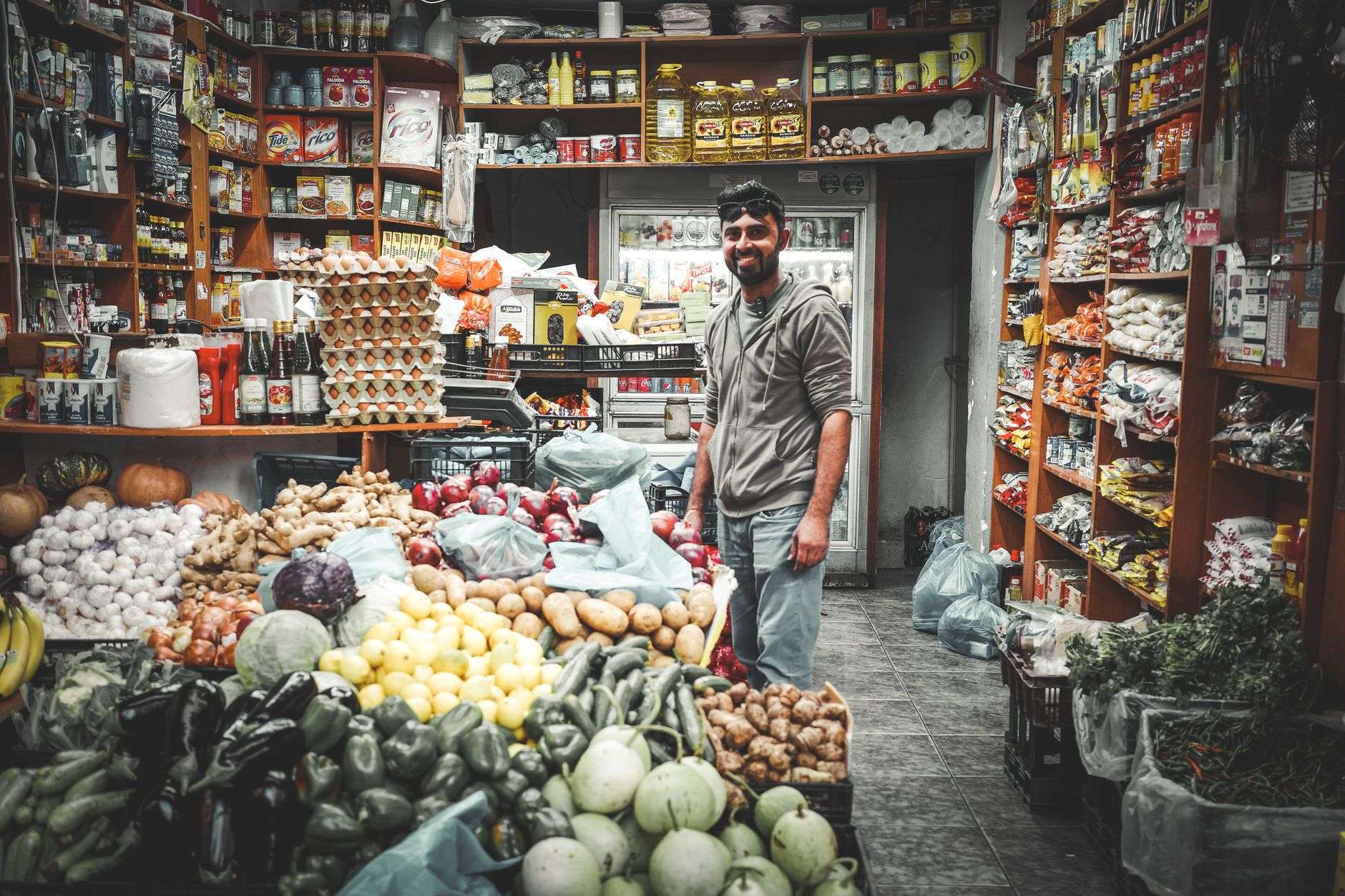
MOBILE, Ala. — The owners of a small international grocery that has anchored a corner of Spring Hill for more than three decades got a thumbs-down Thursday on their plan to move a stone’s throw down the road.
The Mobile Planning Commission voted not to recommend rezoning a lot the owners of Food Pak want to build on — a decision that leaves the store’s future uncertain, and that illustrates how difficult zoning changes are to win in Spring Hill.
Thirty-Five Years on Old Shell Road
Food Pak sits off Old Shell Road in Mobile’s Spring Hill district, about a mile from the University of South Alabama and just west of Lavretta Park. Reza and Mahin Hejazi opened it in 1991.
The Hejazis are immigrants from Iran, and Food Pak carries an eclectic mix of international foods, wines and beers. That selection, along with the store’s prepared foods, has built it a constituency that reaches well beyond the surrounding blocks. An online petition supporting the store has drawn nearly 5,000 signatures.
Why They Need to Move
The Hejazis say their landlord has told them their lease will not be renewed.
Their plan was to build a new Food Pak on a nearby lot they already own, just east of Lavretta Park, behind a public parking area used by park patrons and by customers of the adjacent Maple Street Biscuit Co.
The obstacle is zoning. The lot is zoned residential. Building a grocery there would require rezoning to B-2 business use — the request that came before the Planning Commission on Thursday.
The Lot
Tim Spafford, an architect working with the Hejazis, described the crescent-shaped parcel as looking like “a squishy toy my kids would have played with.”
It is currently occupied by trees and untamed brush. To its north, an alley separates it from the back side of several homes on Village Circle East.
The Case for the Rezoning
Mahin Hejazi presented Food Pak as the natural candidate to convert an unused parcel into a functioning commercial property. She noted that the business has been part of the community for 35 years and that she and her husband live nearby in the Country Club Village neighborhood.
“Over the past 35 years, we have witnessed the growth of and transformation of our neighborhood into a vibrant, bustling community,” she said. “And we have grown right along with it.”
“This rezoning request is not just about Food Pak. It’s about compatible land use,” she said. “Transitioning this property to new commercial use aligns directly with the city’s goals of fostering walkable, sustainable neighborhoods. We do have a lot of customers that do walk, bike and even drive their golf carts. The store is very convenient for them.”
“Our goal is not just to request a change on a map,” she added. “We propose a thoughtful transition that directly supports the future of our neighborhood. This project will transform an underutilized property into a community asset. We want to be good neighbors and a responsible partner in this town’s growth.”
The Case Against
Planning Commission rules allow four speakers in favor of a proposal and four against.
Supporters emphasized the Hejazis’ long involvement in the community and the popularity of the grocery’s services.
Opponents raised concerns about drainage, truck traffic and encroachment on nearby homes. But their central objection was broader: that the change would add another business-zoned lot to the neighborhood, and that once a parcel carries B-2 zoning, a future owner could put something on it far less welcome than a neighborhood grocery.
That argument — that zoning attaches to land rather than to an applicant — is the most durable objection in land use hearings. A commission does not approve a business; it approves a category of permitted uses. B-2 zoning in Mobile permits a range of commercial activity, and nothing in the approval would bind a subsequent owner to operate a grocery.
A Master Plan Held as a Line
Linda St. John, board president of the Village of Spring Hill, presented the neighborhood’s master plan as a non-negotiable barrier.
“For 21 years our organization has stood firmly in defense of our community and our master plan,” she said. “During that time we have faced repeated attempts by developers to circumvent or weaken the guidelines of our plan that we have consistently opposed. With the support of the city and the Planning Commission, we have been successful in defeating all these new non-compliant attempts.”
St. John said the master plan “represents a carefully considered community mission, not a suggestion or an obstacle to be overcome when a particular development does not fit.” She urged commissioners not to let “sentiment and emotion to open the doors allowing non-compliant developments.”
Everyone Likes the Store
What distinguished this hearing from a typical zoning fight is that the opposition was not opposed to the applicant.
Most, if not all, of those who spoke against the rezoning said they appreciated Food Pak. St. John herself said that “Food Pak is exactly the type of business we would encourage in the village in an appropriately zoned location.” She also said the Hejazis seem to believe the location in question “is better suited for invasive, broadly zoned, commercial development non-compliant with the community plan.”
The disagreement, in other words, was about the parcel and the precedent — not about the grocery.
What Happens Next
The Planning Commission does not itself have the power to rezone property. It makes recommendations to the Mobile City Council, which holds the final authority.
At the end of Thursday’s discussion, the commission voted not to recommend the requested change. An unfavorable recommendation is a significant obstacle but not an absolute one; applicants can and sometimes do pursue the matter with the council.
Mahin Hejazi declined to speak to reporters after the meeting.
The Larger Question
The case sits at the intersection of two things Mobile has said it wants. City planning language, like that of most American cities over the past two decades, favors walkable, mixed-use neighborhoods where residents can reach a grocery on foot. Neighborhood master plans in established districts, meanwhile, exist largely to prevent the incremental commercial encroachment that residents in those districts have historically fought.
Both positions were represented in the room on Thursday. A small grocery that customers reach by foot, bicycle and golf cart is close to the textbook example of walkable neighborhood retail. It also happens to want a residential parcel.