

For more than four decades, anglers heading out onto Pensacola Bay, Santa Rosa Sound and the Gulf of Mexico have made the same early-morning stop before they launch: Gulf Breeze Bait and Tackle. The family-run shop on the Gulf Breeze peninsula has outfitted generations of fishermen with live shrimp, rods, reels and local knowledge, and at the center of it all is Victor Wright, a man who has spent essentially his entire life on the water that surrounds Pensacola.
When he sat down to talk about the business in the summer of 2023, Wright had been involved with the shop for about 30 years, and the store itself had been open for 42. His story is one of family, fishing and a deep respect for the resources that keep the Gulf Coast’s fishing culture alive.
A Childhood on Pensacola Beach
Wright grew up on Pensacola Beach, the barrier-island community on Santa Rosa Island that sits between Santa Rosa Sound and the open Gulf. In those days the island’s year-round population was small, and so was its school. Wright attended classes in a house that a resident, Harry Gownes, allowed the Pensacola school system to use. It was the only school on Pensacola Beach. When he reached the eighth grade, his family moved across the Bob Sikes Bridge to Gulf Breeze so he could attend middle school there.
His real education, though, happened outdoors. Wright’s father taught him how to fish, catch bait, run a boat, pull a net and just about everything else connected to life on the water. It was the kind of upbringing that is still common in coastal Northwest Florida, where kids learn to throw a cast net about the same time they learn to ride a bike.
From Marine Science to a Bait Shop
Wright’s father, John Wright, set out to earn a doctorate in marine biology and enrolled at the University of West Florida, the Pensacola university whose campus sits along the Escambia River. At UWF he met Vic Mitchell, and the two went on to work for the Environmental Protection Agency in Pensacola. The EPA has long maintained a research presence in the Gulf Breeze area, studying the estuaries and coastal waters of the region.
At the EPA, John Wright and Mitchell had access to a Boston Whaler they used to harvest and study fish and oysters. “They were able to get a little fishing in on the side,” Victor Wright said. That was in the 1970s. After eight years, the grant that funded their jobs ran out.
John Wright had always wanted to open a sporting goods and bait and tackle shop, so in 1981 Gulf Breeze Bait and Tackle was born. “It kinda took off,” Victor Wright said. “We’ve grown every year we’ve been open except when the BP Oil Spill happened.”
Surviving the 2010 Oil Spill
The Deepwater Horizon disaster began in April 2010, when an explosion on the drilling rig in the Gulf of Mexico led to one of the largest marine oil spills in history. Oil reached beaches from Louisiana to the Florida Panhandle, and federal and state authorities closed large areas of Gulf waters to fishing while the crisis played out. For a bait and tackle shop, it was the equivalent of a factory losing its raw materials and its customers at the same time.
“During the oil spill, it was illegal to fish or even use a boat on the water. You would get ticketed,” Wright recalled. All of the shop’s employees left to work on the oil spill cleanup, while Wright and his family kept the business open every day. “Those were tough times. There was nothing we could do. It felt like the end of the world.”
The shop made it through, and the growth resumed. That resilience is familiar to small businesses up and down the Gulf Coast, many of which have weathered hurricanes, the spill and economic downturns in the same few decades.
Still a Family Affair
Victor Wright owns the business with his father. The family bought Vic Mitchell’s interest in 2016 when he decided to retire. John Wright has since retired as well, turning the day-to-day operation over to Victor in 2017, but the store remains very much a family operation. His father, his nephew, his daughter and his ex-wife, Anmarie, all help run the shop.
Asked how that arrangement works, Wright did not hesitate. “It’s great,” he said. “She’s a hard worker and knows everything about this place.”
During the interview, Anmarie moved in and out of the small, cramped office, bringing papers to sign and equipment to check and handling the business of the day. Scott Stillman stopped in with information about an upcoming charity fishing tournament, one of many the shop supports with donated koozies, cups, hats and T-shirts bearing the Gulf Breeze Bait and Tackle logo. “There’s a tournament every week, and we like to support them any way we can,” Wright said.
Charter Boats and a Storm’s Aftermath
For a time, Wright juggled the store with a charter fishing business. “I had a 35′ Resmondo, custom-built boat made in Perdido Key called the Vitamin Sea for offshore charters with a 9-mile Federal permit, and a 25′ SeaFox with twin 150s for charters inside the federal guidelines,” he said.
That distinction matters in Florida’s Gulf waters, where state jurisdiction extends roughly nine nautical miles offshore and federal waters begin beyond that line. Charter operators who take paying customers into federal waters for reef fish need federal permits in addition to state licensing, which is why many captains run separate boats or trips for nearshore and offshore fishing.
Eventually Wright gave up chartering because the shop was simply too busy. “The shop is my foundation and where my roots are,” he said.
He sold the boats, and the Vitamin Sea ended up at Zeke’s Landing in Orange Beach. Then came Hurricane Sally, which made landfall near Gulf Shores in September 2020 and battered coastal Alabama and the Pensacola area with extreme rainfall and storm surge. “Hurricane Sally hit. No one thought there would be much to it, and I saw my boat had crashed on the concrete parking lot when I watched the news. I was sad to see that,” Wright said.
Live Bait Around the Clock
In the early years, the Wright family caught its own bait with large seine nets, cast nets and trawl nets. They had a permit to drive on the beach and a big tank mounted on the back of a four-wheel-drive truck. The shop kept live bait for sale and stayed open 24 hours a day, 365 days a year.
“You’d be surprised how many people want to fish on Christmas,” Wright said. “Employees volunteer to work, and we pay time and a half, feed them, and give them gift certificates and other goodies.”
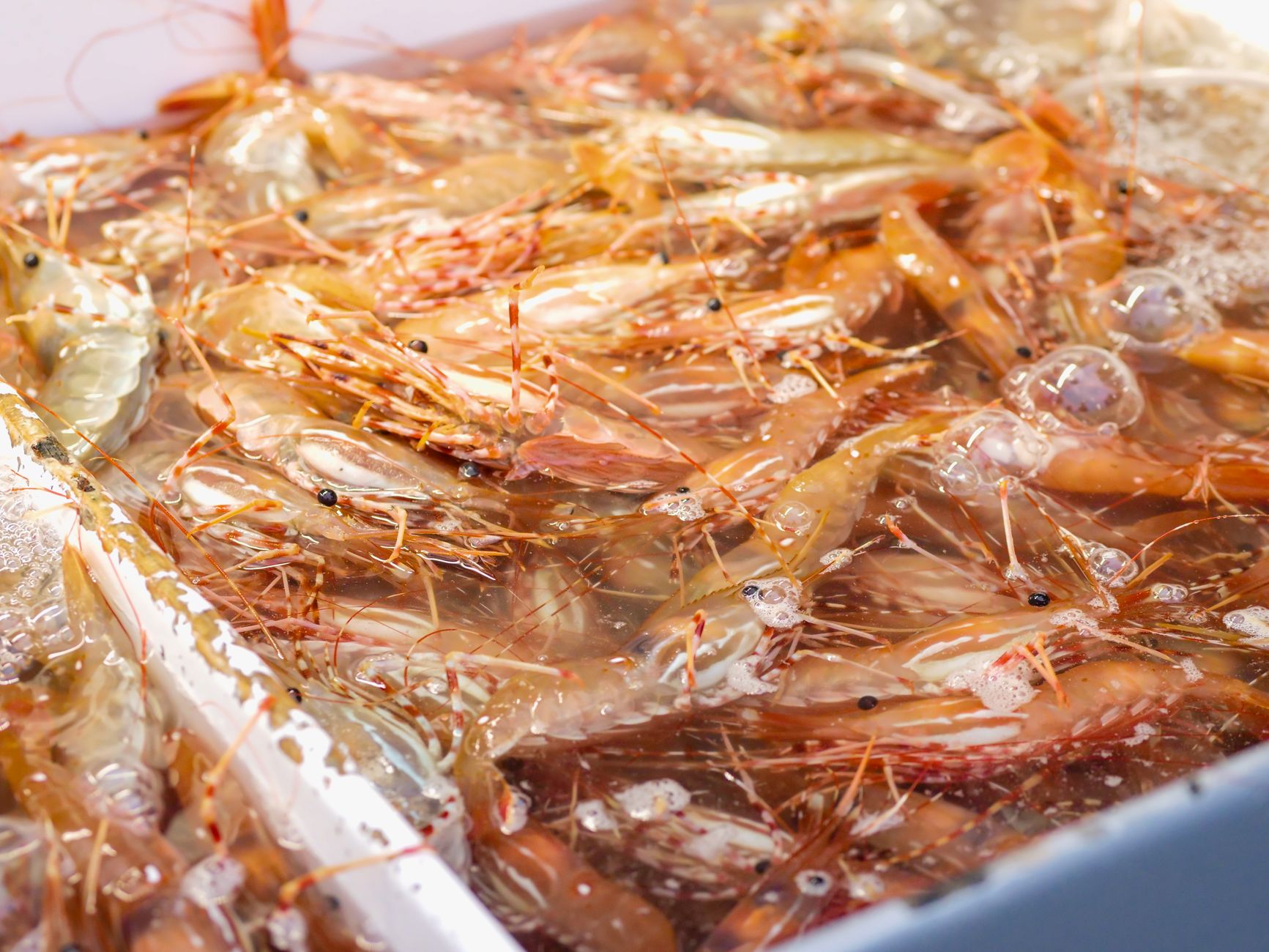
These days the shop opens at 5 a.m. on weekdays and 4 a.m. on weekends. The family stopped catching its own bait because it could not keep up with demand. Instead, Wright said he buys 10,000 to 15,000 live shrimp, delivered every Friday by noon during the busy season. “We sell out by midmorning Saturday, and we order more.”
Getting those shrimp to Gulf Breeze alive is an intricate process. Six shrimp boats pull all night, the catch is loaded onto specially equipped trucks, and the shrimp arrive fresh from about six hours away. “Nothing beats a live shrimp for bait,” Wright said. “We have special tanks that are aerated with local bay water, and we carefully manage the salinity and the 62-degree temperature.”
Live shrimp are the universal currency of inshore fishing along the northern Gulf. Speckled trout, redfish, flounder, sheepshead and a long list of other species will take a lively shrimp, which is why bait shops across the region measure their busy seasons by how fast the tanks empty.
What’s on the Shelves
Every inch of the store is put to use. Gulf Breeze Bait and Tackle carries rods, reels, tackle, aerators and terminal tackle such as weights, hooks and fishing line. The shop used to employ people who could repair reels, but Wright said it has become difficult to find craftsmen who know how to properly repair fishing gear. “We suggest that if our customers have an issue with their equipment, they send it to the manufacturer to have it fixed.”
In the summer, the shop employs 13 people. “We have a really good crew right now,” Wright said. “I keep the good ones all winter.” He also knows the area’s charter services and can steer customers toward the right captain depending on what they want to catch.
“It’s been a family affair with customers and employees,” he said. “I’ve helped teach lots of kids how to fish, and it’s been fun to watch them grow up. We’re starting to see a third generation of grandchildren learning their way around a fishing pole.”
A Plea for Conservation
Decades behind the counter have given Wright a clear view of how fishing pressure has changed, and he is outspoken about protecting fish populations. “We need better limits to keep the fish populations healthy,” he said. He stressed that regulatory agencies need to make conservation decisions more quickly to protect fish for future generations.
In the Gulf, recreational fishing rules are set by a combination of agencies. The Florida Fish and Wildlife Conservation Commission manages species in state waters, while NOAA Fisheries and the Gulf of Mexico Fishery Management Council oversee federal waters. Bag limits, size limits and season lengths for popular species are adjusted through a public process that relies on stock assessments, and anglers often debate whether those changes come fast enough.
For Wright, the issue is personal. “I have a five-year-old granddaughter and I want her to enjoy fishing like I have all my life,” he said. “I’ve sold fish for a living, I’ve had charter boats, and my livelihood is all about fishing. We just need to make responsible decisions. We need to conserve and protect what we have before it’s too late.” Then he posed a simple question: “How many fish does one person really need to keep?”
As Good As It Gets
Looking back, Wright said he has had a great life in the Pensacola area. “I love it here. It’s one of the most beautiful places in the world,” he said. His father worked hard all year but took the family to beautiful places on winter vacations. “Hawaii, Costa Rica, Belize, they are all unique in their way, but Pensacola Beach is as good as it gets.”
For anglers planning a trip to the area, a few tips apply to any visit to a local bait shop:
- Arrive early during the busy season, since live shrimp can sell out quickly on weekends.
- Make sure you have the appropriate Florida saltwater fishing license, and check current FWC regulations for size and bag limits before you keep a fish.
- Ask the staff what is biting and where; local shops are often the best source of up-to-date fishing reports.
- Bring an aerated bait bucket or livewell to keep shrimp lively through the day.
After more than 40 years, Gulf Breeze Bait and Tackle remains what John Wright envisioned in 1981: a place where fishermen can find everything they need, and where the people behind the counter know the water as well as anyone on the coast.