

Julian MacQueen built one of the largest hotel companies in the country from a base on the Gulf Coast. But when he talks about his proudest accomplishments, he points first to his marriage of more than four decades to his wife, Kim, and then to the work the two of them have poured into Pensacola’s underserved neighborhoods. Through Innisfree Hotels and The HIVE Foundation, the MacQueens have spent the better part of a decade focused on education, parent engagement, criminal justice reform and children’s services, efforts that have helped reshape how Pensacola approaches its most persistent challenges.
This profile reflects the MacQueens’ work as of late 2022, when Julian sat down to discuss it at his office in Gulf Breeze.
A Hotel Empire Turned Legacy Company
MacQueen decided early in life that the beach was where he wanted to be, and he built a career to match. Innisfree Hotels, the hotel management and development company he founded, is headquartered in Gulf Breeze and operates hotels along the Gulf Coast and beyond. Much has been written about his business success, his exploits as a pilot and his spiritual journey.
In 2022, at age 72, MacQueen described his business career as winding down a bit, even as his energy for community work was at an all-time high. Innisfree itself was still growing briskly. With about $750 million in assets and more than 2,000 employees, the company was ranked the 42nd-largest hospitality company in America by Hotel Business magazine.
MacQueen is also a graduate of the University of South Alabama in Mobile, a connection that would later shape some of his thinking on education.
About ten years earlier, Julian and Kim began thinking seriously about how to use their resources to improve opportunities for underserved communities in Pensacola. They settled on education as the first priority.
Through Innisfree Hotels, the couple established The HIVE Foundation to help build stronger communities in the places where the company operates. They also decided to structure their hospitality business as a Legacy Company, meaning its assets and profits are dedicated to serving the communities it calls home.
“It’s a core belief that we should be using our financial prosperity and employee talent to give back to the places we call home,” said Rusty Branch, executive director of The HIVE Foundation.
The MacQueens have also been quick to credit others. Pensacola’s downtown revival over the past decade and more is widely associated with Quint and Rishy Studer, whose investments and civic initiatives, including the goal of making Pensacola “America’s First Learning City,” helped get momentum going. The MacQueens’ philanthropy has worked alongside those broader efforts.
Starting Hard Conversations
For Julian, change had to start with talking. “Communication is key,” he said. “There are so many misconceptions and facts that most people can’t begin to relate to. One of the first steps was trying to get people talking about systemic racism in our communities. Everyone is trying to figure it out. It shouldn’t be used as a weapon for attack.”
“We started a small discussion group that met every other week, black and white leaders together,” he said. The group, called the Equity Project Alliance, set out to move past what MacQueen described as an “everyone is a racist” mentality and focus instead on the specific issues standing in the way of opportunity in underserved neighborhoods. Members soon began inviting others to join.
The results caught the attention of Dickie Appleyard, owner of the Pensacola-based Appleyard Agency. “This is good stuff; we need to take it public,” Appleyard said. His agency helped take the conversations to a larger audience, with sessions of around 150 participants. By late 2022 the public program was in its second year, with new participants joining each round.
Rebuilding a School in Pensacola’s Poorest ZIP Code
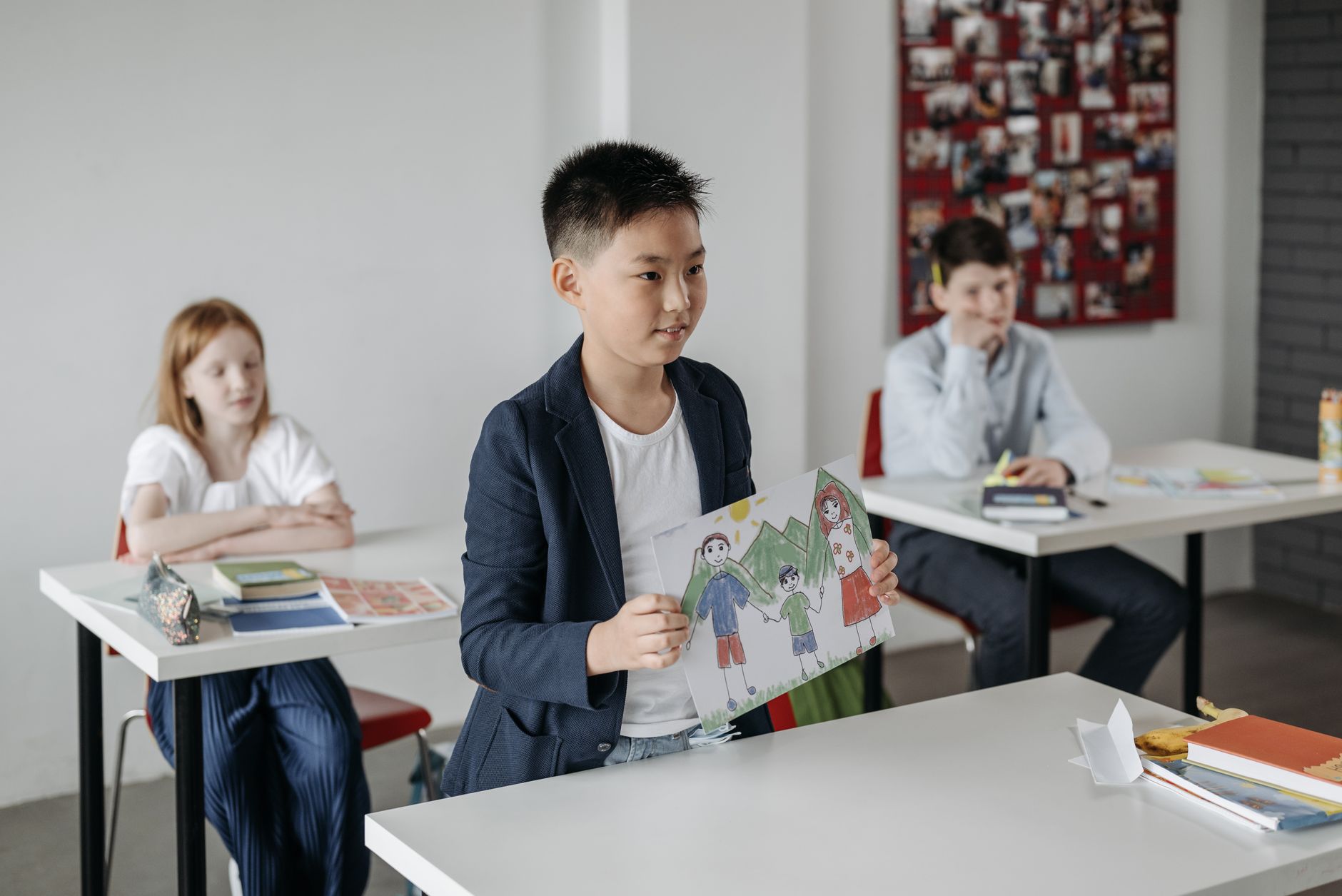
When the MacQueens first planted their stake in education, they leased the Dixon School, located in the poorest ZIP code in Pensacola, with the goal of focusing on kindergarten through eighth grade. The building was in deplorable condition and needed a $2 million investment just to become usable. It reopened as the Dixon School for the Arts and Sciences.
They partnered with Lutimothy May, a Baptist minister in Pensacola, to help get the school on track. The vision was to strengthen students’ education through the arts. But it quickly became clear that many parents’ interactions with the school had been negative and that an adversarial relationship existed between families and school leaders. That had to change.
The school’s arts curriculum emphasizes the visual arts, music and theater as ways to broaden students’ horizons. In one notable example, the Children’s Theatre Company of New York was invited to Pensacola to perform Henry Box Brown, the story of an enslaved man who famously mailed himself to freedom in a wooden crate in 1849. The company staged four performances in Pensacola, each drawing more than 400 people. A follow-up theater curriculum was developed for area children who would not ordinarily have access to live theater, in keeping with the company’s aim of using theater to teach moral reasoning.
Parent University Comes to Pensacola
To bridge the gap with parents, Julian looked to Savannah, Georgia, where a program called Parent University, led by Michael O’Neal, had been helping families build positive relationships with their schools. Kim joined the program’s board in Savannah. Julian also visited Mobile Mayor Sandy Stimpson, who had been instrumental in establishing Prichard Preparatory Academy in Prichard, to learn from that experience.
The MacQueens then brought O’Neal and Parent University to Pensacola. The first meeting, held at the Dixon School for the Arts and Sciences, drew more than 100 people, who said they wanted to learn about personal finances, transportation, jobs and even how cryptocurrency works.
That turnout became the catalyst for a yearlong leadership program built around what parents said they wanted to learn. Businesses such as Navy Credit Union and social service agencies began showing up to work one-on-one with participants. “These are the people in the trenches trying to help,” Julian said.
In 2022, Parent University Pensacola celebrated its first graduating class, complete with diplomas and a year of class credits. “It was one of the proudest moments of their life,” Julian said. “It’s now one of the strongest programs in Pensacola for the most disenfranchised groups of people in our city.”
Bail Reform and the Escambia Children’s Trust
Each year the MacQueens attend the TED Conference in Vancouver, Canada, where the Audacious Project selects bold ideas for major funding. One of those winners was public defender Robin Steinberg, whose talk “What if we ended the injustice of bail?” introduced The Bail Project, a national nonprofit that pays bail for people who cannot afford it. Her presentation inspired the MacQueens to bring the program to Pensacola.
“The purpose is to provide bail for those who can’t afford even the 10% cost of a bail bond and keeps them in the system,” Julian said. “Minor arrests often lead to lost jobs and being away from families because offenders can’t afford a $200 bail. It’s disruptive and unhealthy for our communities and it’s unjust. We want to identify the disparity between blacks and whites and look at the metrics that allow us to look at ourselves and find solutions to the problems.”
Another tool that caught their attention was a Florida law allowing counties to create a Children’s Trust, a dedicated funding source for children’s services established by voter referendum. The model was pioneered in Miami-Dade County. Julian chaired the campaign in Escambia County to pass a property tax millage referendum creating the Escambia Children’s Trust. The grassroots effort passed by a wide margin, and the trust was providing more than $10 million a year for children’s services in the Pensacola area.
For readers unfamiliar with the concept, Florida law permits counties to establish independent special districts dedicated to children’s services, funded by a modest property tax that voters must approve. A governing board, which typically includes appointed community members along with representatives of local government, the school district and state agencies, awards grants to programs that serve children and families, such as early learning, after-school programs, health services and family support. Several Florida counties, including Miami-Dade, Palm Beach and Broward, have used the model for years, and voters must periodically reauthorize some trusts.
A Commitment Without Accolades
The MacQueens love Pensacola and want to see it become a more vibrant, livable city for everyone. They do not seek recognition, but they hope their commitment will draw more people into the work and build greater understanding across the community. “We are all products of our environments and change is hard,” Julian said.
It echoes a line often repeated by Dr. Barry Mason, former dean of the University of Alabama’s business school: “Education opens doors to opportunity.” From a rebuilt school in Pensacola’s poorest ZIP code to a parent graduation ceremony and a voter-approved trust for children, the MacQueens have spent years trying to open those doors.
Getting Involved
Residents interested in supporting education and community efforts in the Pensacola area have several avenues:
- Volunteer with local schools. Escambia County schools and community-based programs regularly seek mentors, tutors and volunteers.
- Learn about the Escambia Children’s Trust. The trust holds public meetings and publishes information about the programs it funds.
- Support the arts in education. Attending student performances and supporting arts organizations helps sustain programs that expose children to theater, music and visual art.
- Join the conversation. Community dialogue programs welcome new participants who want to understand and address local challenges.