Free Car Seat Check Nov. 5 in Mobile After Just 3 of 113 Seats Passed Last Year
USA Health Children's & Women's Hospital and Safe Kids South Alabama will inspect car seats and give away a limited number to eligible families Nov. 5 in Mobile.
MOBILE, Ala. — Parents and caregivers in Mobile can have their children’s seats inspected by certified technicians, and some families can take home a new seat at no cost, during a free car seat check on Thursday, Nov. 5, hosted by USA Health Children’s & Women’s Hospital and Safe Kids South Alabama.
The event runs from 7 to 11 a.m. at 1501 Satchel Paige Drive in Mobile. Organizers say it is worth the stop: at last year’s event, only three of the 113 car seats checked were installed properly.
What families can expect
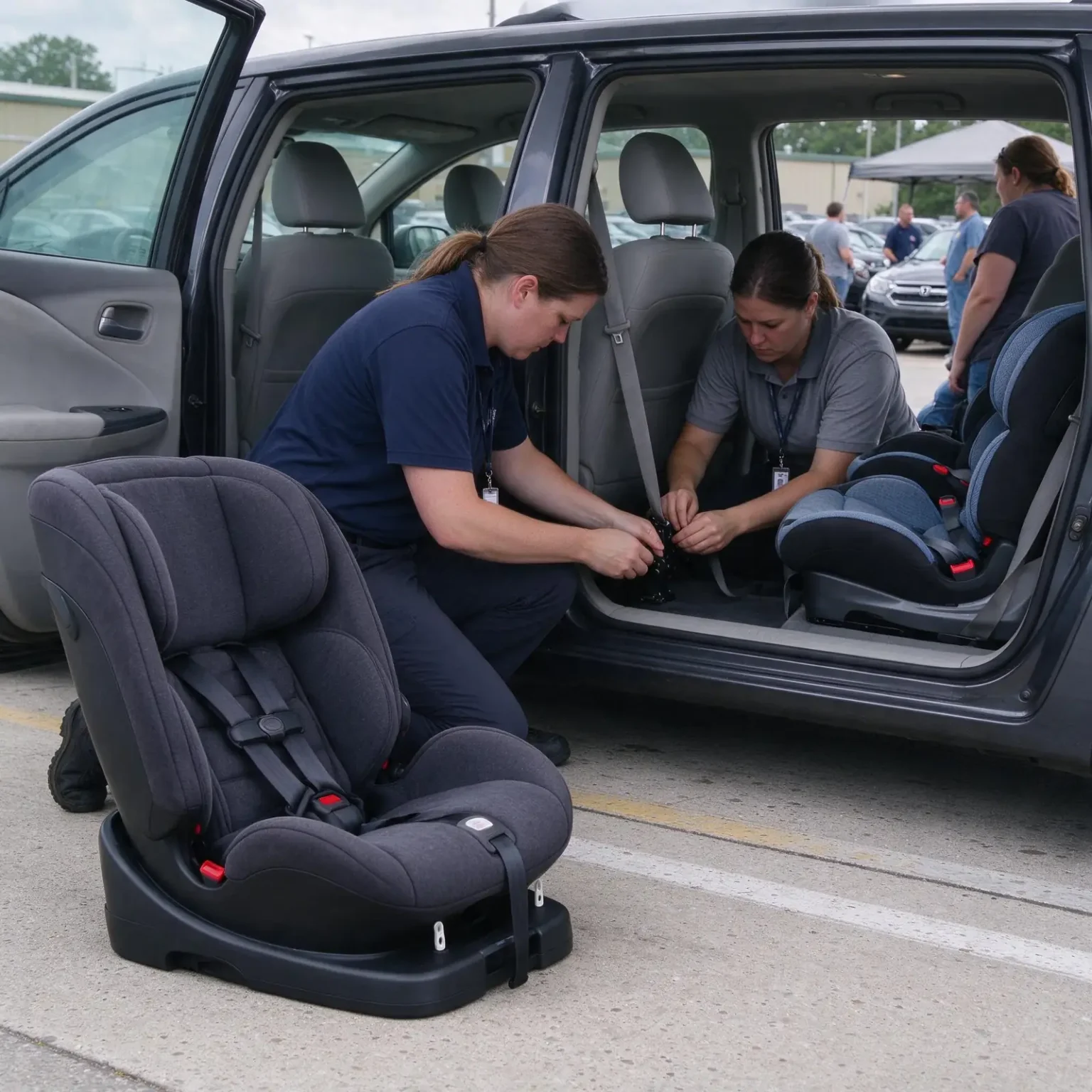
Certified child passenger safety technicians from USA Health will inspect car seats, answer questions about installation and help parents install seats correctly. Families who are unsure whether their child is in the right type of seat, whether a harness is adjusted properly or whether a seat is anchored tightly enough can get hands-on help on the spot.
A limited number of car seats will be available free of charge to eligible families while supplies last. Organizers set a few ground rules for the giveaway:
- One car seat will be provided per vehicle.
- The child must be present to receive a seat, so technicians can make sure it fits properly.
- Seats are available only while supplies last.
The event is funded through a Good Neighbor grant from State Farm awarded through Safe Kids South Alabama, which works to connect families with resources and education on child passenger safety.
Why a quick check makes a big difference
Courtney Thomson, RN-NIC, pediatric outreach education coordinator at Children’s & Women’s Hospital, said a car seat only works as well as it is installed and used.
“Keeping children safe in the car means more than simply buckling them in,” Thomson said. “Children need a car seat or booster seat that is appropriate for their age, size and developmental needs, and it must be installed and used correctly.”
The National Highway Traffic Safety Administration estimates that nearly half of all car seats are used incorrectly, which can reduce how well they protect children in a crash. Common mistakes include seats that move too much at the belt path, harness straps that are too loose or positioned at the wrong height, chest clips placed too low, and children being moved out of rear-facing seats, forward-facing seats or boosters before they are ready.
Thomson said free community checks give parents a chance to ask questions and learn to use their seats properly. She added that “protection remains important well beyond infancy and toddlerhood, as many school-age children still need booster seats to ensure seat belts fit safely.”
What Alabama law requires
Alabama’s child restraint law, found in Section 32-5-222 of the Code of Alabama, sets minimum requirements by age and size. According to the Alabama Law Enforcement Agency, children must ride:
- Rear-facing in an infant-only seat or a convertible seat until they are at least 1 year old or weigh 20 pounds.
- Forward-facing in a convertible or forward-facing seat until at least age 5 or 40 pounds.
- In a booster seat until age 6.
- In a seat belt until age 15.
Seats must meet federal motor vehicle safety standards. Violations carry a $25 fine, and the state assigns points to a driver’s record. A judge may dismiss the charge without court costs if the driver shows they have since obtained an appropriate child restraint. Under state law, $15 of each fine goes toward vouchers that help low-income families get size-appropriate seats.
Safety experts stress that the law sets a floor, not a best practice. NHTSA recommends keeping children rear-facing as long as possible, up to the top height or weight limit allowed by the seat’s manufacturer, then using a forward-facing harness until the child outgrows it, and then a booster seat until the vehicle’s seat belt fits properly. The agency also recommends that all children younger than 13 ride in the back seat.
How to tell if a child is ready for a seat belt
A seat belt fits correctly when the lap belt lies snugly across the upper thighs, not the stomach, and the shoulder belt crosses the middle of the chest and shoulder, not the neck. The child should be able to sit all the way back against the vehicle seat with knees bent comfortably at the edge. Many children are not ready to ride without a booster until they are around 4 feet 9 inches tall, which for many kids comes well after their sixth birthday, the point at which Alabama’s booster requirement ends.
That is one reason Thomson and other safety advocates urge parents of school-age children not to skip a check simply because their child is out of a car seat.
A growing local safety effort
Children’s & Women’s Hospital’s pediatric outreach team has made car seat safety a regular part of its community work. In 2024, the program used an $18,110 grant from State Farm to give away more than 115 car seats to families in need, inspect 241 seats at free community events and train 24 new child passenger safety technicians, according to the hospital. It also bought specialized seats for a loaner program serving children with special medical needs, such as those in spica casts.
Safe Kids South Alabama, the local coalition affiliated with the national Safe Kids Worldwide network, also works on water safety, fire and burn prevention, and pedestrian and bicycle safety.
If you go
- What: Free community car seat check and giveaway
- When: Thursday, Nov. 5, 7 to 11 a.m.
- Where: 1501 Satchel Paige Drive, Mobile
- Hosts: USA Health Children’s & Women’s Hospital and Safe Kids South Alabama
- Bring: Your child, your car seat and the vehicle the seat is used in; the seat’s instruction manual and the vehicle owner’s manual can help technicians
- Free seats: Limited supply for eligible families, one per vehicle, child must be present