

There is a metaphor built into the building itself. The National Maritime Museum of the Gulf of Mexico — the big ship-shaped facility on Mobile’s riverfront — was supposed to be a world-class visitor destination, and for years after it opened it looked like a venture that would sink within sight of the dock. Today it has a new name, a new executive director with an unlikely résumé, a debt that has shrunk from $25 million to roughly $1 million, and a growing case to be the most underappreciated attraction on the Gulf Coast.
“Never underestimate the power of well-connected trustees who resolve to see a project reach its true potential,” says Mike Lee, whose fourth-generation maritime business, Page & Jones, has been involved with the museum since the beginning. He and other Mobile maritime families, along with city leaders, stayed with the institution through the lean years. “We stayed with it, and have been able to reduce a $25 million debt down to about $1 million today through generous donations and successful grant requests — to keep the museum afloat, if you will.”
A hard launch
The museum’s early years were rocky enough to test anyone’s faith. The vision changed repeatedly, Mobile’s city leadership turned over several times — each new administration with new ideas — and construction delays and cost overruns piled up. By the time the facility finally opened in 2015 as GulfQuest, it was saddled with large debt, had no budget for marketing, and struggled to draw paying visitors. For several years the museum operated, as one supporter put it, on life support.
What saved it was patience and capital: a committed board, city leaders who kept the vision of a world-class waterfront facility alive, and eventually a leadership change designed to rebuild the place from the inside. The first visible step was the name change from GulfQuest to the National Maritime Museum of the Gulf of Mexico — a signal that the museum’s ambitions, like the Gulf itself, extend beyond one city.
The port it celebrates
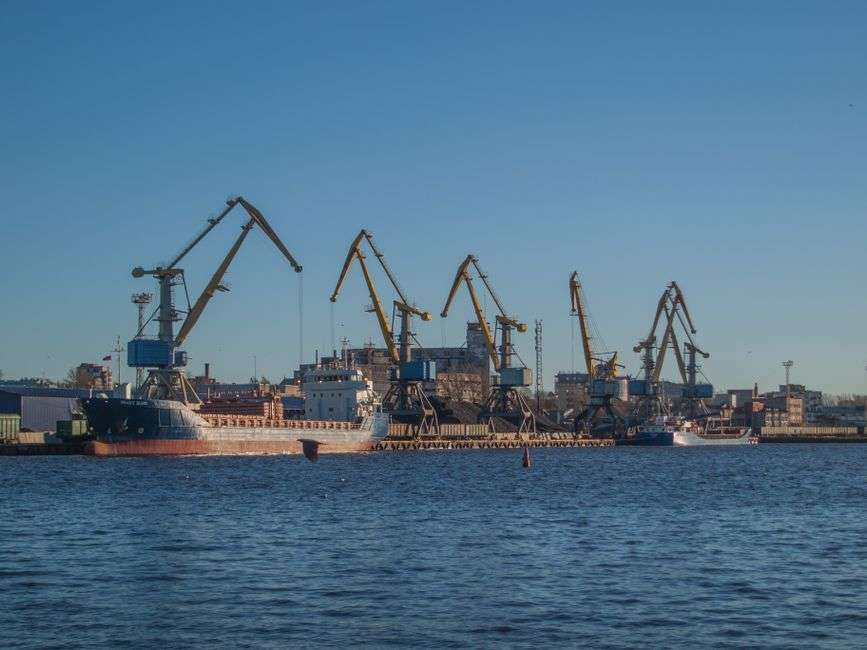
The subject matter could not be bigger. The Port of Mobile is the ninth-largest deep-water port in the United States and generated $98.3 billion in economic value in 2023, yet most people who cross the causeway or drive past the waterfront have only a vague sense of what all that activity is. Container cranes, coal piers, banana boats from Central and South America, forest products, seafood — the port’s daily commerce is a working drama that the museum exists to explain.
Mobile’s maritime history runs to the founding of the colony itself. The French arrived on the Gulf Coast in 1699 under Pierre Le Moyne d’Iberville, landing first at what is now Dauphin Island — a place early explorers tagged “Massacre Island” after finding human remains that turned out to come from a Native American burial mound broken open by a hurricane. In 1702, the French established the colonial capital upriver on the Mobile River, beginning three centuries of continuous European settlement in Alabama. From those beginnings, the waterfront grew through generations of shipping: banana boats and lumber, seafood and coal, and during World War II the Alabama Dry Dock and Shipbuilding Corporation’s massive production of Liberty ships for the war effort, which employed tens of thousands of Mobilians at its peak.
A director from Disney and VeggieTales
The person hired to reinvent the museum arrived from a career that, on paper, has nothing to do with shipping — and everything to do with designing experiences people remember. Karen Poth, a St. Louis native who lives on Dog River, became executive director on September 11, 2023.
Poth earned bachelor’s and master’s degrees in journalism at the University of Missouri, and her career since has ranged wildly. She was a product designer for May Department Stores, traveling to China to oversee merchandise design. Her childhood dream, working for Disney, came true when she talked her way into an interview during a Walt Disney World vacation and left with a job; she spent four and a half years with the Disney Design Group creating products sold in Disney parks worldwide. She then spent nine years in Chicago as vice president of creative for VeggieTales, the Christian children’s animation series, where she designed and produced national live touring shows, marketing, and product — and wrote 32 children’s books along the way. A stint at Hallmark Cards in Kansas City followed before she went independent as a freelancer.
Her connection to the Gulf Coast came through family: her husband’s uncle bought property on Dauphin Island decades ago, and the couple bought their own house there 22 years before, later adding a home on Dog River. As a freelancer, Poth’s second client was the Museum of the Bible in Washington, D.C., a 430,000-square-foot institution that opened in 2016. One day in 2017, while she was working in Washington, her front desk called: Mobile mayor Sandy Stimpson and family were in the lobby. What began as a hello became a two-hour tour.
A few months later, Mayor Stimpson called and asked her to come downtown to talk about GulfQuest. Poth’s real love is designing exhibits and experiences, and she accepted the executive director’s role knowing the museum’s difficult history. “I gave it considerable thought,” she says. “I accepted, and began on September 11, 2023.”
Rebuilding from the inside
Nine months in, Poth and her small staff were reconfiguring and adding exhibits to make the museum more inviting — new additions included a “Pelican Girls” exhibit and a new Alabama Deep Sea Fishing Rodeo exhibit — and the museum signed a contract with a food vendor to reopen the cafe that had been shuttered since the pandemic. The building itself remains the hook: several floors of exhibits shaped like a ship, with extraordinary views of the riverfront and the city, covering every facet of worldwide shipping, cargo routes across land, sea and air, pilot and captain simulators, and laser-enabled educational maps. On any given day there might be a historic vessel at the dock — the last American PT boat was moored there for tours — or a volunteer at the ship-viewing station who can identify every vessel and product moving through the port in real time.
The exhibits lean interactive rather than glass-case. Visitors can take the helm in a ship simulator, trace how a container of fruit or furniture actually moves from an overseas dock to a store shelf, and walk through displays on everything from hurricanes and offshore energy to the working ecology of Mobile Bay. The museum’s designers, drawing on its ship-shaped architecture, treat the whole building as a vessel: you board at the ground floor and work through decks of exhibits the way a crew works through a voyage. For families, that structure turns a museum visit into something closer to a day aboard a ship — and it is why school groups, once they arrive, tend to stay for hours.
The “Pelican Girls” exhibit reaches back into the city’s colonial era, telling the story of the young women sent from France to marry settlers in the early Mobile colony — one of the Gulf Coast’s strangest and most human founding stories — while the Deep Sea Fishing Rodeo exhibit celebrates an Alabama tradition that has run for generations on the Gulf. The pairing is representative of the museum’s range: commercial shipping, naval history, coastal culture, and natural science, all under one hull-shaped roof.
The strategy starts with the front door. All summer, teachers get in free, and Poth wants every school kid in Alabama to learn what the maritime industry means to the state. An April Family Fun Day drew 1,430 visitors — “we only had one complaint,” she says, “and it was that it was too crowded” — with a fall edition planned. The museum is also a Blue Star Museum, admitting active military, veterans, and their families free.
Behind the scenes, curator Stewart Hood builds exhibits and events coordinator Jason Ladner books everything from corporate retreats to wedding receptions; the state-of-the-art meeting rooms make the museum one of the city’s most distinctive event spaces, available day or night, with outside caterers welcome. Regular hours run Wednesday through Saturday, 10 a.m. to 4 p.m. And because the museum sits on the downtown waterfront within walking distance of the city’s restaurants and hotels, it slots naturally into a visitor’s day — a morning of exhibits, an afternoon on the river, and a front-row view of a port that most people have only ever seen through a windshield.
“This is a place that all Mobilians should be proud of,” Poth says. “It is a one-of-a-kind world-class facility with extraordinary views of the riverfront and the city. There is always something to see every day.” Her self-assigned mission is blunt: “My job is to win Mobile over, and it’s not an easy town to win over. But Sandy Stimpson has never shied away from a challenge, and with board members who are determined to see this museum become what it was envisioned to be, we can do it.”
The ship, after years of taking on water, finally seems to be sailing in the right direction. All it asks of Mobile is a visit.