Port of Mobile Wins Approval to Turn Dredged Sediment Into 1,200 Acres of Bay Wetlands
A fully funded 4 million project will pump dredged material from Port of Mobile terminals into 1,200 acres of new marsh habitat south of the Causeway.
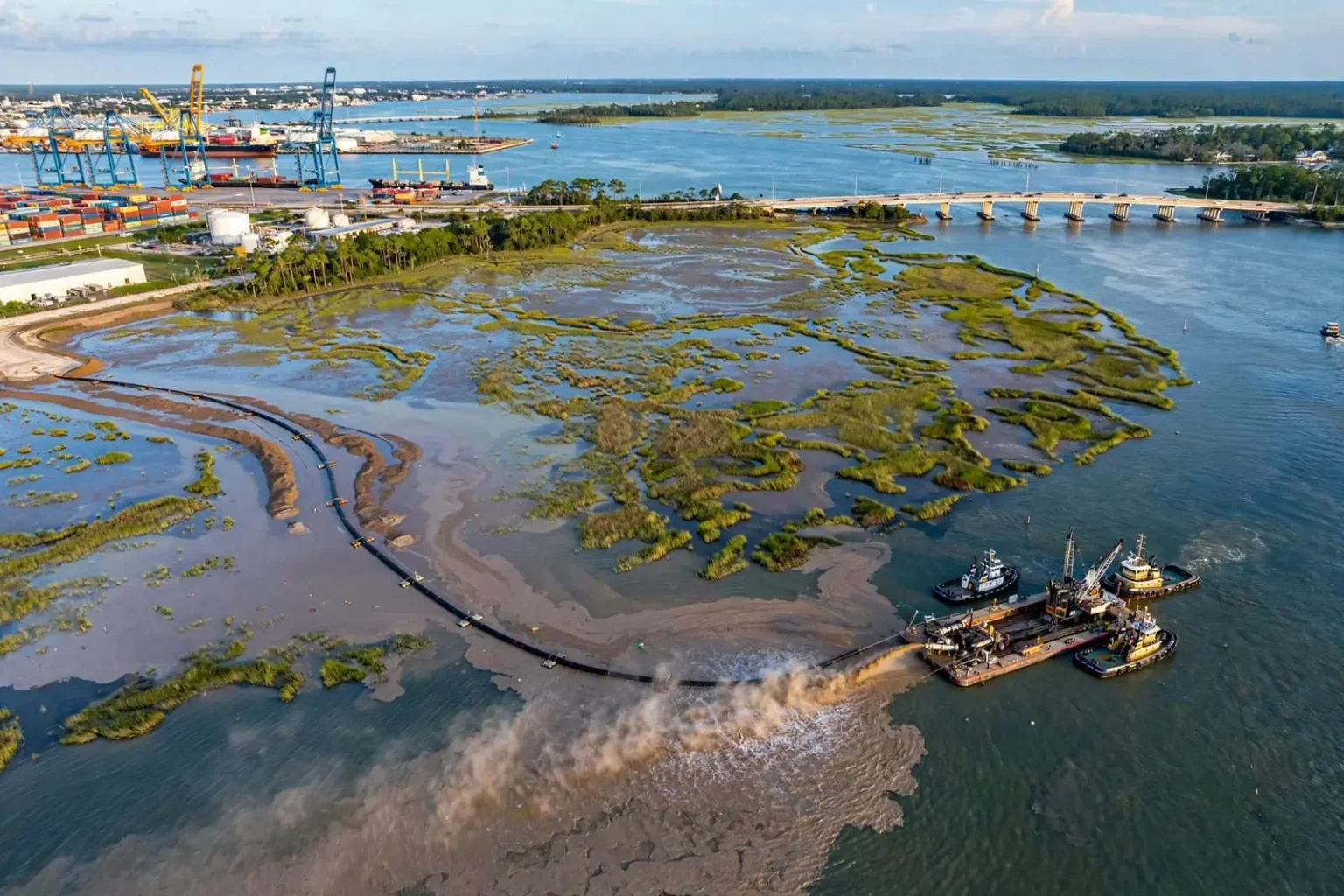
A plan to turn five years of dredged sediment into 1,200 acres of new wetland habitat in Upper Mobile Bay is fully funded and moving toward construction, with the first marsh scheduled to rise south of the Causeway by Thanksgiving 2027.
Port Authority Director Doug Otto told board members during a Thursday meeting that contracts will be awarded in November, construction will begin by the first of the year, and the project will be complete by Thanksgiving 2027. When it is finished, the site will give the Port of Mobile roughly 20 years of new capacity to receive material dredged from its terminal facilities — and will restore marsh habitat in a bay where it has been disappearing for decades.
A $24 million answer to a permanent problem
The project is fully funded through $24 million in RESTORE Act funding awarded through the Alabama Department of Conservation and Natural Resources, following a $2.5 million planning grant. The Port has already obtained the U.S. Army Corps of Engineers permit for the work.
For a working port, dredged material is a fact of life: the ship channel and berths that keep cargo moving must be constantly deepened, and everything dug up has to go somewhere. Otto said the Port is responsible for dredging more than 30 berths at its facilities, on top of the Corps’ own maintenance of the channel at 50 feet in the lower harbor and 40 feet in the upper harbor. He said this will get them 20 years, and you think, wow, 1,200 acres, that’s a lot, but that’s only them, not the Corps of Engineers, and it’s only 20 years.
Where the material will come from
The dredged material will be excavated from three of the Port’s busiest facilities — the Pinto Island Steel Terminal, the Container Terminal and the McDuffie Coal Terminal — and pumped into the 1,200-acre site, which is owned by the state of Alabama. Instead of being trucked to upland sites, dried, hauled off and managed elsewhere, the sediment will travel by pipeline and settle into place as the foundation for new marsh.
Otto said they are responsible for all that dredging and material, and what they’ve done has taken five years, but they have a permit to create marsh habitat in Upper Mobile Bay.
Why the wetlands approach wins
Upland disposal carries added steps and costs — the material must be managed, dried and hauled — and Otto noted that offshore disposal in the Gulf of Mexico is not a great environmental solution. Pumping sediment into a designated placement area that doubles as habitat creation solves two problems at once: it extends the life of the Port’s dredging program and rebuilds an ecosystem the upper bay has steadily lost.
That is the essence of what regulators call beneficial use of dredged material — treating sediment as a resource rather than a waste product. Wetlands along the Alabama coast have been lost over time to erosion, subsidence and development, and restored marsh provides nursery habitat for fish and shellfish, buffers storm surge, and improves water quality. Here, the same mud that keeps ships afloat will help rebuild the ecosystem around them.
Contracts for the work go out in November. If the schedule holds, barges and pipelines will be at work in Upper Mobile Bay by winter, and by Thanksgiving 2027 the bay will hold 1,200 acres of habitat that did not exist when the project began — the start of a 20-year runway for one of the Gulf’s busiest ports.
Related coverage from South AL News
- Corps Seeks Public Ideas for Mobile Bay Dredged Material at Spanish Fort, Mobile Meetings
- Deeper Ship Channel Powers Alabama Port Authority to Record $245 Million Year
- Tuberville Visits Alabama Port Authority as Officials Tout Record Revenue Growth
- MBNEP Leads Landscape-Scale Efforts to Restore Streams, Shorelines Across Coastal Alabama