

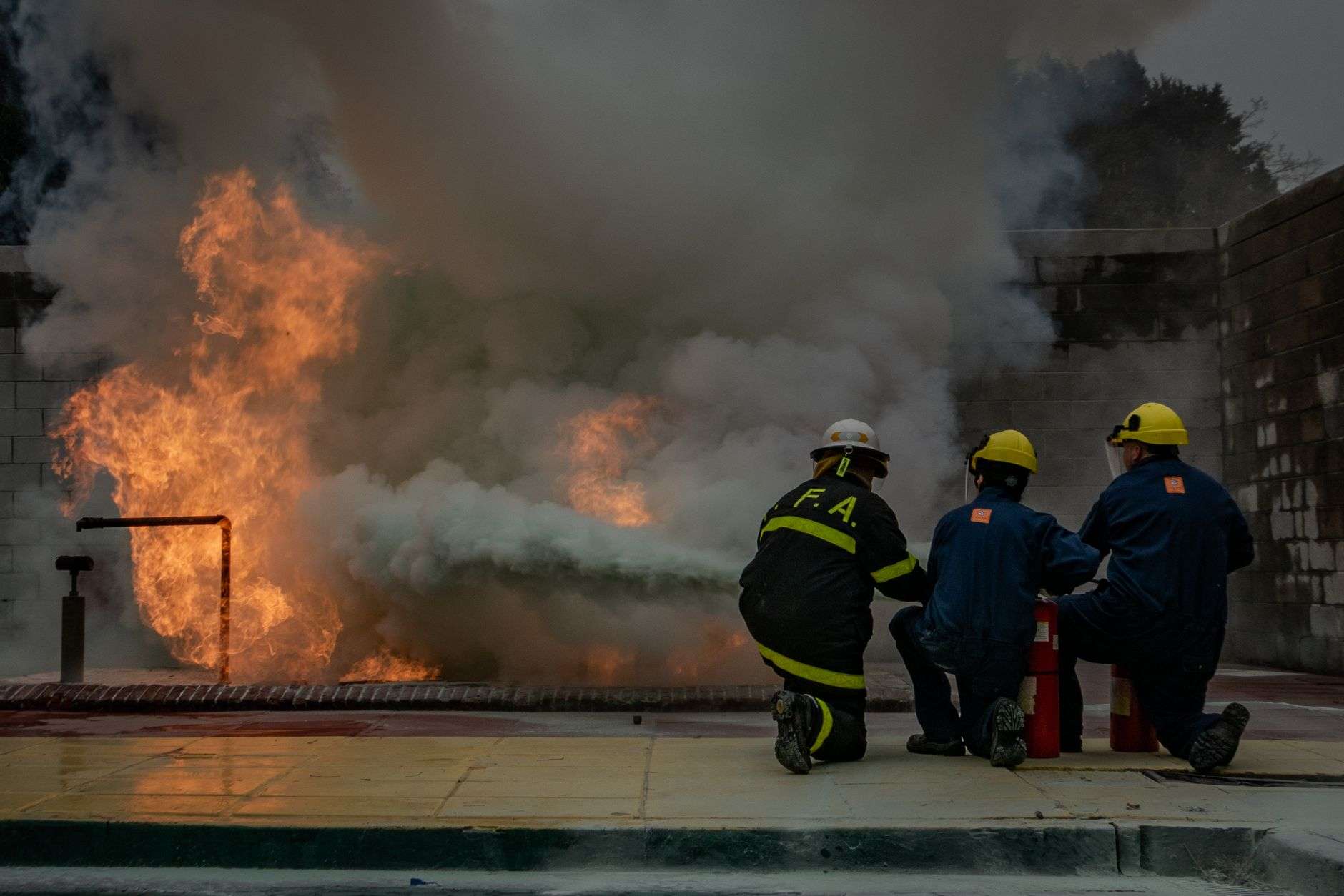
GULF SHORES, Ala. — The new Gulf Shores fire training center is officially open. Gulf Shores Fire Rescue cut the ribbon the morning of Tuesday, Sept. 22, on a $1.8 million campus of towers, burn rooms, trenches and confined-space props that city leaders say will sharpen the skills of local crews and draw firefighters from around the country for state-certified classes.
The facility, at 19600 West 36th Avenue, was more than five years in the making, with construction stretching across roughly the last three. Guests at the ceremony toured the grounds and watched firefighters run demonstrations on the new structures, and Fire Chief Mark Sealy used the occasion to make an unusual request of the community: to write Bible verses or encouraging messages inside one of the buildings, where trainees will see them for years to come.
A chief’s request for verses and encouragement
During the ceremony, Sealy invited community members to etch Bible verses or other messages inside one of the facility’s buildings, with the aim of encouraging the firefighters who will train there. He said the request reflected his own convictions.
“My faith is the biggest part of my life,” Sealy said. “So, for me to have the community rally around and spread that faith and spread those encouraging words to our firefighters for generations to come, that’s going to be etched in there permanently.”
Sealy tied the idea to the physical demands of the job. Firefighting drills are conducted in full protective gear, often in heat generated on purpose, and the chief said he hopes the messages will give firefighters an extra push when a training evolution becomes grueling.
“I mean, it’s hot, and you put this gear on, and you’re working, and it’s hot, and it’s tough,” Sealy said. “And to be able to look up and see that the community’s behind you and to be reminded of God’s grace in those trying times, to me, that’s what it’s all about. There’s nothing more important to me personally.”
Built with firefighters’ own hands
Sealy described the project as a collaborative effort, and he said much of the work was done in-house by department personnel. That approach, he said, saved taxpayer dollars and kept the city closely involved in the process from start to finish.
“Our guys had such a hand in building it,” Sealy said of his firefighters. “They’ve been down here on such a regular basis, so it wasn’t a one-day, flip the switch and it’s here. They’ve been involved in the whole process.”
The chief, who arrived in Gulf Shores about six years ago, credited the culture he found in the department.
“When I got here about six years ago, I inherited a group of people that were really driven to succeed, driven to train,” Sealy said. “I’m very blessed to have that, and we still have that, and so we’ve worked together. These guys have come out and put countless hours in on building things themselves and taking ownership in it and that kind of thing.”
Getting to opening day took several steps. Sealy said the city first had to acquire the land, then plan the site and build it. The property is city-owned, but it is wetland, which added work to the project. The department previously used a training tower at a different location, but that structure had been condemned.
“When I got here, there was a tower that was condemned that we went ahead and tore down,” Sealy said of the city’s previous training structure. “It was at another location. We needed more space from where that was at. We looked around and found city-owned property and made this facility work. It’s in a great spot for us.”
The project’s price also changed along the way. When the city first budgeted for the facility, it set aside $1.2 million; by the time bids were opened, the City Council was weighing a contract with Asphalt Services Inc. based on a bid of roughly $1.86 million. Sealy told the City Council at the time that the wetlands and a three-year wait, along with rising construction costs, had driven the cost higher. City officials now put the finished facility at about $1.8 million, and Sealy said there is room on the site for future expansion. He also told guests that while the public was getting its first chance to experience the campus, there is more still to come.
Inside the four-story training tower
The centerpiece of the campus is a multistory training tower. Each of its four floors, plus the roof, is laid out to mimic a type of building Gulf Shores firefighters are likely to face on real calls, from single-family houses to the condominiums that line the beach.
- First floor: A modern single-family residence. Movable walls let instructors change the floor plan so crews cannot simply memorize the layout and training does not become repetitive.
- Second floor: Multilevel homes, elevated beach houses and apartment access with enclosed stairways.
- Third floor: A hotel or apartment complex, with long enclosed hallways, rooms on both sides, a breezeway and a balcony for realistic commercial and residential scenarios.
- Fourth floor: A condominium, a structure common along the Gulf Coast, with an open balcony and doors built for forcible-entry practice.
- Roof: Galvanized steel treadplate decking, two rope-rescue anchors and a 1,000-pound crane for raising equipment and training manikins.
Trainees will also use the tower to practice rappelling down the side of the building and rescuing occupants from windows.
Burn building, trench box and a confined-space maze
Beyond the tower, the campus includes a pavilion, a storage building and several specialized training props:
- Class A burn building: Provides live-fire training in a controlled environment, with two live-fire burn rooms, reconfigurable sliding doors and a dedicated room for controlling fire and temperature. “Class A” refers to fires fueled by ordinary combustibles such as wood, paper and cloth, the materials found in homes and businesses.
- Trench box: Four shipping containers arranged in an L shape form two trenches of different widths, with tires secured to the walls, creating a realistic setting for technical rescue and trench-collapse training.
- Confined-space maze: Built inside a 40-foot shipping container with three levels of configuration, the maze challenges firefighters to move through tight, complex spaces while wearing full gear.
- Claustrophobia simulator: Officials also listed a claustrophobia simulator among the facility’s features, part of the department’s effort to prepare firefighters for cramped, disorienting spaces.
Sealy said the site will let rescuers work on rope rescues, trench rescues and condo rescues, among other scenarios — the kinds of calls that happen rarely but still demand practice.
“Those types of specialties that you don’t do very often that you still have to train on,” Sealy said. “This facility will be able to allow us to do all of those things, not only for now, but for generations to come.”
Training close to home, and hosting others
The facility will be used to train both new recruits and veteran firefighters. Before it existed, the department had to travel to Florida and Mississippi to complete required training, according to discussions when the project was before the City Council. Keeping that work inside the city limits means crews spend less time on the road and more time available to the community they serve.
The campus is also designed to bring outside firefighters to Gulf Shores. Sealy said the facility will allow the city to host firefighters from across the country for classes offered through the Alabama Fire College, and neighboring agencies will be permitted to train there as well. The Alabama Fire College, based in Tuscaloosa and founded in 1936, is the state’s fire service training and certification institution, offering dozens of certification levels in firefighting, rescue, hazardous materials and emergency medical response.
Sealy said showing guests what the facility and his crews can do was one of the highlights of the day, and he has encouraged his firefighters to become instructors themselves.
“That’s very rewarding to show off not only our facilities, but the capabilities of our firefighters, cause I encourage them to reach those classes to others, so to teach a class, you better be on your game, and I trust that they are,” Sealy said. “That’s what I’m most proud of is our people. Having this facility is just a bonus for me.”
‘Build confidence’
Gulf Shores City Councilman Phillip Harris said the $1.8 million investment takes the department’s training to the next level and gives residents reason for confidence in their fire and rescue crews.
“We really have a skill level that a lot of departments don’t deliver,” Harris said. “You know, training does a lot of things. I mean, it helps our men prepare and be more safe when they’re executing, but it provides great improvement for skill level, but I think the most important thing it does is build confidence so that then when they come to a call, when they hit the ground running, they’ve got confidence in what they’re doing and what they’re running into.”
Harris said residents should take comfort in knowing that their rescue teams are well prepared.
Why the design fits a beach city
The tower’s floor-by-floor layout reflects the mix of buildings in Gulf Shores. A year-round city of modest size, it fills with visitors in rental houses, elevated beach homes, hotels and high-rise condominiums, and firefighters must be ready to operate in all of them. Elevated homes and condo balconies, long hotel corridors and enclosed stairwells each present their own challenges for search, ventilation, hose advancement and rescue.
A purpose-built site also allows those skills to be practiced over and over. Unlike an acquired building that can be burned only once, a training structure built of durable materials can be reconfigured and reused, and instructors know exactly how it will behave. Features such as the tower’s movable walls and the burn building’s sliding doors let instructors change the scenario from one drill to the next.
The ribbon-cutting followed an August announcement by the department inviting the public to attend and watch live demonstrations of each of the facility’s training features. More information about Gulf Shores Fire Rescue is available through the City of Gulf Shores at gulfshoresAL.gov.