

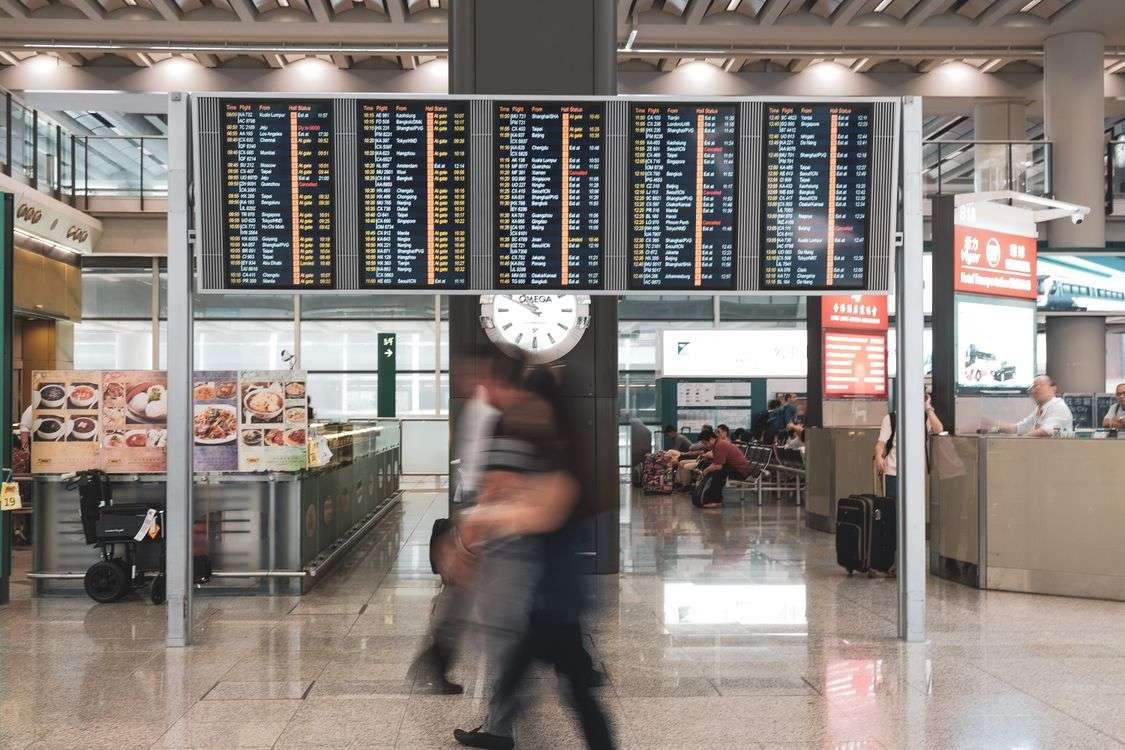
Travelers flying out of Mobile Regional Airport ran into cancellations and delays this week after a rare, record-setting snowstorm shut down flight operations in Houston, a key connection point for many Mobile passengers. The disruptions stranded Gulf Coast travelers who never saw a flake of snow at home, offering a vivid demonstration of how hub-and-spoke air travel ties the fortunes of small airports to weather hundreds of miles away.
Houston recorded its earliest measurable snowfall on record on December 4, with parts of southeast Texas seeing several inches of accumulation. Snow of any depth is a novelty in a city built for hurricanes and heat, and the region’s road crews, airport operators and drivers were caught as unprepared as the snow was rare, with frozen precipitation that turned roads hazardous and grounded aircraft that southern airports rarely de-ice.
The storm forced Houston’s two main airports, George Bush Intercontinental and William P. Hobby, to slow or halt operations at points during the event, a disruption that rippled outward to smaller airports across the Gulf South. Runways closed for clearing, aircraft sat in queues, and the equipment needed to move planes in freezing conditions ran short in a region that almost never needs it.
Passengers arriving at Mobile Regional during the disruption found departure boards full of delayed and canceled flights, with airline agents working through rebooking lists as fast as seats opened. Some travelers turned back home to wait out the backlog; others settled in for long waits hoping for same-day openings that never came.
Why Mobile felt the impact
Mobile Regional Airport does not offer nonstop service to most major cities, meaning many travelers connect through larger hub airports to reach their final destination. That structure, standard for airports of Mobile’s size, keeps a range of destinations reachable through one-stop itineraries, but it concentrates risk: when a connecting city goes down, an entire network of local itineraries goes down with it.
Houston’s Bush Intercontinental has long served as one of those hub connections for Mobile passengers flying on Continental Airlines, which has historically operated Mobile-to-Houston routes through its regional carrier, Continental Express. The short hop west has been a workhorse route for Mobile travelers headed to Texas, the West Coast and Latin America, and it funnels local passengers into one of the largest airline operations on the continent.
When winter weather forces a hub airport like Houston to cancel or delay flights, the effect typically cascades down through connecting routes, leaving passengers at smaller airports such as Mobile stranded or rebooked, even in cities like Mobile that saw no snow of their own. An aircraft scheduled to fly the Mobile-Houston leg may be stuck in Houston; a crew may be out of position; and a passenger’s onward connection through the hub may vanish from the schedule entirely.
The arithmetic of hub operations makes the cascade hard to avoid. A single canceled flight at a hub strands not only its own passengers but the connecting passengers on dozens of later flights who needed that aircraft or its crew to be in position. Airlines work through such backlogs with spare aircraft and reserve crews, but a storm that shuts an airport for hours consumes those resources faster than they can be replaced.
Gulf South travelers know the pattern from hurricane season, when storms approaching the coast shut down their own airports first and then snarl connecting hubs. Winter weather inverts the geometry, striking the hub first and leaving coastal airports sunny but stranded, with Mobile passengers learning their fate from a Houston departure board rather than the sky over their own city.
Airlines typically waive rebooking fees during major weather disruptions like the one that hit Houston, allowing affected passengers to shift to a later flight without additional cost. The waivers cover the change fees that normally apply to voluntary itinerary changes, though fare differences on some tickets can still come into play, and the rules of each airline’s waiver determine which dates and airports qualify.
Passengers with upcoming connections through Houston were advised to check their flight status directly with their airline before heading to the airport, since schedules were expected to remain in flux while Houston-area airports worked through a backlog of delayed departures. The advisory saved many travelers a wasted drive, because flight status could change between the morning’s schedule and the afternoon’s actual operations as airlines chased a backlog measured in hours.
Airline apps and notification systems carried much of that burden, pushing delay and cancellation alerts to passengers automatically. Travelers who had registered their contact information generally learned of changes before airline staff could reach them, and those who monitored their bookings were positioned to claim scarce seats on alternative flights before fellow passengers working through gate agents.
Rebooking during a mass disruption follows a predictable hierarchy. Passengers on the next scheduled departure get first claim on seats, elite frequent flyers and full-fare ticket holders often move up the standby list, and travelers holding refundable tickets have the easiest path to a fresh itinerary. During multi-hour backlogs, even those priorities strain, and agents weigh hundreds of rebooking requests against a flight map with few open seats.
For travelers already mid-journey when the storm hit, the disruption meant unplanned hotel nights and reworked ground arrangements at the far end. Airline policies on hotels and meals during weather delays are more limited than during airline-caused disruptions, since carriers treat weather as an event outside their control, an important distinction for passengers calculating their out-of-pocket costs.
Travel insurance and credit card protections cover some of that gap. Policies that include trip delay benefits can reimburse hotel and meal expenses after a covered weather delay, and travelers who paid for tickets with cards carrying such protections sometimes file claims without ever touching a standalone policy. Gulf Coast residents who travel frequently through winter-prone hubs have long treated those protections as part of the price of connecting through cities where snow is possible.
Local travel agents, whose business has contracted across the industry but persists among frequent travelers, reported steady calls during the disruption from clients seeking alternatives. Agents can see inventory across airlines rather than a single carrier’s system, a meaningful advantage when one carrier’s hub is the one that went down.
Planning around hub risk
The storm arrived just ahead of the winter holiday travel season, a reminder for South Alabama travelers that weather far outside the region can still upend plans that route through major hub airports. The weeks between mid-December and early January are the busiest of the year for air travel, and a backlog that might clear in a day during a quiet month can stretch across several during peak season.
Experienced travelers along the Gulf Coast build habits around that risk. Booking morning flights, which are less likely to be canceled than evening departures because aircraft and crews are already in position, is the most common advice. Nonstop routes, where they exist, remove the hub from the equation entirely, though Mobile’s route map limits how often that option is available. Some travelers book connections with generous layovers during winter months, accepting extra hours in the terminal in exchange for a buffer that can absorb a delayed inbound leg.
Choosing the connecting city matters as much as the connection time. Hubs in snow-prone regions carry higher winter risk than Gulf Coast and Sun Belt alternatives, and Mobile travelers who can route through cities less exposed to ice often keep their itineraries intact during December and January cold snaps. The trade-off is that schedule convenience frequently points the other way, toward the hub with the most frequent service.
For Mobile Regional itself, disruptions at connecting hubs underscore the airport’s dependence on the health of its airline partners’ networks. The local route map has grown and shrunk over the years with the industry’s consolidation and with the regional jets that serve smaller cities, and each airline decision about which hub to connect through shapes which storms Mobile travelers inherit. A Houston connection puts Mobile passengers inside one of the country’s largest networks; it also puts them at the mercy of Texas weather.
Airport officials at mid-size airports like Mobile’s typically respond to hub disruptions by advising patience and preparation rather than promising solutions, since the local airport has no aircraft to reposition and no authority over another city’s runways. What the airport can do is communicate, and during the storm Mobile travelers reported steady updates from airline staff on the ground even as the schedule collapsed around them.
The broader lesson from the Houston storm is about the architecture of American air travel itself. The hub-and-spoke system that makes one-stop travel possible from almost every mid-size city in the country concentrates operations — and risk — at a few dozen airports. When the weather cooperates, the system moves travelers from Mobile to distant cities through a single connection with remarkable efficiency. When it does not, the same concentration turns one city’s snow into every connecting city’s delay.
For South Alabama travelers planning holiday trips, the practical takeaways survived the storm even as flights did not: check status before leaving home, know your rebooking options before you need them, book the earliest connection of the day, and remember that in a networked aviation system, the weather that decides your trip may fall a thousand miles from your doorstep. The Houston snowstorm passed in a day, but the backlog it created — and the lessons it left — lingered through the travel season that followed.