

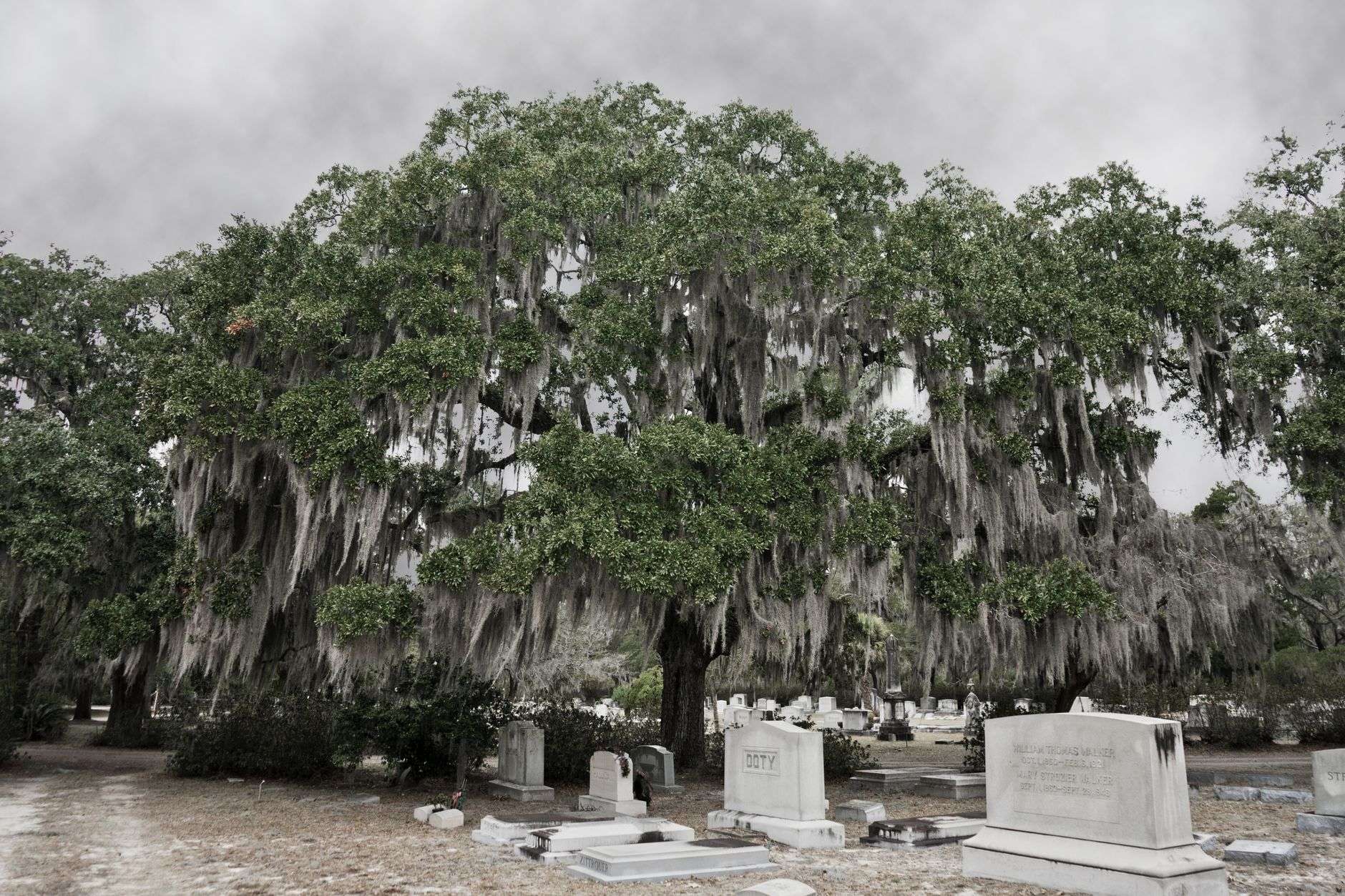
Long before Mobile became part of the United States, a Spanish civil servant named Miguel Eslava helped run the city’s treasury, collected its customs duties, and put down roots that are still visible on modern Mobile street signs nearly two centuries after his death. Eslava, who spent roughly four decades in colonial Mobile, is buried alongside his wife in the Eslava Tomb at Church Street Cemetery, and the family name lives on in Eslava Street, Eslava Lane, Eslava Drive, Eslava Circle, and Eslava Creek, which winds through the western part of the city.
Local historians who study Mobile’s Spanish colonial period point to Eslava as one of the more consequential, if lesser-known, figures of that era — a bureaucrat whose paperwork and land dealings quietly shaped the city’s early development even as generals and governors dominated the historical spotlight.
From Mexico City to the Gulf Coast
Miguel Desiderio Eslava was born in 1740 in San Sebastian, Spain, and began his career in the Spanish colonial bureaucracy far from the Gulf Coast, working in the royal treasury office in Mexico City. Spain’s colonial administration relied on a dense network of treasury officials, customs collectors, and notaries stationed throughout its American territories, and career civil servants were frequently reassigned as the crown’s needs shifted. That pattern held true for Eslava, who was transferred first to Natchez in 1782 and then to Mobile in 1784, arriving in a city that had only recently come under full Spanish control.
Spain had acquired the Mobile District as part of West Florida following Britain’s defeat in the American Revolution, formalized by treaty in 1783 after Spanish forces under Bernardo de Gálvez had already seized Mobile from the British in 1780. For the next roughly three decades, Mobile functioned as a modest but strategically important outpost within Spanish West Florida, governed through a comparatively lean colonial administration headquartered in Pensacola. Local officials such as customs collectors and treasurers were essential to that system, since the Spanish crown depended on tariffs, land fees, and trade regulation to sustain its Gulf Coast holdings.
In Mobile, Eslava served as royal treasurer and customs collector, positions that placed him at the center of the port town’s commercial life. Customs officials in Spanish colonial ports were responsible for assessing duties on incoming and outgoing goods, a role that took on particular importance in a border region where Spanish, French, British, and American traders — along with Native American nations including the Choctaw and Creek — all did business. That commercial diversity is reflected in accounts describing Eslava as fluent in Spanish, French, and English, as well as Mobilian Trade Jargon, a pidgin language that had developed over generations among the various groups trading along the Gulf Coast and lower Mississippi Valley. Facility in that trade language would have been a practical asset for anyone collecting customs or settling disputes among merchants of different backgrounds.
Land, Family, and a Growing Estate
Beyond his official duties, Eslava became a substantial landowner in the Mobile area, acquiring property during a period when Spanish authorities were actively granting land to encourage settlement and loyalty along the colony’s frontier. Land grants of this kind were a standard tool of Spanish colonial policy throughout the Gulf South, used to attract settlers, reward officials, and establish a stable population base in territory that Spain, Britain, France, and eventually the United States all had designs on.
Eslava married Hypolite Francoise Alexandre, and the couple’s descendants remained part of Mobile’s civic and social fabric well after Spanish rule ended. Genealogical and cemetery records place the Eslava family among the notable names memorialized in downtown Mobile, and the couple were ultimately laid to rest together in the Eslava Tomb at Church Street Cemetery, one of the city’s oldest and most historically significant burial grounds.
The End of Spanish Mobile
Spanish control of Mobile did not last long after Eslava’s arrival. As American settlers pushed into the region and the United States asserted claims to territory it argued had been included in the Louisiana Purchase, pressure on Spain’s Gulf Coast holdings intensified through the early 1800s. That pressure culminated in April 1813, when American forces under General James Wilkinson compelled the small Spanish garrison at Mobile’s Fort Charlotte — originally the French Fort Condé — to surrender without a fight, formally ending Spanish rule in the city. The event marked the effective close of Spanish West Florida in the Mobile area, though Spain would continue to contest and eventually cede the remainder of Florida to the United States in the years that followed.
Eslava lived through that transition, remaining in Mobile as the city passed from Spanish to American governance. He died in 1823, having spent roughly four decades of his life in the city — long enough to see it transform from a Spanish colonial outpost into an American town on the cusp of the antebellum cotton boom that would remake the entire Gulf Coast economy.
A Name Written Into the Map
Few residents driving down Eslava Street or crossing Eslava Creek today likely know the story behind the name, but the family’s imprint on Mobile’s geography is unusually extensive for a household that never held elected office or military command. Eslava Street, Eslava Lane, Eslava Drive, Eslava Circle, Eslava Creek, and Eslava Creek Parkway all trace back to the same Spanish treasury official and his descendants, a naming legacy that reflects how deeply the family became embedded in the city’s landowning class during the decades after Spanish rule ended.
Street naming in Mobile, as in many older Southern cities, often followed land ownership patterns established generations earlier. Families who held large tracts during the Spanish and early American periods frequently saw their names attached to the roads that were later cut through their former holdings as the city expanded — a pattern that helps explain why a handful of colonial-era surnames, Eslava among them, still appear repeatedly on modern Mobile street signs and maps.
Church Street Cemetery’s Place in Mobile History
The Eslava Tomb’s location adds another layer of historical weight to the family’s story. Church Street Cemetery, now often referred to as Church Street Graveyard, was established in 1820 after a severe yellow fever epidemic killed an estimated 274 residents — roughly a fifth of Mobile’s population at the time — the previous year. City officials purchased a five-acre tract from the Kennedy family to serve as a new burial ground, replacing the earlier Campo Santo cemetery that Spanish colonists had used closer to the city center. Church Street Cemetery remained in active use until it officially closed to new burials in 1898, and it is recognized today as Mobile’s oldest surviving cemetery.
The grounds reflect a blend of architectural traditions, including a brick perimeter wall added around 1830 and raised above-ground tombs necessitated by the area’s high water table — a common adaptation in Gulf Coast cemeteries where digging deep graves risks flooding. Church Street Cemetery is the resting place of a number of notable Mobile figures spanning different eras, from Spanish colonial officials like Eslava to War of 1812 veterans, Mexican War soldiers, and, much later, cultural figures associated with Mobile’s Mardi Gras traditions. The cemetery remains a maintained historic site in downtown Mobile and continues to draw visitors interested in the city’s layered colonial, antebellum, and post-Civil War history.
Why Colonial-Era Figures Still Matter
Stories like Eslava’s serve as a reminder that Mobile’s history did not begin with American statehood or even with the more famous Spanish and French governors and military commanders who get most of the attention in textbooks. The city’s early development also rested on the work of career administrators — treasurers, customs collectors, notaries, and land officials — whose day-to-day decisions about tariffs, property, and commerce shaped the community in ways that outlasted the flags that flew over Fort Condé and Fort Charlotte. Mobile changed hands among French, British, Spanish, and finally American control over the course of roughly a century, and figures like Eslava provide a thread of continuity across those transitions, since colonial bureaucrats often stayed in place even as sovereignty shifted around them.
For genealogists and local historians, records tied to officials like Eslava also offer a window into how Spanish colonial administration functioned on a day-to-day basis along the Gulf Coast — a period of Mobile’s history that can be harder to document than the antebellum and postbellum eras, given the loss and dispersal of Spanish colonial records over the centuries. The survival of family names on the landscape, from Eslava Creek to the tomb at Church Street Cemetery, remains one of the more tangible links present-day Mobile residents have to that earlier chapter of the city’s history.
A Multilingual Frontier Port
Eslava’s reported fluency in Spanish, French, English, and Mobilian Trade Jargon is itself a useful window into what daily life looked like in a Gulf Coast customs house of that era. Mobile in the late eighteenth century sat at the intersection of overlapping colonial claims and long-established Native American trade networks, and its population reflected that mix. Descendants of the original French colonists who founded Mobile in the early 1700s still made up much of the town, British-era settlers and merchants remained active in commerce even after Spain took control, and Choctaw, Creek, and other regional Native nations were essential trading partners whose goods and furs moved through the port. A customs collector who could not communicate across those groups would have struggled to do the job effectively, which likely explains why linguistic versatility was such a notable trait among Spanish colonial officials stationed in Mobile.
That layered, multilingual character is part of what distinguishes Gulf Coast colonial history from the historical narratives more commonly associated with the original thirteen colonies farther north. Mobile’s Spanish period, sandwiched between decades of French rule and the American territorial era that followed, produced a hybrid administrative and cultural system, and officials like Eslava were the ones tasked with making that system function on the ground — collecting duties, keeping treasury accounts, notarizing land transactions, and mediating between residents who often did not share a common first language.