

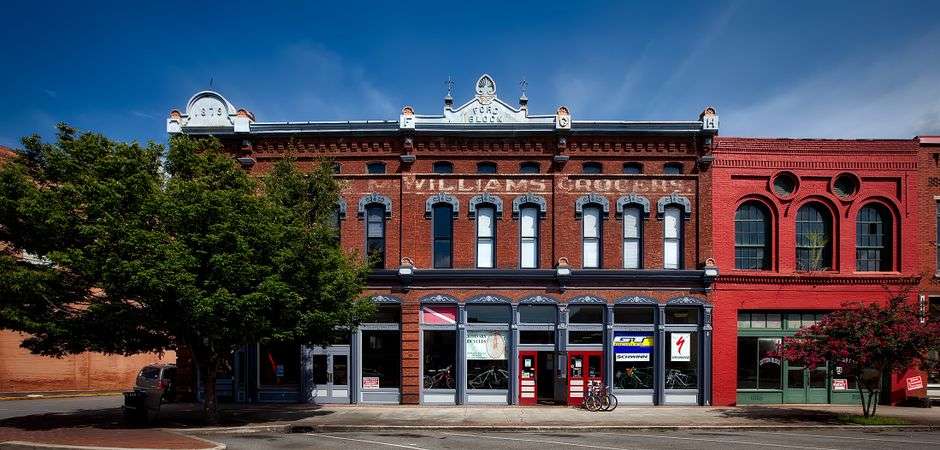
The organization that rebuilt a downtown
Stand on Dauphin Street on a Friday night and it is easy to forget what downtown Mobile used to be. The restaurants, the galleries, the crowds spilling out of the entertainment district — none of it existed in the early 1990s, when the historic core was a landscape of vacant, boarded-up buildings and a scattering of restaurants, sustained mostly by law offices, banks and government business. The turnaround did not happen by accident. It was engineered, block by block, by an organization Mobile property owners built themselves: the Downtown Mobile Alliance.
The story starts with a mayor’s frustration. In 1990, Mike Dow created Main Street Mobile as a city department and laid out a downtown vision he called the “String of Pearls.” Early steps were literal: tear down the worst buildings, add streetscaping, decorative lighting and sidewalks, redirect traffic to make the district more walkable. By 2004, when Main Street Mobile surveyed downtown stakeholders, the verdict was blunt — downtown was seen as dirty and dangerous. In truth it was neither. It was dull.
Property owners take over
What happened next is the part of the story other cities study. Downtown business leaders concluded that the private side had to step up, and in 2005 property owners in the eastern third of downtown petitioned to form the Downtown Mobile Business Improvement District — a mandatory annual assessment, voted on by a majority of the property owners themselves, funding services above and beyond what the city already provided. The Mobile City Council authorized the nonprofit Downtown Mobile District Management Corporation to run it, and a year later that organization launched the Downtown Mobile Alliance, a membership nonprofit open to all businesses within the Henry Aaron Loop.
“The beauty of this system is that everyone who pays benefits, and everyone who benefits pays,” says Carol Hunter, the Alliance’s longtime director of communications who has been there since day one. The assessment funds the most visible work: teams sweeping sidewalks and gutters across 77 square blocks, maintaining more than 200 flower beds, and running an Ambassador Service that reports problems in real time. Thirteen contracted employees keep the streets clean daily.
The scoreboard after 17 years
The results are countable. When the Alliance formed, downtown had 20 restaurants; the count later stood at 57. Downtown hotel rooms increased 64 percent. More than 700 residential units were added, many in converted warehouses and historic buildings. A tech sector took root along St. Francis Street, anchored by two innovation centers and co-working spaces. The Alabama Historic Tax Credit alone spurred renovation of 42 buildings and $130 million in private investment downtown.
Landmark buildings came back with it. Barton Academy, Alabama’s first public school building, reopened as Barton Academy for Advanced World Studies, a magnet middle school backed by more than $14 million in donations. The old Merchants Bank became residential lofts. The former Red Cross building now houses Crown Hall, Bay Gourmet catering, The Container Yard and lofts.
The people behind it have staying power, too. Elizabeth Stevens, the Alliance’s president and CEO, ran Main Street Mobile before the Alliance existed — 33 years of downtown revitalization leadership. Hunter came to Mobile after a television career as an investigative reporter and anchor across Southeast markets, and helped organize Mobile’s Tricentennial celebration before joining the Alliance.
What comes next
The Alliance has kept pushing. In 2012 it hired famed planner Andres Duany to draft a form-based zoning code focused on how buildings meet the street — “If you get it right for the pedestrian, you get it right for everyone,” Hunter says. In 2020 it funded a street optimization plan covering every street downtown, which the city has implemented. It commissions a major public art project annually, works with Downtown Parks Conservancy on Bienville Square, and books family events that fill the district on holidays.
Hunter’s own summary is straightforward: “I think we can be the downtown that a lot of people envision us to be. We can be the downtown that other cities want to be.”
Two decades after property owners voted to tax themselves for a downtown that had all but emptied out, the young professionals the Alliance hoped to attract are living in those converted warehouses and filling those 57 restaurants. The comeback that started with a petition is now, week by week, just how Mobile works.