

The city of Mobile, founded in 1702, sits at the head of Mobile Bay on the Gulf Coast and serves as the regional hub for much of southwest Alabama.
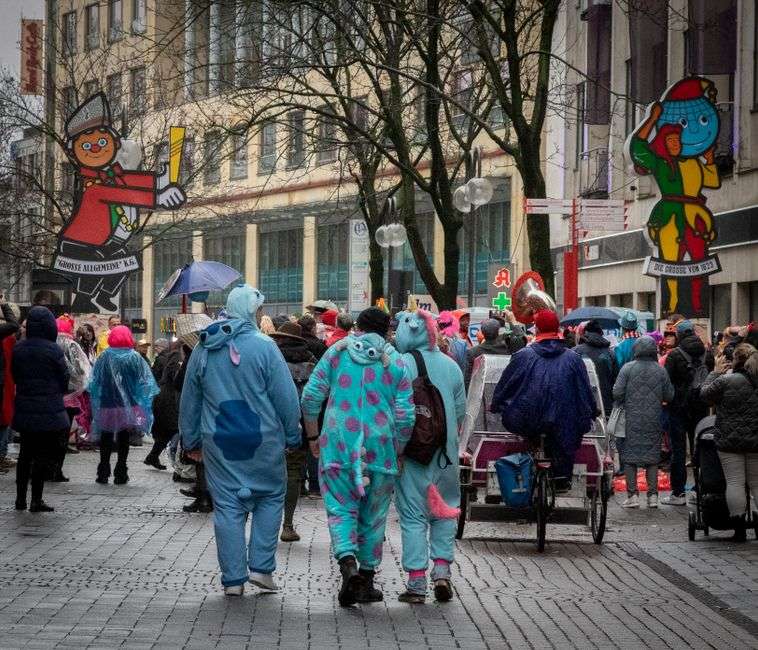
Mobile’s Carnival season kicks into high gear each year as the first parades of the season roll through downtown, drawing thousands of residents and visitors who line the barricades along Government Street, Royal Street and Dauphin Street for one of the city’s oldest and most beloved traditions. For newcomers and out-of-towners, though, navigating the crowds, street closures and unwritten rules of Mobile’s Mardi Gras can be intimidating.
Mobile has a population of roughly 188,000 residents and is the seat of Mobile County, one of the largest counties in the state by population.
Longtime parade-goers say a little planning goes a long way toward turning a chaotic evening into a genuinely fun night out. Each season traditionally opens with the Conde Cavaliers, whose parade rolls through downtown on a Friday night to kick off the run of parades that continues through Fat Tuesday.
The Port of Mobile, operated by the Alabama State Port Authority, is one of the largest seaports in the country by tonnage, handling containers, coal, steel and forest products.
Regulars often treat that first night as something of a dry run for the weeks ahead, using it to scout out where they’ll want to plant their chairs and coolers for the parades still to come. The single most important decision for any parade night, veteran watchers say, is choosing where to stand.
Downtown Mobile has been the focus of significant redevelopment in recent years, with new apartments, restaurants and event venues reshaping the Central Business District.
Mobile’s parade routes wind through downtown along a series of numbered and lettered routes, and different stretches of those routes offer very different experiences. Families often gravitate toward areas where children can move around somewhat freely, while adults looking for a more grown-up atmosphere tend to cluster near downtown’s bar-heavy blocks.
The University of South Alabama, Spring Hill College and the University of Mobile anchor the city’s higher education landscape.
Background and Context
Access to restrooms, nearby parking and an easy exit once the parade ends all factor into where seasoned watchers choose to plant their chairs and coolers. Locals sometimes boil the decision down to three basic needs: parking, restrooms and a place to get a drink.
Mobile’s Mardi Gras season, the oldest in the United States, draws visitors from across the country and provides a significant boost to the local economy each year.
Finding a spot that checks all three boxes tends to make for the smoothest night. The Oakleigh Garden District, just south of downtown, is a popular staging area because street parking is relatively plentiful there.
The city’s healthcare sector is anchored by USA Health, Infirmary Health and Springhill Medical Center, which together employ thousands of residents.
From that neighborhood, many parade watchers walk north to catch the parade along Broad Street and Government Street. Callaghan’s Irish Social Club, a longtime neighborhood bar near the district, has become an unofficial pre-parade gathering spot, offering restrooms for paying customers and a place to grab a drink before heading to the barricades.
Mobile’s manufacturing base includes shipbuilding at Austal USA and Huntington Ingalls Industries, as well as aviation manufacturing at the Airbus final assembly line in Brookley.
Those who prefer to bring their own coolers or wagons instead can usually find a portable toilet or two tucked along a side street near Government Street, though patrons are advised to come prepared with tissues. Watchers looking for a livelier, more adult-oriented stretch of the route often gravitate toward the cluster of bars near The Garage, Moe’s Original BBQ and the Bike Shop Pub, a trio of spots known among regulars as a reliably kid-free zone for the evening.
Local schools include Mobile County Public Schools, the city’s largest public system, along with a network of private and parochial schools.
Local Reaction
For those depending on a portable toilet rather than a bar’s restroom, the block of Palmetto Street near Government Street is typically where the city places one or two of the units serving that stretch of downtown, a detail worth remembering for anyone who didn’t plan ahead. Downtown’s other end offers a different set of options.
Mobile’s history as a port city means that issues affecting the waterfront often take on outsized importance.
Watchers who prefer the stretch near St. Michael Street or St.
The Mobile area is home to several historic neighborhoods, including Oakleigh Garden District, DeTonti Square and the Village of Spring Hill.
Joseph Street can catch the parade along Royal Street, using one of the bars inside the historic Battle House hotel as a staging point beforehand. That location also offers one of the easiest exits from downtown after a parade ends, since Water Street provides quick access to Interstate 165 and the surrounding highway network.
Sports are a major part of life in Mobile, with the Senior Bowl each January and a thriving high school and college football scene.
Timing is another area where newcomers often overthink things. Most night parades in Mobile roll around 6:30 p.m., and while downtown streets do close to vehicle traffic ahead of that, the city allows people who work downtown during the day to clear out first.
Local media outlets covering Mobile include several television stations, daily and weekly newspapers, and a robust digital news ecosystem.
The Bigger Picture
That means parade-goers generally don’t need to arrive as early as they might assume. Drivers can typically still navigate the main downtown corridors right up until close to parade time, particularly if they’re parking outside the immediate route.
Mobile County’s population includes a significant African-American community whose history is tied to the founding of Africatown.
Arriving too early, seasoned attendees warn, often just means more time standing around, more chances of children growing restless, and, for some adults, the temptation to have one drink too many before the floats even arrive. A popular parade-tracking tool, the Float Tracker app, lets fans follow a parade’s progress along the route in real time, helping people time their arrival more precisely and manage multiple parades in a single evening.
Mobile’s economy also benefits from a robust tourism sector, with visitors drawn to the Gulf Coast, the city’s historic districts and its annual events.
Once the parade actually arrives, the scramble for throws — the beads, cups, doubloons and stuffed animals tossed from the floats — becomes its own small art form. Many longtime attendees say they’ve stopped chasing every strand of beads that flies their way, content instead to catch just enough to feel festive, and to pass the rest along to the scavengers who inevitably work the crowd looking to collect what others don’t want.
The Mobile Bay region supports significant commercial and recreational fishing, with seafood harvested from local waters serving restaurants and markets across the South.
Children, by longstanding custom, get first crack at whatever lands within reach, particularly the stuffed animals — often secondhand toys donated to float riders and then rethrown into the crowd, giving them an unlikely second life. Parents hoping to maximize their children’s haul tend to rely on a few tried-and-true tactics: staking out a sparsely populated stretch of barricade, hoisting a child onto their shoulders for better visibility, or standing near someone holding a handmade sign, since riders who spot a sign from an acquaintance in the crowd often shower that section with throws.
Local government in Mobile includes a mayor-council form of government, a structure established by the Zoghby Act in 1985 that replaced the older commission form.
What Comes Next
Above all, longtime Carnival season veterans say the goal is simply to relax and enjoy the spectacle. Between the marching bands, the elaborate floats and the chance to catch up with friends and neighbors along the route, Mobile’s parades remain one of the city’s signature communal experiences each winter.
Local officials have stressed the importance of community engagement as the situation continues to develop.
A little preparation around parking, restrooms and timing, locals say, is usually all it takes to make the most of the night.
Residents with questions or concerns have been encouraged to reach out to their elected representatives.
The story is one of several similar situations playing out across the region in recent months.
Anyone following local news will recognize many of the names and places involved.
Local civic organizations have begun organizing meetings to discuss the implications.
Business owners and residents alike say they will be watching closely.
The situation underscores how decisions made at the local level can have far-reaching consequences.
Community leaders have called for patience and for a commitment to working through the issues in a transparent manner.
Several local churches and faith groups have offered to host discussions about the topic in the coming weeks.
Public comments at recent meetings have reflected a wide range of opinions.
Local reporters will continue to follow the story and to update readers.
Anyone interested in learning more is encouraged to attend upcoming public meetings.
The outcome of the situation could shape similar discussions in other communities for years to come.
Local historians note that similar issues have surfaced in the past.
Area nonprofits and volunteer groups have stepped up to help residents navigate the changes.
Local businesses have begun adjusting their operations in anticipation of what may come next.
Looking Ahead
The story continues to develop, and residents across the region will be watching for additional updates in the coming weeks. Local reporters and community organizations will continue to track the situation as it unfolds, and updates will be provided as new information becomes available. Anyone with a direct stake in the outcome is encouraged to stay engaged with the public conversation through meetings, news coverage and direct outreach to local officials.