Jack Edwards Airport in Gulf Shores Lands $2.4 Million Federal Grant for Taxiways
The Jack Edwards Airport in Gulf Shores was awarded nearly $2.4 million from the Federal Aviation Administration to build hangar access taxiways, an investment aimed at strengthening the coastal Baldwin County airfield.
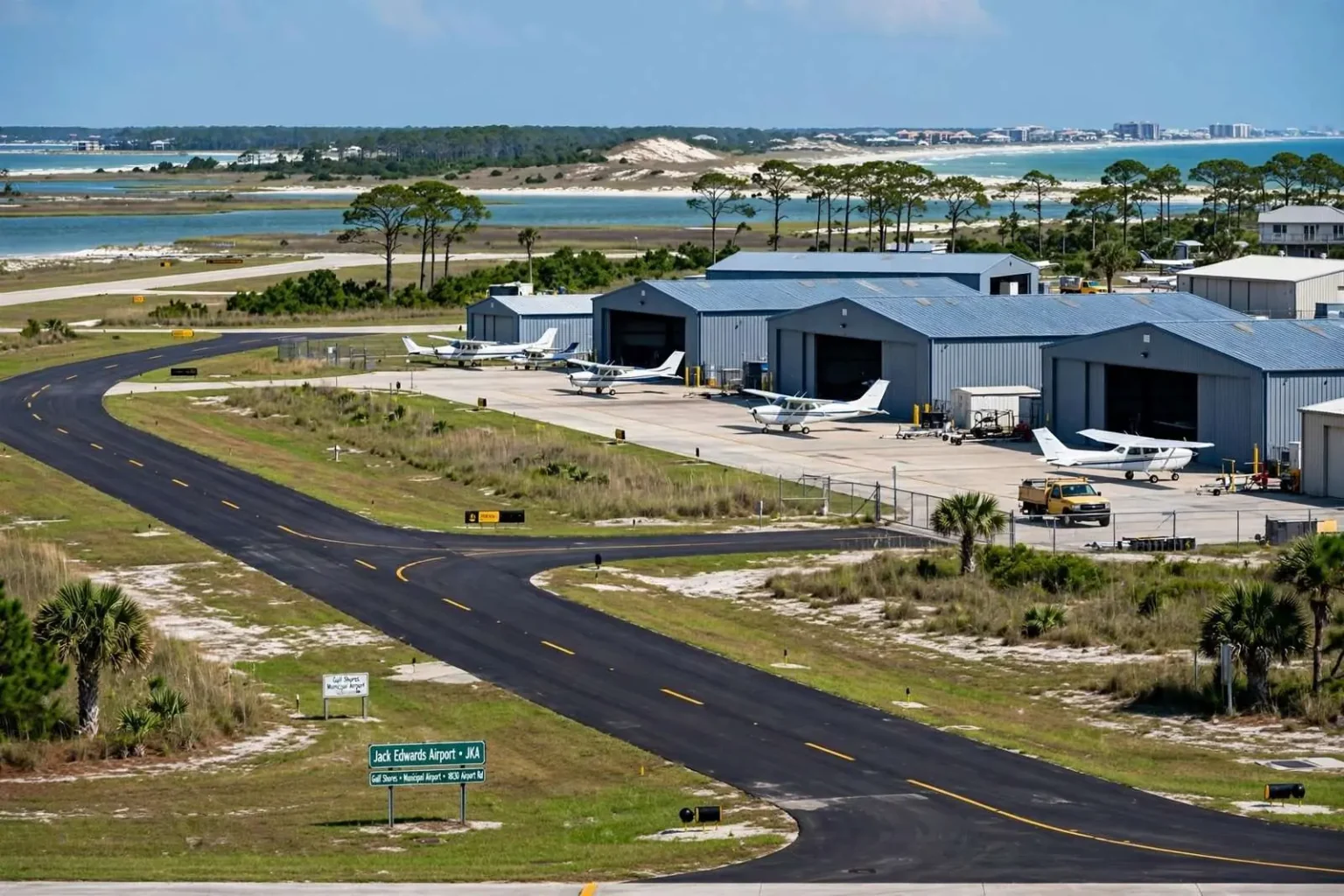
The Jack Edwards Airport in Gulf Shores was set to receive almost $2.4 million from the Federal Aviation Administration to build access taxiways, U.S. Sen. Richard Shelby (R-Ala.) announced.
Shelby, a senior member of the Senate Appropriations Committee, said the funding would allow the airport to construct hangar access taxiways, which provide a path from hangar sites to the airfield’s main taxiway system.
“We must ensure that our regional airports have the infrastructure needed to meet the needs of those traveling to, from, and through Alabama,” Shelby said. “The Jack Edwards Airport will use this funding to construct hangar access taxiways, which will provide access from hangar sites to the airport’s main taxiway system.”
Taxiways are the paved connectors that link aircraft parking, hangars and runways, allowing planes to move safely on the ground without conflicting with runway operations. Adding hangar access taxiways is a routine but significant piece of airfield development, easing congestion and improving the flow of traffic for the general aviation aircraft that use a field like Jack Edwards.
For pilots and airport operators, the distinction matters more than it might appear from the ground. When hangars sit apart from the main taxiway system, aircraft must either taxi across open apron areas or use circuitous routes to reach the runway, and every extra movement multiplies the chances of conflicts between planes, ground vehicles and pedestrians. Dedicated access taxiways channel those movements into predictable paths, which improves safety, speeds up departures and makes hangar sites more attractive to the aircraft owners who lease them.
A gateway to the beaches
Situated in Gulf Shores, the Jack Edwards Airport serves one of Alabama’s busiest tourism corridors, giving general aviation travelers a point of entry to the beaches of southern Baldwin County. Investments in its ground infrastructure carry implications beyond aviation, since the airfield functions as part of the transportation network that supports the coastal economy and the visitors who fuel it.
General aviation airports occupy a particular niche in resort communities. Commercial airline passengers bound for Alabama’s beaches typically arrive through Pensacola or Mobile and finish their trips by car, but private and corporate aircraft can land directly at fields like Jack Edwards, putting business travelers, second-home owners and high-spending visitors within minutes of Gulf Shores, Orange Beach and Fort Morgan. Every aircraft that lands there represents potential revenue not just for the airport itself but for the restaurants, lodging, charter operators and marine businesses that surround it.
The grant reflected the way federal appropriations flow to regional airports across the country to fund capital improvements that local budgets often cannot cover on their own. Airfield pavement is expensive to build and to maintain in a coastal environment, where heat, humidity, salt air and storm exposure shorten the life of infrastructure compared to inland facilities. For a small municipal airport, a multi-million-dollar taxiway project is not something local revenues alone could shoulder, which is precisely why the federal grant program exists.
For a field the size of Jack Edwards, a nearly $2.4 million award represented a substantial commitment, the kind of project that can reshape how efficiently the airport operates for years to come.
Infrastructure and access
Shelby framed the announcement in terms of connectivity, emphasizing the role regional airports play in linking Alabama communities to the broader national aviation system. His seat on the Appropriations Committee had long made him a central figure in steering federal dollars toward Alabama infrastructure, and the Gulf Shores award fit that pattern of directing money to transportation projects around the state.
Seniority on the Appropriations Committee carries particular weight in aviation funding. Airport grants move through the federal budget process with input from the members who control spending priorities, and Alabama’s congressional delegation has historically used that leverage to support projects at airports large and small, from Birmingham and Huntsville down to the general aviation fields that serve coastal and rural communities. For local officials in Gulf Shores, a senator positioned to shepherd an FAA award through the process is a practical advantage that translates directly into construction schedules.
The federal grant system behind the award is built on shared responsibility. The FAA’s airport funding programs draw on taxes paid by aviation users — fuel purchases, ticket fees and related charges — and return that money to airports through competitive and formula-based distributions. Airports like Jack Edwards participate by maintaining their facilities to federal standards, which is why ground infrastructure projects like taxiways are so closely tied to the program: a field must keep its airside layout safe and functional to remain eligible for future rounds of assistance.
What the taxiways mean on the ground
For Gulf Shores and the surrounding Baldwin County communities, the practical effect was straightforward. Improved hangar access taxiways would make it easier for based and visiting aircraft to reach the main taxiway system, supporting the airfield’s day-to-day operations and its capacity to handle the traffic that comes with a coastal resort destination.
Peak-season traffic at a beachfront-area airport arrives in waves. Holiday weekends, fishing tournaments, spring break and major coastal events concentrate arrivals and departures into short windows, and the ground system has to absorb that surge without backing up onto the runway. Taxiway capacity is a large part of what determines whether a small airport can land a dozen aircraft in an hour or only a handful — and during a tourist season, that difference shows up as wait times for pilots and as wear on the airport’s reputation among the visitors it wants back.
Hangar development also feeds the local tax base. Based aircraft bring registration revenue, property value around hangar leases and ongoing maintenance and service activity that employs local workers. Each new hangar that fills depends on the kind of access the FAA grant will fund, which is why airports treat taxiway projects as growth infrastructure rather than simple maintenance. The investment essentially extends the airport’s usable footprint and makes additional private investment in hangars practical.
A quieter kind of investment
The funding arrived at a moment when the region’s leaders were keenly focused on the coastal economy, and any investment tied to the flow of visitors drew attention. While a taxiway project lacks the visibility of a new terminal or a marquee attraction, the announcement underscored a quieter truth about tourism-dependent areas: the infrastructure that keeps people and goods moving is itself an economic asset, and federal support for it can pay dividends well beyond the tarmac.
Baldwin County’s transportation network has long been shaped by the challenge of moving people to and from a barrier-separated coastline. Visitors funnel down a limited set of highways toward the beaches, and every mode that relieves pressure on that road network — including aviation — has value to the communities that host the crowds. An airport that can efficiently receive private aircraft contributes to that balance, drawing a segment of travelers who would otherwise add to the summer traffic on the county’s main corridors.
The airport also plays a support role in emergencies, a consideration that coastal communities weigh carefully. Fields like Jack Edwards serve as staging points for medical flights, disaster response and post-storm relief, when road access to the beaches may be compromised and aircraft become the fastest way to move people and supplies. Ground infrastructure that supports efficient aircraft movement under normal conditions supports it under emergency conditions as well, an often unmentioned benefit of projects funded through federal aviation programs.
Construction of the hangar access taxiways will put the federal dollars to work in the most direct sense — local contractors, materials and labor flow through projects like this one. By the time the pavement cures, the airport will have a ground system better matched to the traffic it already receives and the growth its promoters expect, courtesy of an award that Sen. Shelby’s committee position helped deliver. For Gulf Shores, it is another piece of the infrastructure underneath the tourism economy, largely invisible to the visitors it serves, but essential to the airport that brings many of them to town.
The award also fits the broader arc of the airport’s development as Gulf Shores has grown from a seasonal beach town into a year-round destination with conventions, sports tournaments and a permanent population boom of its own. Airfields tend to lag the communities they serve: hangar waiting lists form long before new pavement is poured, and by the time an access project is funded, demand has usually outgrown the facilities on hand. Airport backers in Baldwin County have described that pattern for years, and the FAA grant represents the response — investing ahead of the next busy season rather than behind the last one. If the taxiways do their job quietly, the measure of success will be simple: planes moving smoothly on the ground, hangars filling with aircraft, and visitors stepping onto the tarmac in Gulf Shores rather than adding another car to the causeway traffic.