

A 2014 documentary brought renewed attention to Malbis Plantation, the historic Greek immigrant community in Baldwin County. The film, Malbis Plantation: From Greece to America, traced the story of a settlement whose agricultural and commercial projects left a lasting mark on the Eastern Shore, following the community from its founding through the landmarks that remain part of Baldwin County today.
For viewers unfamiliar with the area east of Mobile Bay, the name Malbis is easy to take for granted. It appears on road signs, businesses and street names along the U.S. 90 corridor between Daphne and Spanish Fort, a quiet reminder that the stretch of highway grew up around a real place with a real history. The documentary set out to explain where that name came from and why it still matters.
The film made its public-television debut in 2014, giving a statewide and regional audience a look at a community story that locals had passed down for generations. Its arrival came at a time when the historic buildings of the settlement were aging and the people who remembered the community at its height were growing fewer, which made the recorded account itself a piece of preservation.
How Malbis began
According to the Encyclopedia of Alabama, Greek entrepreneur James Malbis arrived in 1906 and established a farming commune on land that expanded into Malbis Plantation. Malbis had come to the United States from Greece and built his plans for the settlement on a combination of agriculture, shared labor and community life, drawing fellow Greek immigrants to the Eastern Shore property he assembled.
The commune model meant that the community’s members worked, lived and worshipped together under a common enterprise, an unusual arrangement for rural Alabama in the early twentieth century. The settlement grew steadily as its farming operations succeeded, and the land under cultivation and the population it supported both expanded through the community’s early decades.
By the 1920s, the community had added a cannery, bakery, ice plant and power plant. That range of enterprises made Malbis unusually self-sufficient for its time: the settlement could process what it grew, bake and sell its own goods, make its own ice, and generate its own electricity. The cannery in particular gave the agricultural operation a way to preserve and market its produce, and the bakery’s products became known well beyond the community itself.
A route built to connect the settlement to major roads became part of U.S. Highway 90, tying Malbis into the corridor that now carries much of Baldwin County’s eastbound traffic. What began as a practical spur for farm goods and supplies evolved into a segment of one of the Gulf Coast’s most important highways, and the settlement’s location on it shaped the community’s fortunes in the decades that followed.
A religious legacy in stone and mosaic
The community’s religious legacy remains especially visible. After Malbis died in Greece in 1942, his followers raised funds over many years for Malbis Memorial Church, which opened in 1965. The gap between the founder’s death and the church’s completion, more than two decades, reflects how deliberately the community built it: the money came gradually from members and supporters who saw the church as the settlement’s lasting monument.
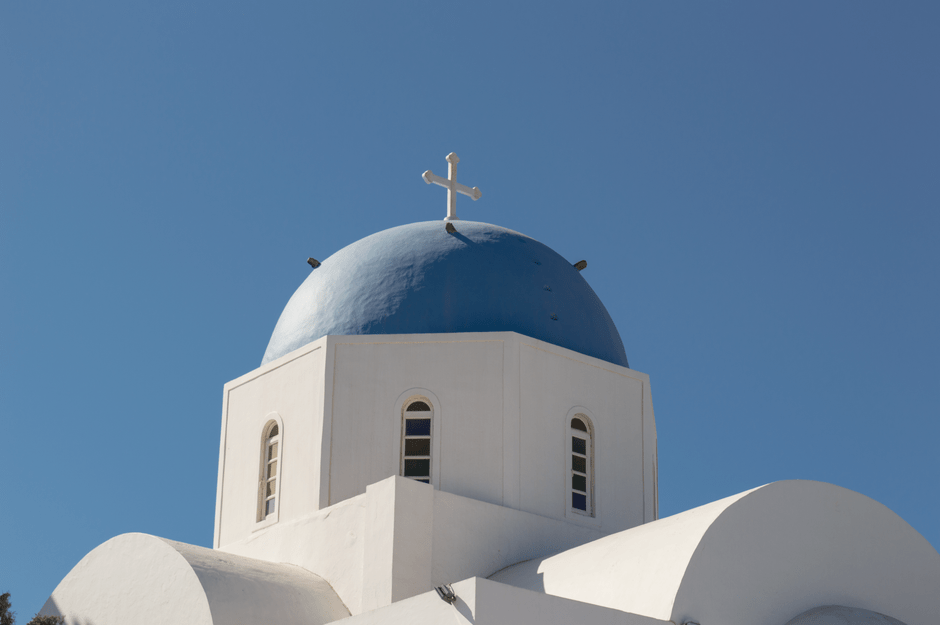
The church’s mosaics and murals make it one of the most distinctive visual landmarks in the Baldwin County community. Byzantine-style imagery covers the interior in the tradition of Orthodox churches in Greece, and the craftsmanship has drawn visitors and admirers from across the region. For many travelers along the Eastern Shore, the church is the first and most striking introduction to the story of the Greek community that built it.
The church also remains an active center of Orthodox worship in Baldwin County, which separates it from many historic landmarks that survive only as museums. Services, memorial observances and community gatherings keep the building in use, and that living role is part of what the documentary emphasized: the settlement’s spiritual heart never stopped beating even as its other institutions changed.
Malbis in preservation today
Malbis also remains part of the county’s preservation landscape. The Baldwin County Architectural Preservation Review Board lists Malbis among the county’s historic districts, recognizing the enduring significance of its built environment and community history. The designation gives the remaining structures a measure of protection and formally acknowledges what the documentary put on screen: that the district is worth safeguarding.
Baldwin County’s rapid growth has made that recognition more urgent rather than less. The Eastern Shore communities of Daphne, Spanish Fort and Fairhope have absorbed much of the county’s population boom, and land along the U.S. 90 corridor has been remade repeatedly by commercial development. Historic districts like Malbis preserve a thread of the county’s earlier story within a landscape that keeps changing around it.
What the documentary records
The documentary’s 2014 public-television debut offered a way to connect that local history with a wider audience. Public television has long served as a home for regional history films of this kind, where the audience may be spread across a state but the subject is deeply local, and the broadcast format gave the Malbis story a permanent, shareable form.
It documented more than a single building or a vanished business: it recorded how Greek immigrants established a distinctive community within the broader history of Baldwin County. That framing matters because the Malbis story is both an immigrant story and a local one. The settlement’s founders came from Greece seeking opportunity on the Gulf Coast, and what they built in the Alabama soil became part of Baldwin County’s identity, its economy and its map.
Films like this also serve the practical work of memory. Photographs, interviews and archival records gathered for a documentary often exist nowhere else, and a broadcast that captures them preserves material for the researchers, descendants and curious viewers who come later. In the case of Malbis, the film arrived in time to include voices and images from the community’s living memory.
The wider story of Greek communities on the Gulf Coast
Malbis was not the only Greek settlement or Greek-run enterprise on the northern Gulf Coast, but it became one of the most distinctive. Greek immigrants across the region found their way into agriculture, restaurants, shipping and commerce, and the communities they formed kept language, faith and tradition alive in towns far from the Mediterranean. The documentary’s title, From Greece to America, captures that whole arc in a single phrase.
The Eastern Shore setting was central to the community’s success. Baldwin County’s farmland, its growing road network and its proximity to the port city of Mobile gave the settlement markets for what it produced and connections to the wider world. The community’s businesses along the highway served travelers as well as residents, which is how the Malbis name spread to generations of motorists passing through.
For Baldwin County viewers, the film answers a question that daily life rarely pauses to ask: why does this place carry the name it does? The answer runs back to a Greek entrepreneur’s 1906 arrival, a farming commune that grew into a self-sufficient village, a church raised by its followers’ donations, and a stretch of federal highway that still carries the settlement’s name to thousands of drivers every day.
Why the story still resonates
More than a century after James Malbis arrived, the traces of the community he founded remain woven into everyday Baldwin County life. The name appears on the map, the church stands along the highway, and the historic district designation formally marks the ground where a Greek farming commune once ran its cannery, bakery, ice plant and power plant. The documentary ties those visible traces back to the people and decisions behind them.
The story also speaks to a broader pattern in Gulf Coast history. Immigrant communities shaped much of the region’s development, from the port city’s neighborhoods to the farm settlements of its inland counties, and each left its own landmarks. Malbis is one of the clearest surviving examples in Baldwin County, which is why both the documentary and the preservation designation treat it as more than local color.
Editor’s note: This is an archival report about a 2014 documentary and historical place. It does not announce a current broadcast or screening.
For viewers and readers who want to explore further, the places the film describes remain reachable in an afternoon: the Memorial Church on the U.S. 90 corridor, the historic district recognized by the county’s preservation board, and the stretch of Eastern Shore highway that began as a farm road built to connect a Greek settlement to the world. The documentary’s work was to make that landscape legible, and its 2014 debut made the community’s story available to anyone who had ever driven past the Malbis signs and wondered about the name behind them.