Daphne Couple Recalls Racing Hurricane Frederic Home in 1979 With a Truck Full of Igloo Coolers
A Daphne couple looks back 35 years to Hurricane Frederic, when a risky truck run from Houston and a house full of extension cords became neighborhood legend.
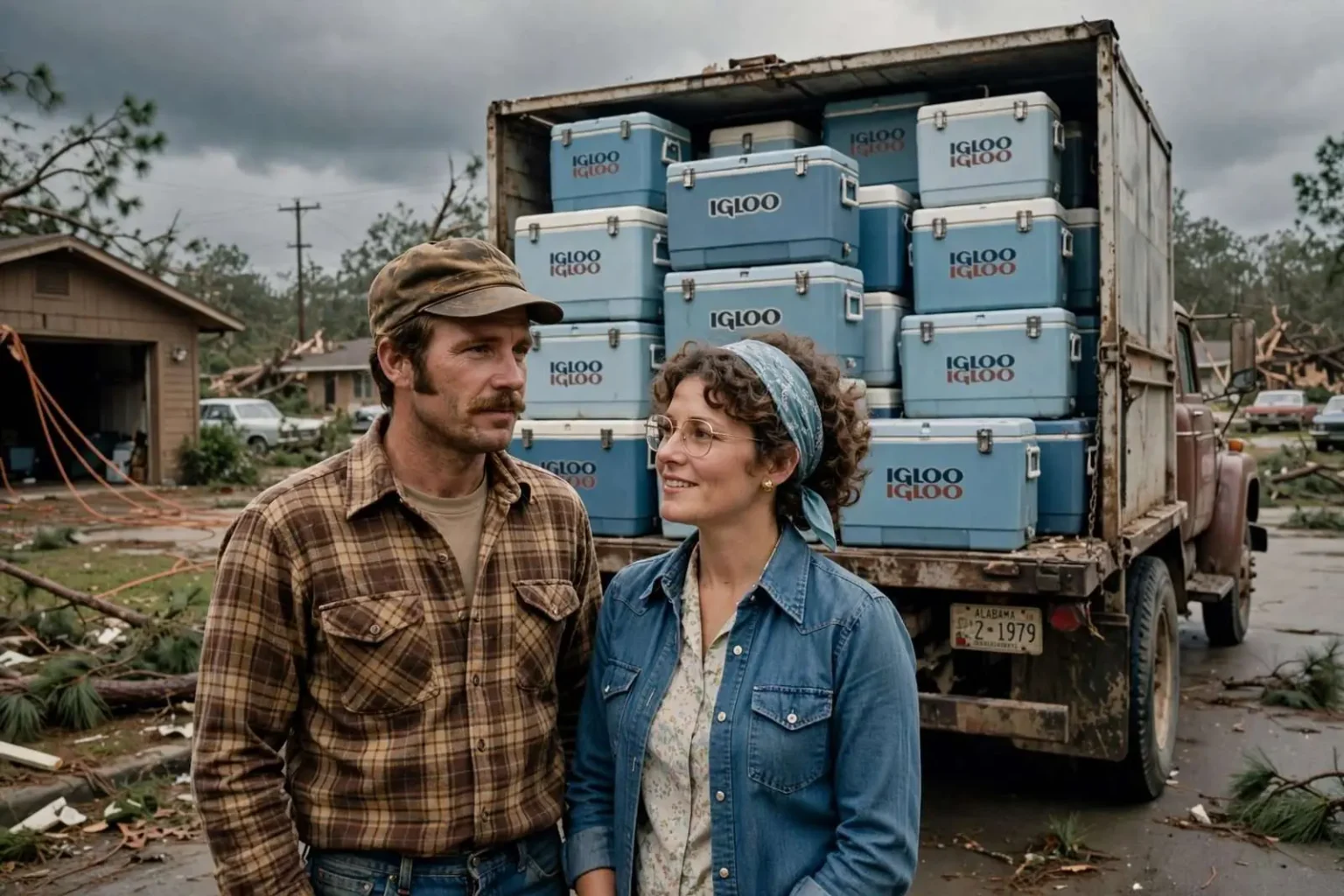
DAPHNE, Alabama — Thirty-five years after Hurricane Frederic tore through Baldwin County, Charles and Kaye Desmond still swap stories about the storm that nearly separated them and the days afterward when their Lake Forest subdivision home became the unofficial power hub of the neighborhood. The couple’s recollections trace the full arc of one of the Gulf Coast’s defining hurricanes, from the desperate drive home ahead of landfall to the strange camaraderie of a darkened subdivision running on a single intact power line.
A race against the storm
In 1979, Charles drove trucks for a freight line and had just dropped a load in Houston when his company ordered every driver to hold trucks east of the storm until Frederic passed. For a driver with a wife and home directly in the hurricane’s projected path, the order amounted to an instruction to watch the disaster from a thousand miles away. Charles and four coworkers who also called the Mobile area home weren’t willing to wait it out in Texas. They told their supervisor that if the company wouldn’t let them drive the trucks back, they would rent a car and make the trip themselves.
The company relented, but not without a catch: a cooler manufacturer loaded the outbound trucks with empty ice chests to make use of the trip, even though the lightweight cargo wasn’t heavy enough to properly ballast an 18-wheeler for high winds. An empty trailer catches wind like a sail, and drivers running light in gusting conditions face the constant risk of a jackknife or a rollover. The irony was not lost on the Desmonds — a truck full of coolers, the very items Gulf Coast residents would soon be hunting for after a hurricane knocked out power for weeks, racing the storm to get home.
No interstate, no shelter from the wind
Rather than take the interstate, the drivers stuck to Highway 90, a route that offered no real protection once the wind picked up. The choice made sense for its time — the interstate routing east of Mobile was not what it is today, and the old Spanish Trail highway was the natural corridor from Louisiana into the Mobile Bay area — but it put the drivers on a road lined with pines, billboards, and signs, all of which become projectiles or falling hazards in tropical storm conditions.
Despite the lighter-than-ideal loads and the exposed highway, the five drivers made it back to the Mobile Bay area with roughly half a day to spare before Frederic made landfall on September 12, 1979, as a Category 3 storm with winds near 130 miles per hour. They got home, secured what they could, and waited out the storm with their families as the eyewall rolled over the Bay area in the late evening, tearing roofs, toppling oak trees, and cutting power to virtually every customer in the two-county region.
Charles and Kaye were living in Daphne’s Lake Forest subdivision at the time, a neighborhood of wooded lots and golf course views on the eastern shore of Mobile Bay. While the storm caused only modest damage to their house, it did something more valuable for their neighbors: it left their power line largely intact while everyone else went dark.
The house that kept the neighborhood cold
Word spread quickly that the Desmonds still had electricity, and soon their garage looked more like a small appliance store than a home. At the peak of it, the couple counted a dozen neighbors’ chest freezers plugged in and running off their line, daisy-chained together with cord after cord. In the days before every household owned a gasoline generator, a single powered home in a dark subdivision was a public utility, and the Desmonds’ garage became the unofficial power station of Lake Forest.
Kaye remembers their own washer and dryer working overtime through those weeks, as neighbors rotated loads of laundry through the only working machines for miles. The arrangement turned the aftermath of a destructive storm into an unlikely block party, with families who might never have spoken sharing freezer space, hot meals, and updates about when Alabama Power might restore service to the rest of the streets.
Frederic’s lasting mark on the Gulf Coast
The Desmonds’ story is one thread in the larger fabric of Hurricane Frederic’s legacy. The storm remains one of the most destructive hurricanes ever to strike Alabama, causing hundreds of millions of dollars in damage across Mobile and Baldwin counties, flattening beachfront development on Dauphin Island, and gutting the resorts along the Gulf Shores and Orange Beach shoreline. Forecasters and emergency managers credit Frederic with spurring the region’s modern building codes and evacuation planning, lessons that would be tested again by hurricanes in the decades that followed.
For the neighborhoods of Daphne, Spanish Fort, and Fairhope, the weeks after landfall were an exercise in improvisation — chainsaw crews opening roads through fallen timber, grocery stores running on generator power, and churches organizing meals for families whose homes had not fared as well as the Desmonds’. Recovery stretched on for years, and longtimers still mark their memories of the Gulf Coast as “before Frederic” and “after Frederic.”
Thirty-five years on, the couple’s stories carry both the danger and the warmth of that September: a truckload of empty coolers outrunning a hurricane down Highway 90, and a garage strung with a dozen extension cords quietly keeping the neighborhood’s food from spoiling while the rest of Baldwin County waited for the lights to come back on.
Life in a darkened county
The scale of Frederic’s damage is hard to overstate for those who did not live through it. When the storm crossed the shoreline, it drove a storm surge of eight to twelve feet over the beaches, scoured the dunes at Gulf State Park, and pushed water well up Mobile Bay, sinking or stranding boats along the eastern shore. On land, the wind field was enormous — hurricane-force gusts reached far inland, and virtually every utility customer in Mobile and Baldwin counties lost electricity, some for weeks. Emergency crews from across the Southeast poured into the region to help clear roads and restore the grid, working street by street through corridors of fallen oaks and snapped pines.
In Lake Forest, the Desmonds’ intact line made their home an island of light in that landscape. Neighbors coordinated among themselves about who would run what and when, mindful of the strain on a single circuit. Freezers holding a season’s worth of venison, shrimp, and family meals were kept cold by luck and a few well-placed extension cords, while families without powered homes cooked on charcoal grills and camp stoves in driveways across the subdivision.
The weeks that followed also revealed how much of everyday life depends on the things a storm takes away. Without traffic signals, intersections became hand-signaled crossings. Without refrigeration, ice became a commodity chased from one storefront to another. Without televisions or charged phones, word of mouth — exactly the network that had spread news of the Desmonds’ electricity — became the community’s information system.
How the coast changed afterward
Frederic’s aftermath reshaped the Alabama Gulf Coast in ways still visible today. The destruction of the beachfront hotels and cottages along the shore opened the door to the high-rise era of Gulf Shores and Orange Beach, as insurers, developers, and local governments rebuilt under tougher standards. Dauphin Island, which took a direct blow, saw large sections of its west end wiped clean and spent years in a cycle of rebuilding and reinforcement. Building codes across both counties were strengthened, and the region’s emergency management agencies adopted evacuation and sheltering plans that grew into the sophisticated systems used today.
The storm also entered the region’s folklore. Longtime residents measure later hurricanes against it, and family stories like the Desmonds’ — part survival tale, part comedy about a truckload of coolers — get retold at fish fries and holiday dinners decades later. The details change from household to household, but the shape is the same: a terrifying night of wind and noise, a dawn of fallen trees and disbelief, and then weeks of neighbors taking care of neighbors.
For Charles and Kaye, the storm that nearly kept them apart in Houston ended up drawing their Lake Forest neighborhood closer than it had ever been. They stayed in the Daphne area through the decades that followed, watching Baldwin County grow from a quiet stretch of small towns into one of the fastest-growing corners of Alabama, and watching later storm seasons bring new names and new worries to a coast that had already proven how much punishment it could absorb. Every hurricane season since, when forecasts first paint a storm aimed at the Gulf, the couple finds themselves back in that September of 1979 — the drive down Highway 90, the light loads in the trailers, the dark subdivision — comparing every storm to the one that made their garage the most popular address in Lake Forest.
The empty Igloo coolers their truck hauled home in 1979 became, in a way, a promise kept — the tools that would help a whole street full of families get through the longest, darkest September the Gulf Coast had seen in a generation.