MAMGA Royal Coronation Crowns King Elexis I in Mobile
Mobile's Mobile Area Mardi Gras Association held its 77th annual Royal Coronation, crowning King Elexis I and Queen Morgan amid elaborate custom regalia.
The Mobile Area Mardi Gras Association, known locally as MAMGA, held its 77th annual Royal Coronation at the Arthur R. Outlaw Convention Center, crowning a new king and queen in front of a packed ballroom as part of Mobile’s Carnival season traditions. The event stands among the most anticipated nights of the city’s African American Mardi Gras calendar, an evening of pageantry, music and family pride that fills the convention center’s ballroom year after year.
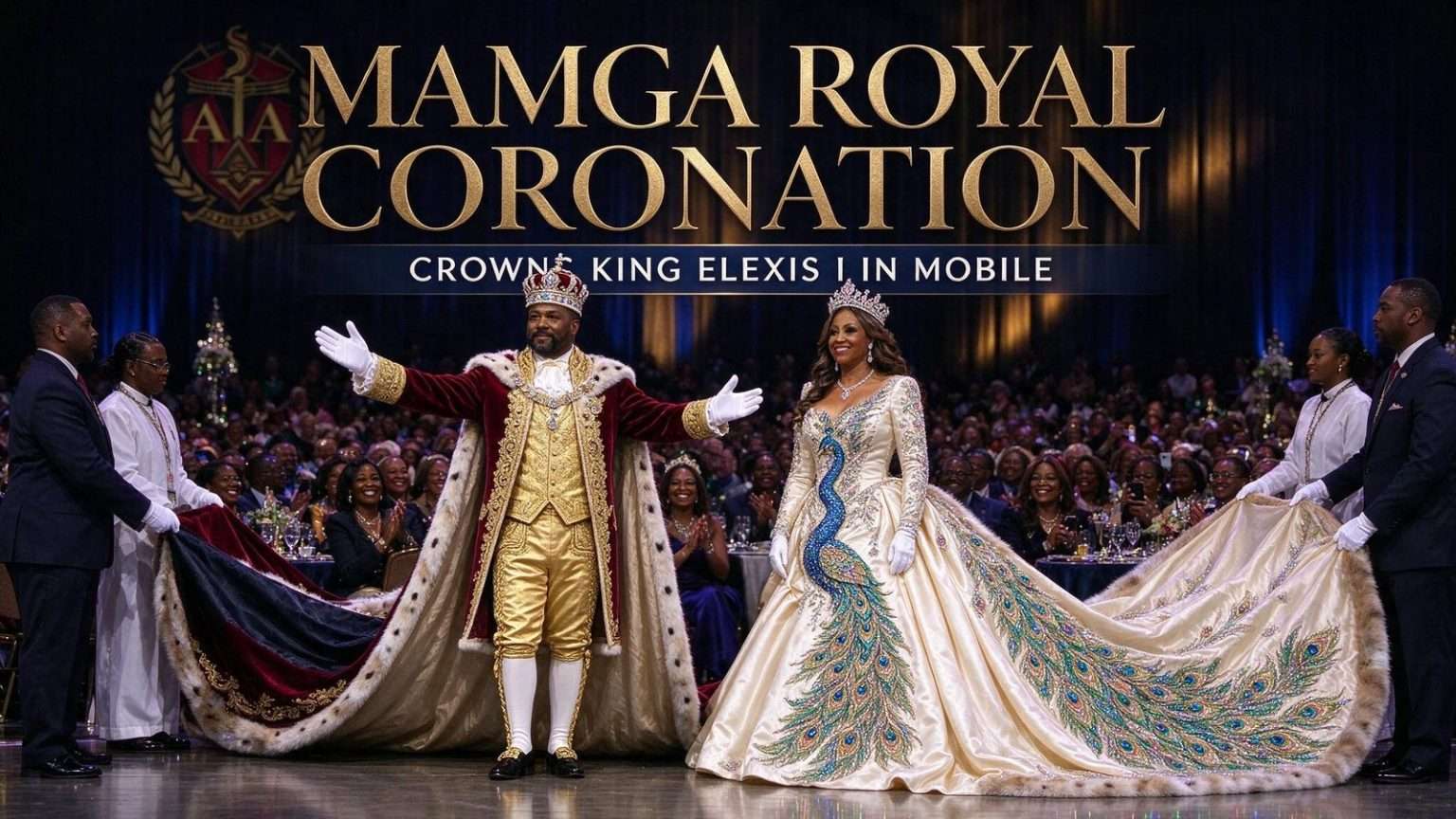
Patrick Clark Yelding reigned as King Elexis I, dressed in an elaborate royal costume that included a fur-trimmed train bearing both his mother’s and father’s family crests. The design placed his lineage at the center of the presentation, a hallmark of Mobile’s coronation tradition, where royal attire is treated as a wearable family history read by the audience from the floor as the king makes his rounds.
The train, along with his burgundy jacket and gold vest and breeches, was custom designed by Mobile-based designer Patricia Halsell-Richardson. Because Yelding lives in Nashville, much of the design process was coordinated remotely over months of calls and long-distance planning before the pieces came together for coronation weekend, a logistical dance that plays out every Carnival season as members of Mobile’s royal courts return to their hometown from lives lived across the country.
Reigning alongside him as queen was Morgan Varnee Billingsley, a University of Alabama graduate who works as a flight attendant and lives in Los Angeles. Billingsley’s ivory silk gown featured a fitted bodice, a trumpet-style bottom and an 18-foot train decorated with a peacock design containing more than 12,000 stones, roughly 170 feathers and 40 feet of crystal fox fur, also created by Halsell-Richardson, whose studio has become one of the busiest workshops in Mobile during the Carnival build-up.
The peacock motif carried personal meaning for the queen. Billingsley’s parents, Vaughn and Delilah Billingsley, died in a car accident when she was 11 years old, and she chose the peacock as a tribute to them after learning of folklore describing the bird as a guardian at the gates of heaven, a story that transformed the gown’s most striking feature into an act of remembrance carried before the entire ballroom.
Backstage before the ceremony, Billingsley grew emotional recalling her parents as members of the court prepared to take the stage, with fellow royals offering support as she composed herself ahead of the presentation. The moment, recounted by those present, reflected the way Mobile’s coronation tradition weaves personal history into public celebration, with the evening’s grandeur resting on stories of family that stretch back generations.
For the court members, the months of preparation — fittings, rehearsals, dance lessons and the coordination of relatives traveling in from around the country — culminate in a single night in the ballroom. The presentation itself follows a script perfected over decades: the royal party makes its entrance in full regalia, the king and queen are formally crowned before the assembled members and guests, and the evening continues with dancing and celebration that carries on well past midnight.
A tradition more than seven decades deep
MAMGA has crowned a king and queen for its Royal Coronation for more than seven decades, making it one of the longest-running traditions among Mobile’s African American Mardi Gras organizations. The association’s royal court anchors a Carnival lineage that Black Mobilians built alongside — and apart from — the city’s older carnival establishments, with its own parades, balls and social calendar that draws families back to Mobile each season.
The coronation is one of dozens of formal presentations held across the city each Carnival season, part of a social calendar that keeps Mobile’s ballrooms booked from late fall through Fat Tuesday. Each organization’s court carries its own history, colors and customs, and the season functions as a layered network of celebrations where family membership, friendships and community standing are displayed through participation.
In Mobile’s carnival tradition, the royalty themselves serve as cultural ambassadors for their organizations, appearing at parades and civic events throughout the season. Reigning as King Elexis I placed Yelding in a line of kings stretching back to the association’s founding generations, each monarch adding his family’s name to a succession that reads as a history of the city’s Black professional and civic life.
The craft behind the crowns
The gowns and trains that define Mobile’s coronation season represent an unusual corner of the fashion world: couture-scale garments produced in small Mobile workshops for a single night’s presentation, with no catalog, no runway and no second wear. Designers like Halsell-Richardson work months in advance, coordinating with royalty who often live out of state, sourcing fabrics, feathers and thousands of individual stones, and engineering trains that must carry their weight through hours of presentation without exhausting the wearer.
A queen’s train like Billingsley’s — 18 feet of silk, crystal fox fur and a peacock rendered in more than 12,000 stones — represents hundreds of hours of handwork before the first seamstress signs off. The stones alone must be placed individually to build the shading and shimmer that read from the farthest tables of a ballroom, and the featherwork demands both sourcing skill and careful construction to survive transport, fittings and the evening itself.
The economics of the season are invisible to most observers but real for the city: coronation gowns, tuxedos, invitations, photography, band bookings and banquet services spread Carnival spending across a network of local businesses, from fabric suppliers to florists to the caterers who feed packed ballrooms. Mobile’s Carnival season operates as a quiet industry alongside its more visible parades, and the coronation circuit is one of its cornerstones.
What the coronation means to Mobile
For the families involved, coronation night is the culmination of generations of participation. Court members are typically chosen from among association families with long histories in the organization, and reigns are remembered in family archives — photographs, gowns and trains preserved through the years — as milestones on par with weddings and graduations.
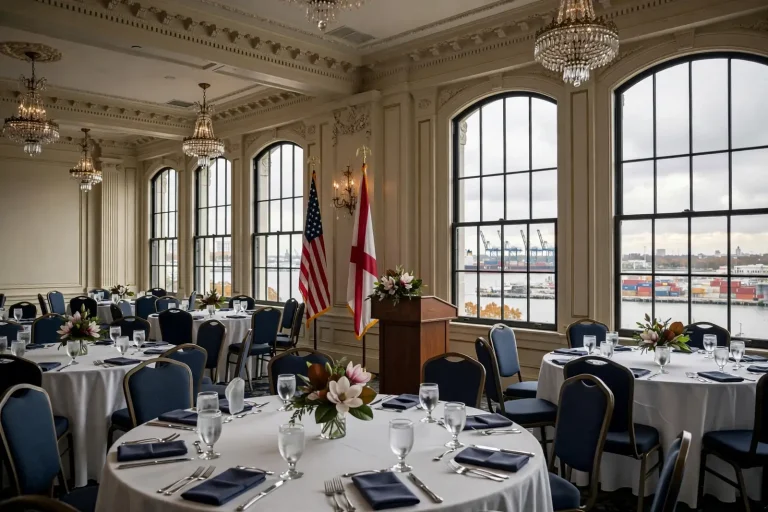
The packed ballroom at the Arthur R. Outlaw Convention Center reflected that reach. Guests filled tables in formal dress, many of them relatives and lifelong friends of the court, others members of rival organizations paying their respects, and the evening doubled as a reunion for Mobile families scattered across the country who time their travels home around the carnival calendar.
As King Elexis I and Queen Morgan Varnee Billingsley take their place in MAMGA’s royal line, their reign joins a record now in its eighth decade, one that has survived wars, segregation and social change while continuing to crown new royalty each season. For a city that measures its year from Twelfth Night to Fat Tuesday, the coronation stands as proof that Mobile’s carnival traditions, in all their variety, remain in lively and careful hands.
The Carnival season around the coronation
The coronation sits near the center of a season that stretches from society celebrations in the fall through Fat Tuesday itself. Leading up to Carnival, Mobile’s calendar fills with the official start of the season in November, the lighting of downtown, and the parade season that turns the city’s streets into a rolling celebration each February. The royal courts of the various organizations thread through all of it, appearing at parades and civic functions between their own organizations’ balls.
MAMGA’s own season includes its parade, which winds through downtown Mobile with floats, marching bands and the association’s members in full regalia, drawing crowds that pack the route alongside the city’s other Carnival processions. The parade gives the organization’s royalty their most public moment, as King Elexis I and Queen Billingsley wave to thousands of spectators from their own float, completing the arc from ballroom presentation to street celebration that defines Mobile’s carnival hierarchy.
The two sides of Mobile’s Carnival — the downtown parade routes and the ballrooms where courts are presented — are often discussed separately, but they form a single season that the whole city shares. On any given February weekend, visitors can watch a daytime parade and attend a formal presentation the same evening, and many families move between both worlds across the calendar as members and guests of multiple organizations.
Carrying the story forward
Billingsley’s tribute to her parents resonated beyond the ballroom because it captured the way Mobile’s Carnival traditions function as vessels for family memory. Organizations keep rolls of past royalty, families preserve photographs and regalia, and each new court inherits the obligation to honor the generations that came before — an obligation the young queen made literal in the design of her gown.
For Yelding, the Nashville-based king whose train displayed his mother’s and father’s family crests, the reign represents a similar continuity from a different direction: a hometown tradition sustained by someone who built his life hundreds of miles away but returned to preside over the season that shaped his family’s standing in Mobile.
The 77th coronation, like the 76 before it, will fade into the organization’s archive as the season moves toward its culmination, leaving behind photographs, memories and a royal record extended by one more year. What remains constant is the structure itself — the packed ballroom, the hand-made trains, the families who plan their year around a single night — a structure Mobile’s Mardi Gras community has kept alive for more than seven decades and shows every sign of keeping for decades more.