Mobile Council Approves Downtown Ice Skating Rink for the Holidays
Mobile's City Council narrowly approved a temporary ice rink at Cooper Riverside Park, joining other Alabama cities with holiday skating attractions.
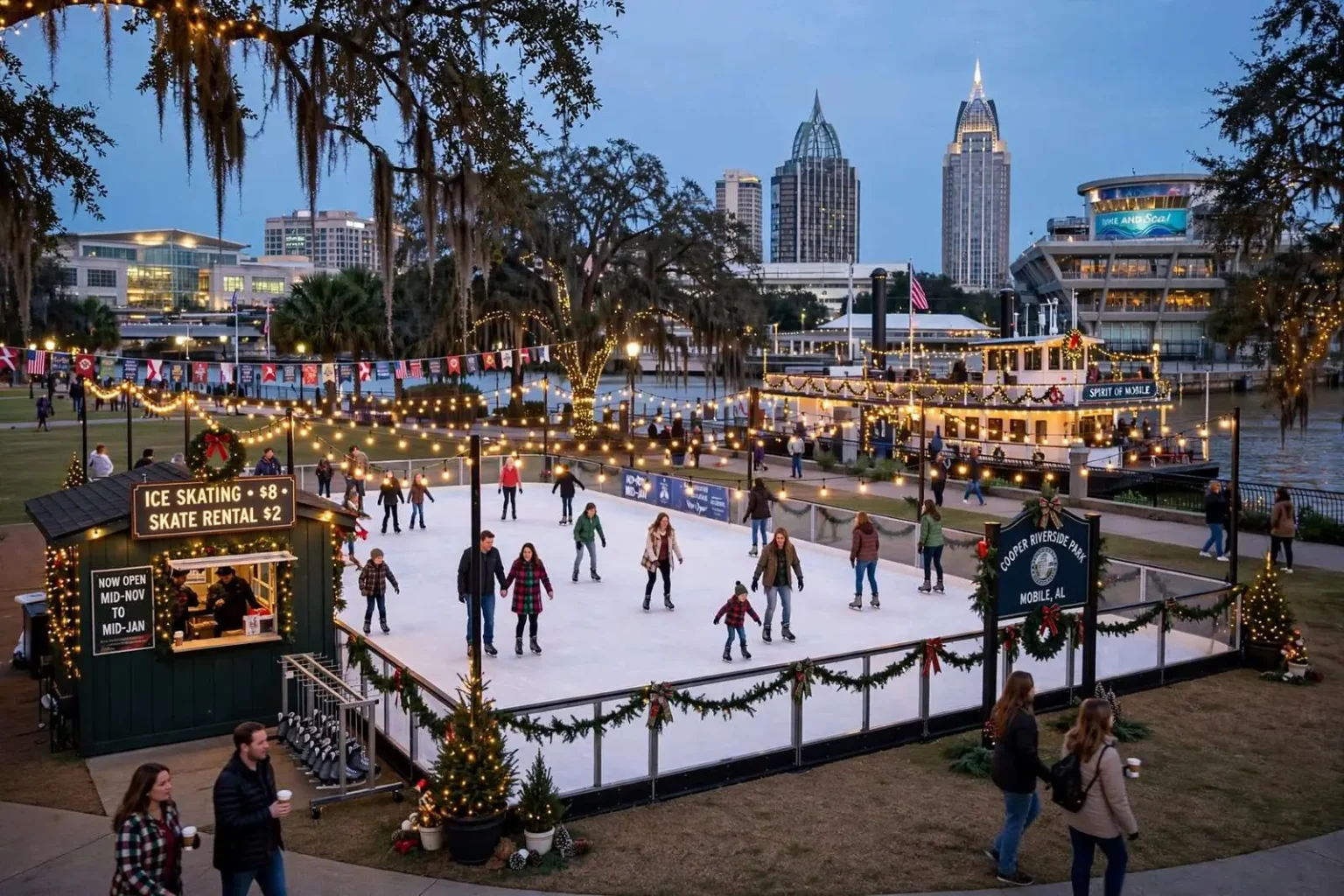
Mobile is set to bring ice skating to its downtown waterfront this holiday season after the City Council narrowly approved a rental agreement for a temporary rink at Cooper Riverside Park. The council voted 5-2 to authorize the plan, which will place a 50-by-70-foot portable ice rink at the park along the riverfront, near the GulfQuest Maritime Museum.
The vote capped weeks of public discussion about whether a city where winter temperatures routinely climb into the seventies should operate an ice rink at all. The administration’s answer was that the novelty is precisely the point: an ice rink on the Mobile River waterfront is an attraction no other venue in the region offers, and the holidays are the season when families are looking for something to do together. Portable synthetic-base rinks of the kind planned have operated successfully in far warmer climates, with refrigeration systems maintaining the ice surface through daytime warmth.
The rink is scheduled to operate from mid-November through mid-January, giving residents and visitors roughly two months of holiday skating downtown. Council President Gina Gregory said the attraction fits with a broader push to bring more activity to downtown Mobile during the holidays. Mayor Sandy Stimpson had championed the idea in recent weeks, describing it as a family-friendly seasonal feature.
Cooper Riverside Park, the riverfront green space just steps from the Convention Center and the GulfQuest museum, has been the focal point of the administration’s effort to activate downtown’s waterfront. The park offers open lawn, views of the working river and easy walking access from downtown hotels and restaurants — the kind of setting that seasonal attractions need to draw foot traffic. Placing the rink there puts skating within sight of the docked riverboats and within walking distance of Dauphin Street’s entertainment district, so an evening of skating can extend into dinner and shopping downtown.
Skating will cost $8 per person, plus a $2 skate rental fee. The proposal faced pushback before the vote, as some council members raised concerns about the cost of renting the rink and equipment for two months and whether the expense was justified without outside help.
The rental agreement itself carries a price tag of more than $130,000, covering the rink and ice-maintenance equipment from an out-of-state vendor, with additional costs for utilities and staffing a ticket booth pushing the total city obligation higher. Those concerns eased somewhat after Stimpson’s administration announced it had lined up tens of thousands of dollars in private sponsorships in the days leading up to the vote, with more funding commitments reportedly in the works.
The sponsorship push changed the arithmetic of the debate. An obligation that had looked like a six-figure municipal gamble now carried a meaningful private offset, and city officials said the contributions would cover a substantial share of the roughly $80,000 the city expects to spend on the project this year. Corporate sponsors along the Gulf Coast have a long history of underwriting downtown Mobile’s seasonal attractions — from holiday lights to festival stages — and the administration’s ability to recruit backers for the rink signaled to hesitant council members that the business community saw value in the idea.
Council members who backed the plan pointed to the last-minute fundraising as a sign the administration was serious about limiting the burden on taxpayers. One council member said he was not certain the rink would be a financial success but felt the city should give the idea a chance given the sponsorship effort.
That framing captured the experimental spirit of the vote. No one on the council pretended a two-month rink would transform the city’s finances; admission revenue of $8 a skater, even with healthy holiday crowds, was unlikely to cover the full cost in the first season. The argument was about what the city gets for the gap: activity on a riverfront that too often goes quiet in winter, a family outing priced within reach of most households, and a test of whether seasonal attractions can anchor a broader downtown holiday strategy.
The 5-2 vote reflected how genuinely contested those questions were. The two dissenting members argued, in effect, that the city should not be in the entertainment business on speculative grounds, and that $130,000 in rental costs plus utilities and staffing for a ten-week season was real money for a city with a long list of deferred needs. The majority accepted the administration’s counterargument that the net cost — after sponsorships — was modest by the standards of downtown economic development, and that the first season’s attendance would settle the question with data rather than conjecture.
Downtown’s Holiday Strategy
The rink joins a growing list of seasonal programming aimed at keeping downtown Mobile busy from Thanksgiving through Mardi Gras. The city’s holiday season has traditionally built toward the carnival season — the oldest Mardi Gras celebration in the country, which fills downtown streets beginning in late winter — but civic leaders have worked for years to extend activity through the weeks between Christmas shopping and the first parades. A skating rink gives families a reason to come downtown in December, when lights and decorations are up and before the carnival crush begins.
Downtown’s redevelopment has been the central economic story of the Stimpson administration’s first years in office. Residential conversions of historic office buildings, new restaurants and bars along Dauphin Street, the reopening of major hotels and the construction of the GulfQuest museum have all contributed to a downtown that functions in the evenings, not just at nine on a weekday morning. Seasonal attractions like the rink are meant to build on that momentum, giving visitors and suburban families recurring reasons to cross into the city center during the highest-spirited weeks of the year.
How the Numbers Work
The rink’s economics will be watched closely by supporters and skeptics alike. A 50-by-70-foot surface is modest by professional standards — large enough for dozens of skaters at a time in rotating sessions, small enough to fit comfortably on the park’s lawn — and portable rinks of this class are designed for rapid installation and removal, leaving the park intact for spring events. The out-of-state vendor supplies the rink system and the ice-maintenance equipment, while the city provides the site, utilities and staffing. If attendance tracks with comparable attractions in Southern cities, weekends and school holidays will account for the bulk of the season’s skaters.
Admission of $8 plus $2 for skate rental keeps the experience affordable — roughly the price of a movie ticket — which the administration views as essential to the attraction’s family-friendly positioning. The city has not projected a specific attendance figure publicly, but the private sponsors who signed on before the vote effectively placed their own estimates on the table, betting that two months of holiday crowds on the riverfront would put their names in front of thousands of families.
What Happens After January
When the rink comes down in mid-January, the council will have its first real evidence about whether seasonal attractions belong in the city’s downtown playbook. Strong attendance and a manageable net cost would strengthen the case for making the rink an annual tradition and possibly adding programming around it — holiday markets, school field trips, youth group nights. A disappointing season would vindicate the two dissenting votes and likely end the experiment quietly.
Either way, the decision marks a small but telling moment in Mobile’s civic life: a city better known for humid summers and Mardi Gras mobs than for ice, betting modestly on the idea that its families would enjoy gliding across a frozen patch of its riverfront. The skaters arrive in November; the verdict will be tallied in the new year.
The rink debate also offered a preview of decisions the city will face as it develops the riverfront further. Cooper Riverside Park sits amid a stretch of downtown that includes the Convention Center, the GulfQuest museum and the riverboat docks, and planners have long envisioned the area as a continuous promenade drawing residents and tourists year-round. Each event or attraction that succeeds there builds the case for more investment in the waterfront; each that fails makes the next proposal harder to sell. The council’s 5-2 vote was, in that sense, a down payment on a longer argument about what the city’s riverfront should become.
City staff will spend the season gathering the operational details that matter for that judgment call: how many skaters paid admission each day, what times drew crowds, how much utilities and staffing actually cost, and how much the sponsorships ultimately covered. Those figures will feed directly into next year’s budget discussion, when the administration must decide whether to seek a second season and whether the private sponsors return. Municipal experiments of this kind tend to be judged quickly, and the rink’s first ten weeks will determine whether ice skating joins the list of things Mobile does downtown every December — or becomes a one-winter curiosity remembered mostly for the debate it started.