Mobile Couple at Center of Alabama Marriage Case Reflects on Nine-Year Wait
A Mobile couple whose lawsuit helped overturn Alabama's same-sex marriage ban gathered with supporters as county probate offices awaited a final order.
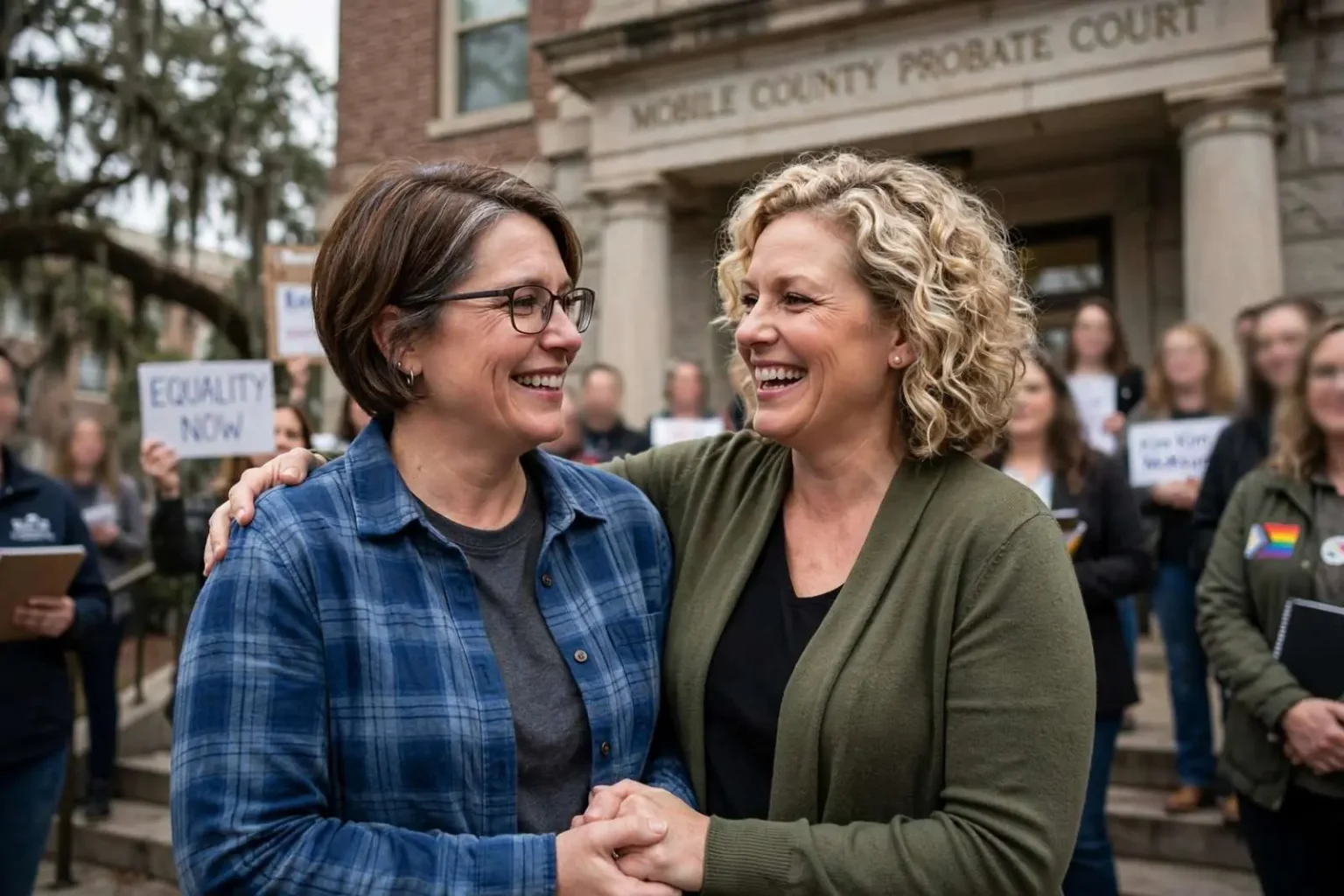
Two years after registering their California marriage license with the Mobile County Probate Court as an act of protest, a Mobile couple gathered with supporters this week to mark a legal turning point in their nine-year fight for recognition under Alabama law.
Cari Searcy and her spouse, Kim McKeand, are the lead plaintiffs in a federal lawsuit that led U.S. District Judge Callie “Ginny” Granade to declare Alabama’s ban on same-sex marriage unconstitutional. Granade briefly put her ruling on hold to give the Alabama Attorney General’s Office time to seek review from a federal appeals court, a delay Searcy said did not diminish her optimism.
“It has been an emotional rollercoaster,” Searcy told reporters gathered in Mobile. “We are ecstatic about the ruling and couldn’t be happier… We just have to wait a couple more weeks. No big deal. We’ve been waiting nine years.”
McKeand added, “I feel blessed… I’m still dancing.”
The two-week window before the ruling takes effect means the couple and the advocates who gathered with them are watching the calendar rather than celebrating outright. Federal trial courts across the country have issued similar rulings since the U.S. Supreme Court’s 2013 decision striking down part of the federal Defense of Marriage Act, and most of those rulings were followed by stays — brief holds that courts use when a decision is expected to be reviewed by a higher court, preserving the status quo while the appeals process begins.
Quiet probate offices across the region
Away from the news conference, the scene at probate offices across southwest Alabama remained calm. No same-sex couples were reported waiting at the Mobile or Baldwin County probate offices seeking marriage licenses once word of the temporary delay spread. Probate judges are the officials who issue marriage licenses in Alabama, and until Granade’s stay expires, they have no legal obligation to begin issuing them to same-sex couples — a fact that kept the courthouse lines quiet even as the ruling dominated the news.
In Baldwin County, Probate Judge Tim Russell was out of the office that day due to a family death, leaving Chief Clerk David Wood, the only other staff member authorized to perform marriages at the Bay Minette office, minding day-to-day operations as usual. Wood reported nothing unusual: the office handled its routine marriage licenses and probate business while the legal drama played out in federal court in Mobile.
The calm may prove temporary. When the stay lifts, probate offices across the state could face couples seeking licenses within hours, and each probate judge will have to decide how to respond — particularly with state officials signaling they intend to appeal and with the Alabama Supreme Court’s involvement still possible. Clerks in Mobile and Baldwin counties spent the wait preparing for both outcomes.
More than a marriage license
For Searcy and McKeand, the ruling carries weight well beyond the marriage license itself. It opens the door for Searcy to pursue a second-parent adoption of the 9-year-old boy the couple has raised together since birth. Because Alabama had not recognized their marriage, only McKeand held legal parental status as the birth mother, leaving Searcy without authority to make medical or other decisions for their son.
That gap in legal standing is the daily reality that drives many same-sex couples into court. A parent without a legal relationship to a child cannot consent to emergency surgery, sign school forms, claim the child on insurance or inherit custody if the legal parent dies. The couple’s lawsuit began as a challenge to exactly that predicament after Mobile County Probate Judge Don Davis rejected Searcy’s adoption petition, and the case grew into the broader challenge to Alabama’s marriage ban that Granade has now ruled on.
Second-parent adoptions are routine for stepparents in heterosexual marriages, where a spouse can adopt a child born to the couple without the child losing any legal tie to the birth parent. Alabama’s ban on recognizing the marriage foreclosed the same protection for same-sex couples, which is why the federal ruling on marriage recognition reaches so directly into the couple’s family life — and why a marriage license, for them, is less a symbol than a legal instrument on which their son’s security depends.
A nine-year fight
The couple’s nine-year journey tracks the broader arc of the marriage-equality movement. They built their life together in Mobile, raised their son, and found that every ordinary family milestone — taxes, medical decisions, parenthood itself — was complicated by a legal system that refused to see their relationship. Their decision to register the California license with the Mobile County Probate Court two years ago was a deliberate, public challenge: they presented the document, asked the court to accept it, and turned their family’s situation into a test case.
That strategy carried them into federal court, where the case outlasted the initial adoption dispute and became one of the lawsuits challenging state bans directly. The pace of change that followed — court after court ruling that state bans violate the federal constitution — meant their case arrived before Granade amid a national wave of similar decisions, each citing the Supreme Court’s 2013 United States v. Windsor ruling as the turning point.
What happens after the stay lifts
Once Granade’s stay expires, the immediate question shifts to the probate offices. A federal ruling against Alabama’s ban binds the state, and couples denied licenses are expected to return to court for enforcement if probate judges continue to refuse. The attorney general’s office, meanwhile, will pursue its appeal to the federal appellate court, and the case could eventually reach the U.S. Supreme Court, which has yet to resolve definitively whether states may ban same-sex marriage at all.
For couples in Mobile and Baldwin counties, the practical timing matters as much as the ultimate legal outcome. Advocates have been fielding calls from couples asking whether they can schedule license appointments, and the answer for now is that they must wait for the stay to lift. When it does, probate offices will need staff time to process a wave of applications that has been building for years, and the experience in other states suggests the first weeks bring long lines and celebratory crowds.
The human stakes
The scene at the couple’s news conference reflected how personal the case has become for the families involved. Supporters who have followed the litigation filled the room, and the couple spoke about their son — now 9, the same age as the case that defines his family’s legal standing — and about the ordinary life they have built in Mobile while the courts weighed whether the state would recognize it.
Searcy’s patience through the delay has a practical edge: if the ruling takes effect as expected, she will be able to stand before a judge as a legal parent of the child she has raised from birth, and the family’s paperwork — from school emergency forms to hospital consent documents — will finally match its reality. McKeand’s comment that she was “still dancing” captured the mood of a family that has learned to celebrate milestones short of the finish line.
The ruling also resonates beyond the couples who brought it. Same-sex partners across Alabama — veterans with spouses listed on federal benefits, parents whose children are covered by one partner’s employer but not protected by both, couples married in other states who moved home — have watched the case as a bellwether for their own legal standing. Granade’s decision, once it takes effect, would extend recognition to them as well, converting a single Mobile family’s fight into a change felt in probate offices from the Tennessee line to the Gulf.
Alabama’s constitutional ban
The ban Granade struck down traces to 2006, when Alabama voters amended the state constitution to define marriage as between a man and a woman and to prohibit the recognition of same-sex marriages performed elsewhere. The amendment passed overwhelmingly, reflecting public opinion at the time, and it became the legal barrier the couple’s lawsuit had to overcome. In the years since, public attitudes in Alabama and nationally have shifted quickly, but the constitutional language remained on the books until federal courts began finding that such bans conflict with the U.S. Constitution’s guarantees of due process and equal protection.
Judges in neighboring states had already reached the conclusion Granade announced. Federal courts in a succession of states — including several across the South — struck down marriage bans in the months before the Mobile ruling, and appellate courts were beginning to sort out the law. That pattern made Alabama’s turn in the litigation almost inevitable: once the legal reasoning spread across the country, a state with a ban on the books was going to face the same challenge in its own federal courthouse.
The wait continues
For now, the couple’s supporters are planning for the moment the stay lifts, and the couple themselves are preparing the paperwork for both the marriage license they intend to finally obtain and the adoption petition that started the entire case nearly a decade of obstacles ago. The Mobile County Probate Court, which rejected Searcy’s original petition, will be the office where the family’s legal story began its next chapter.
Advocates note that the fight may not end cleanly even if the ruling takes effect on schedule. Appeals, further stays and separate state-court proceedings could stretch the timeline, and probate judges uncertain about their obligations may seek guidance from the Alabama Supreme Court before issuing licenses. Couples have been warned to expect complications and to document any refusals, so that enforcement actions can be brought quickly if necessary.
None of that has dimmed the mood among the people who filled the room in Mobile this week. Nine years of advocacy, two years since the protest registration at the probate office, and a federal ruling declaring their family’s exclusion unconstitutional have brought Searcy and McKeand closer to the finish line than they have ever been — with only a couple more weeks, and whatever comes after, left to wait.