Mobile Teen Pleads Guilty in 2014 Break-In, Stabbing of Elderly Chickasaw Man
A 19-year-old Mobile woman pleaded guilty to attempted murder and burglary in the 2014 break-in and stabbing of an 86-year-old Chickasaw man.
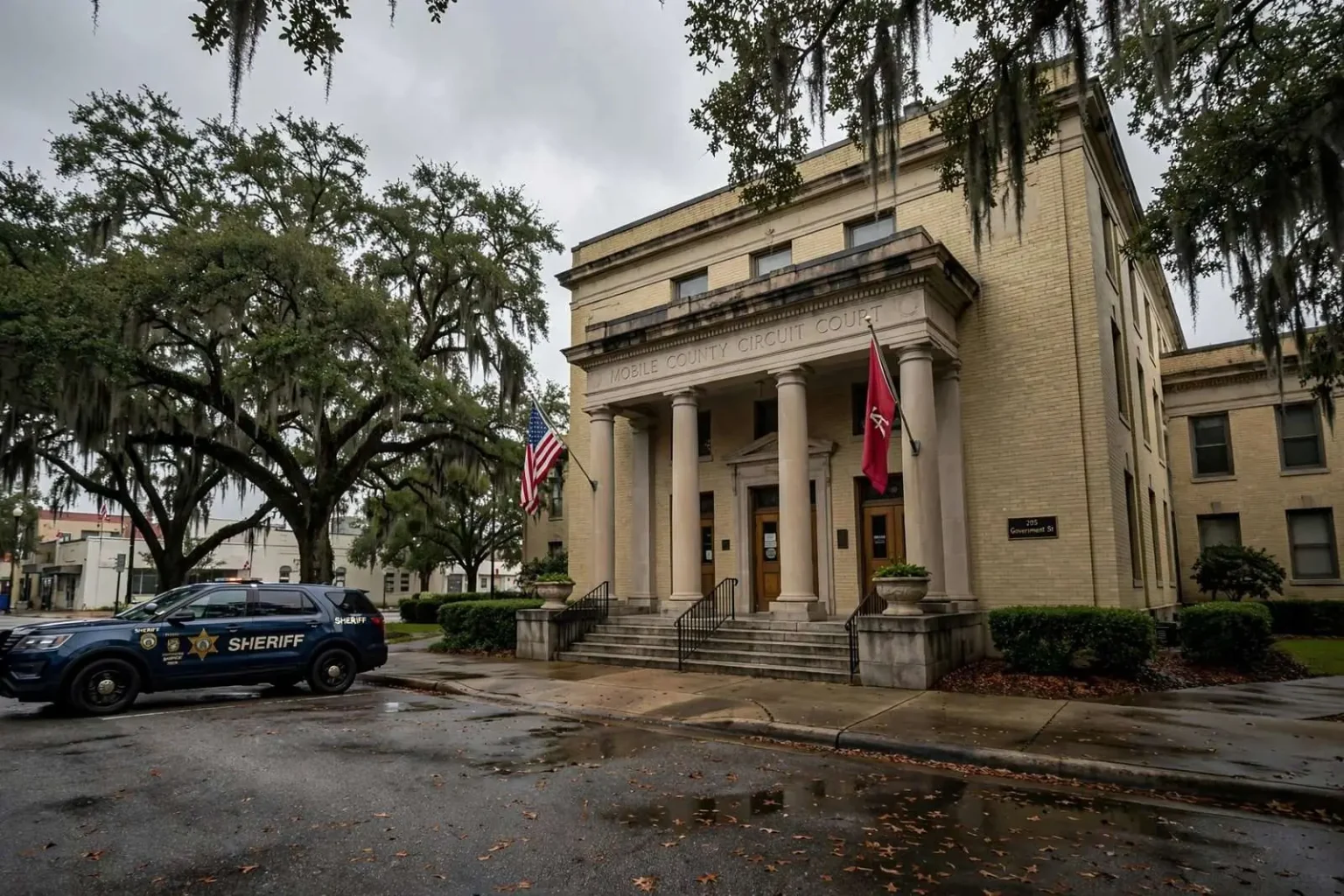
A 19-year-old Mobile woman entered a guilty plea in Mobile County Circuit Court to attempted murder and burglary charges connected to a violent 2014 home invasion in Chickasaw that left an elderly resident seriously injured.
The defendant had been scheduled to stand trial on the morning she instead chose to enter a blind plea, meaning prosecutors will not recommend a specific sentence when she appears before the judge next month. She faces a minimum of 20 years and up to life in prison on each charge.
A blind plea is one of the higher-stakes moves available to a criminal defendant. By pleading guilty without a sentencing agreement, the defendant gives up any certainty about punishment in exchange for ending the case before a jury can hear the evidence. In this instance, with a minimum of 20 years attached to each count and the counts stacked, the decision placed her entire future in the judge’s hands rather than a negotiated deal’s.
According to prosecutors, the defendant and two co-defendants broke into an 86-year-old man’s home on 11th Avenue in Chickasaw in January 2014. The victim was beaten and stabbed multiple times during the attack, and the Mobile County District Attorney’s Office said items including a television, a wedding band and a cordless phone were taken from the home. The stolen television was later found left behind in the yard.
The details — an elderly man living alone, a wedding band taken from his home, a television abandoned in the yard as the attackers fled — are the kind that have kept the case alive in the community’s memory in the years since it occurred. Chickasaw, a small city carved out of the Prichard area in north Mobile County, is a close-knit community where such a violent crime against a well-known resident reverberated immediately.
The Attack and the Neighbor Who Interrupted It
The attack was interrupted when a neighbor came to the home to borrow butter and encountered the scene, prosecutors said. That ordinary errand likely saved the victim’s life at the time, cutting the assault short and bringing help to a man who had been left bleeding inside his own home.
The domestic details of the interruption became part of the case’s lasting story. A neighbor’s knock, a borrowed cup of butter — the most mundane of exchanges between people who live near one another — collided with a violent break-in in progress, and the resulting commotion sent the attackers fleeing before they could finish what they had started. Residents in the neighborhood recounted the episode in the days that followed as both a horror and a strange comfort: proof that people were watching out for one another on 11th Avenue, even when they could not have known what they were walking into.
Chickasaw police handled the initial response and investigation, working the scene on 11th Avenue while the victim was rushed to medical care. The subsequent involvement of the Mobile County District Attorney’s Office reflected the severity of the charges, which fell under felony jurisdiction and carried the potential for decades-long sentences from the outset. Investigators assembled the case across the following months, identifying the three suspects — two young men from Chickasaw and Mobile, and the 19-year-old woman whose plea has now resolved her part in it.
Home invasions targeting elderly residents remain among the most troubling categories of crime for small Alabama cities, where many older homeowners have lived in the same houses for decades and are known personally to their neighbors. Police departments in the county periodically urge residents to check on elderly neighbors, install exterior lighting and report unfamiliar vehicles in the area — ordinary precautions that take on added urgency after an attack like the one on 11th Avenue.
The victim was hospitalized and, weeks later, died at a Mobile hospital, though authorities determined his death was unrelated to the injuries sustained in the beating. That determination shaped the prosecution significantly: had the death been tied to the attack, the charges would have escalated to murder, and the case’s resolution would have carried a far different weight. As it stood, the defendants faced attempted murder and burglary counts — serious charges carrying decades in prison, but not a capital or life-mandatory exposure.
For the victim’s family, the intervening death compounded the loss. The man survived the initial attack, spent weeks in medical care, and died before he could see anyone held accountable in court — leaving relatives to follow the criminal case as representatives of a father or grandfather who could no longer attend.
When the judge asked the defendant if she wished to make a statement after entering her plea, she offered only a brief remark describing the case as a lesson learned.
Prosecutors argued for the maximum sentence, describing the crime as a brutal attack on a vulnerable, well-regarded member of the Chickasaw community who was targeted inside his own home.
The state’s framing centered on the victim’s age and the home setting. Crimes against elderly residents carry particular weight with judges and prosecutors alike, both because of the physical vulnerability of the victims and because home invasion strikes at the sense of security that communities prize most. Prosecutors in Mobile County have historically pushed for severe penalties in cases involving elderly victims, arguing that deterrence requires sentences that match the violence of the conduct.
A family member who attended the hearing said relatives were hopeful for a lengthy sentence but expressed confidence in the handling of the case by the court and prosecutors throughout the process.
That restraint from the family — hope for severity, paired with trust in the process — reflected nearly two years of involvement in a case that had already outlasted the news cycle. Victims’ family members in cases of this kind typically attend every hearing, consult with prosecutors before plea decisions, and carry the practical knowledge of the crime’s details that no one else in the courtroom possesses.
The Co-Defendants’ Cases Remain Pending
Charges remain pending against the two co-defendants, a 20-year-old Chickasaw man and a 21-year-old Mobile man, both of whom still face trial on attempted murder counts in the coming months.
Their cases will now proceed without the ambiguity of a co-defendant’s testimony at trial — the woman who pleaded guilty has already admitted, in open court and under oath through her plea, to the core of the state’s allegations. Defendants considering their own pleas or trials will weigh that admission carefully, and prosecutors gain a form of leverage that only a conviction or a plea produces.
The case has drawn attention in the Chickasaw community since the day of the attack, when news spread through the small city that one of its elderly residents had been savagely beaten inside his home in broad daylight. Community members followed the court proceedings closely, and the resolution of the first defendant’s case marks the beginning of the end of a legal saga that will not fully close until all three defendants are sentenced.
How the Courts Handle Blind Pleas
Blind pleas occupy an unusual place in Alabama’s criminal justice system. In the ordinary plea negotiation, the defense and prosecution agree on a recommended sentence, and the judge typically accepts or rejects the package. In a blind plea, no recommendation exists: the defendant admits guilt, the presentence investigation proceeds, and the judge exercises independent discretion at a sentencing hearing where victims’ families, prosecutors and defense counsel all address the court.
For the defense, the gamble can make sense when the trial evidence is overwhelming and a jury conviction would remove any argument for leniency. For prosecutors, a blind plea still delivers a conviction — and in this case, one that stands on each count with a 20-year minimum attached. The judge, informed by the presentence report and the hearings to come, will weigh the defendant’s age, role in the offense and record against the brutality of the January 2014 attack.
What Comes Next
The defendant returns to court next month for sentencing, where she will learn whether the judge imposes the maximum the law allows or something less. The two co-defendants face their own trials in the months ahead, and the victim’s family will be present for each — continuing a two-year pursuit of accountability that began with a neighbor’s knock on a door on 11th Avenue in Chickasaw.
For the community, the case has served as a sobering reminder of the vulnerability of elderly neighbors who live alone, and of the difference an alert resident can make. The neighbor who stopped to borrow butter interrupted an attack in progress; the family members who filled the courtroom rows for two years afterward made sure the interruption was followed by prosecution.