Chickasaw Man Jailed After Overnight Assault, Unlawful Imprisonment of Girlfriend
A Chunchula man faces multiple domestic violence charges after Chickasaw police say he strangled and held a woman overnight on Hillside Drive.
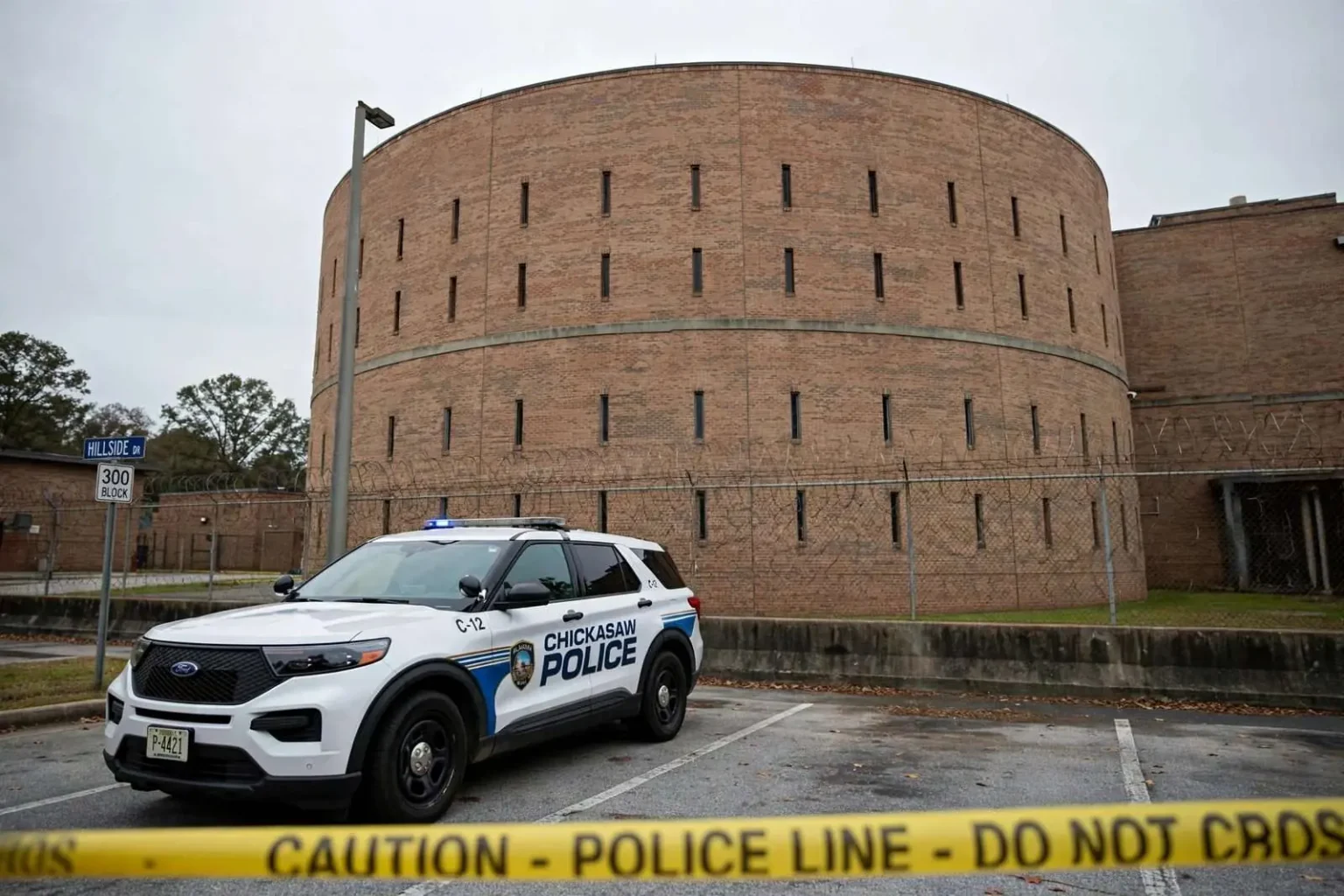
CHICKASAW, Alabama — A Chunchula man is behind bars in the Mobile County Metro Jail after Chickasaw police said he attacked a woman inside a home on Hillside Drive and then refused to let her seek help for hours afterward. Robert Arthur Cooley, 44, was booked earlier in the week on a series of domestic violence charges stemming from the overnight incident.
According to the Chickasaw Police Department, Cooley got into an argument with a woman at a residence in the 300 block of Hillside Drive that escalated from shouting into physical violence. Investigators said Cooley came up behind the woman and choked her until she passed out. When she regained consciousness, officers said her face, arm and leg were bruised badly enough that she could barely walk without limping.
Held until early morning
Police said the woman was not permitted to leave the home, call 911 or get medical treatment until roughly 2 a.m. the following day, well after the assault occurred. Officers said that delay became the basis for an additional charge of interfering with a domestic violence emergency call, on top of the assault itself. Investigators have not publicly described exactly when the argument began or how long the confrontation lasted, but the hours-long wait before the woman could reach help became central to how the case was ultimately charged.
The episode reflects a pattern officers across Mobile County describe seeing repeatedly in domestic cases: what begins as a verbal dispute between partners can move quickly into serious physical harm, and victims are sometimes kept from calling for help by the very person who injured them. Police in the small city said that is precisely why blocking a 911 call is charged on its own, rather than being folded into the underlying assault count. Each hour a victim is cut off from emergency services, officers note, is an hour in which a serious injury can go untreated.
Multiple charges filed
Cooley was booked earlier in the week on charges that include second-degree domestic violence, domestic violence by strangulation, second-degree unlawful imprisonment and interference with a domestic violence emergency call, Chickasaw police confirmed. The strangulation count in particular carries significant weight under Alabama law, which treats choking or otherwise impeding breathing during a domestic assault as a distinct and more serious offense than a standard battery. As of the department’s update, Cooley remained in custody at the Mobile County Metro Jail while the case moved through the court system.
Why strangulation is charged separately
Under Alabama’s domestic violence statutes, an assault committed by strangulation or suffocation is not treated as a routine injury case. Legislators created a specific strangulation offense after medical researchers documented that victims who lose consciousness during a domestic attack face a dramatically elevated risk of being killed by the same partner later. The act of cutting off blood flow or oxygen can leave no visible mark at all, which historically allowed some of the most dangerous abusers to be charged with minor misdemeanors. Alabama law now recognizes the behavior itself as a felony, regardless of whether the victim sustains lasting physical injury.
That framework is what investigators in Chickasaw were working within when they filed the strangulation count against Cooley. Officers said the woman passed out during the attack, and loss of consciousness is viewed as a significant aggravating factor that often elevates charges beyond a standard assault. The second-degree domestic violence charge covers the broader pattern of physical harm, while the second-degree unlawful imprisonment count addresses the claim that Cooley would not allow the woman to leave the residence during the overnight hours.
The interference charge
The fourth count, interference with a domestic violence emergency call, is the charge that most directly matches the timeline police described. Alabama law makes it a separate crime to prevent or attempt to prevent a household or family member from calling 911 or otherwise summoning emergency assistance during a domestic incident. Prosecutors treat the offense seriously because it can trap a victim at the scene with an injured abuser, and it can delay medical care long enough to turn survivable injuries into fatal ones.
In this case, police said the woman was unable to get medical treatment until roughly 2 a.m., well after the assault occurred. Officers who eventually made contact with her documented bruising to her face, arm and leg severe enough that she struggled to walk. The combination of charges — assault, strangulation, imprisonment and interference — presents prosecutors with several paths forward as the case moves toward an initial court appearance.
Inside the Mobile County Metro Jail
The Mobile County Metro Jail on Union Avenue in downtown Mobile houses defendants awaiting trial from across the county, including small municipalities like Chickasaw that do not operate long-term detention facilities of their own. Booking records there are public, and charges filed by municipal police departments are typically reviewed as cases proceed to district or circuit court. Defendants facing felony domestic violence charges usually appear before a judge for an arraignment and bond determination within days of booking, though agencies in this case did not release a bond amount or arraignment date for Cooley.
Chickasaw and its police department
Chickasaw is a small city of roughly 5,000 residents sitting just north of Prichard in Mobile County, carved out as its own municipality in 1946 around the company town that once served the Chickasaw Shipbuilding Village. Its police department handles the full range of municipal law enforcement for the city, including domestic calls, which make up a steady share of the workload for departments of its size across the Gulf Coast. The Hillside Drive neighborhood where the assault occurred is a residential area in the heart of the city, close to the schools and churches that anchor community life there.
Departments across the region have sharpened their focus on strangulation-related domestic violence charges in recent years, and Chickasaw is no exception. Training for patrol officers increasingly emphasizes recognizing the signs of strangulation — which can include subtle injuries, voice changes and delayed symptoms — and documenting them thoroughly, because the medical evidence often supports the more serious felony charge even when a victim initially minimizes what happened.
What the law says about second-degree domestic violence
Second-degree domestic violence in Alabama generally applies when a person commits assault, menacing, reckless endangerment or certain other offenses against a family or household member, and it is charged as a felony rather than a misdemeanor. The distinction matters for defendants and victims alike: felony convictions carry longer potential sentences, and courts often impose no-contact conditions as a condition of any bond. Second-degree unlawful imprisonment, the count tied to keeping the woman inside the Hillside Drive home, likewise elevates conduct that might otherwise be handled as a brief detention into a felony when it occurs alongside a domestic assault.
Together, the four charges filed against Cooley span the entire arc of the incident police described — the assault itself, the strangulation, the hours she was kept from leaving, and the blocked access to emergency help. That kind of layered charging is common in Mobile County domestic cases where investigators can document a victim being isolated as well as injured.
How these cases move forward
Once charges like these are filed, the case typically moves from municipal police investigators to the Mobile County District Attorney’s Office, which reviews the evidence and presents it to a grand jury for indictment on felony counts. Along the way, prosecutors weigh the victim’s account, medical records documenting the injuries, and any statements the defendant made during the investigation. Judges handling domestic violence dockets in Mobile County also have access to protective order proceedings that can run parallel to the criminal case, giving victims an additional layer of legal protection while prosecution is underway. For the woman on Hillside Drive, the process ahead will involve interviews with victim services officers and, likely, testimony — a road many domestic violence survivors in the county have walked before her.
Resources for domestic violence victims
Advocates in the Mobile area point to the case as a reminder that help is available around the clock for people trapped in violent relationships. Penelope House, the domestic violence shelter serving Mobile County, operates a crisis line that connects callers to emergency shelter, safety planning and court advocacy. Similar resources exist in Baldwin County and across the region, and victims who are unable to speak safely can still reach 911 by text in many jurisdictions, a capability that has become a lifeline in cases like the one Chickasaw police described.
Advocates note that loss of consciousness during a domestic assault is treated as a significant aggravating factor under Alabama law, often elevating charges beyond a standard assault count, and they encourage victims to seek medical attention promptly even when injuries appear minor. Chickasaw police did not release additional details about a bond amount or an arraignment date as the case continued through the court system.