Mobile Bay Oyster Harvest Plunges as Dredge Sediment Debate Intensifies Along the Coast
Alabama closed its public oyster season after 12 days with about 400 sacks harvested, reviving a debate over dredged sediment, water conditions and the future of Mobile Bay reefs.
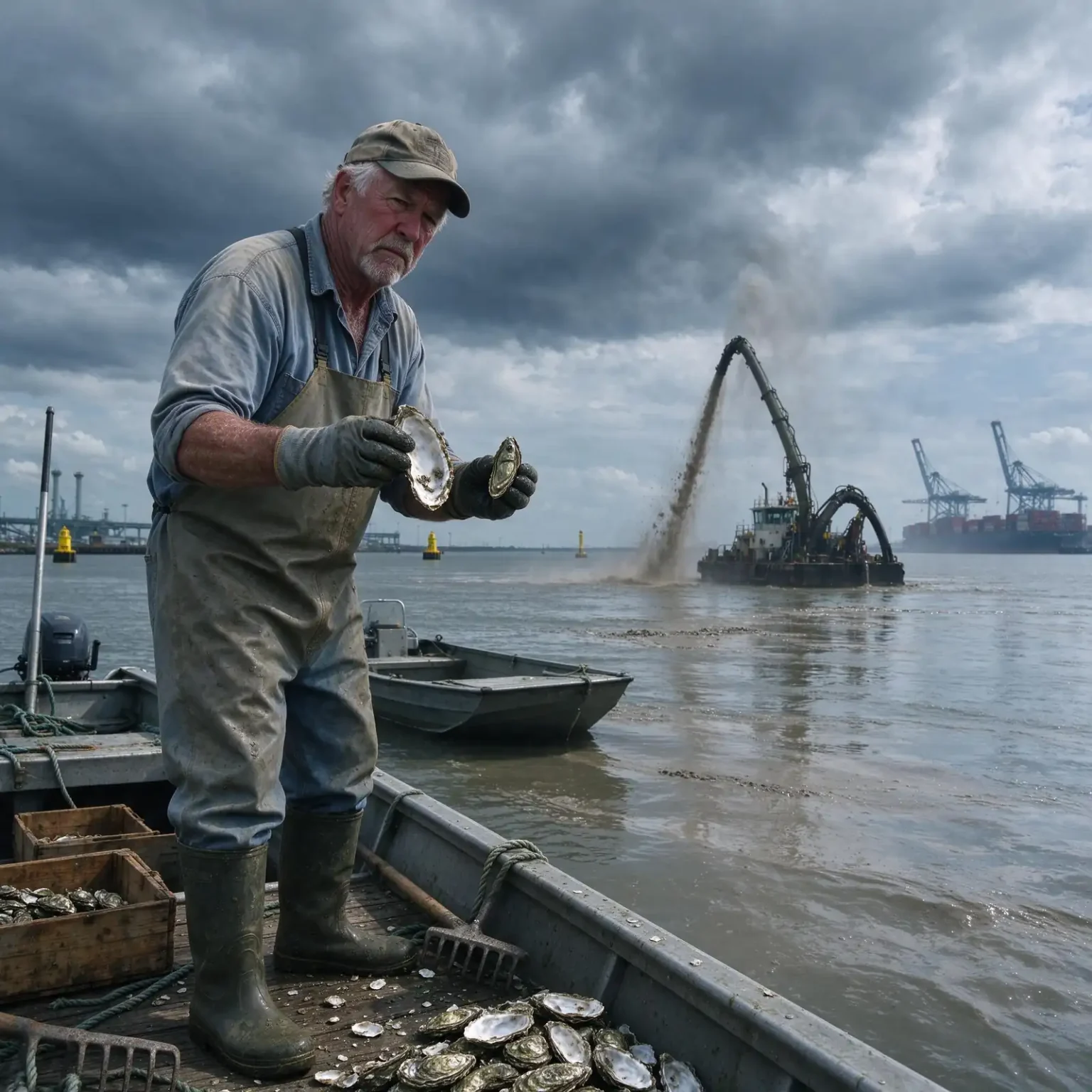
MOBILE, Ala. — Mobile Bay’s oyster harvest has fallen to a sliver of what it was only two years ago, and the people who depend on it are divided over why. State wildlife managers shut down this year’s public oyster season after just 12 days, and estimates put the total catch at roughly 400 sacks. In 2024, by comparison, harvesters brought in about 25,000 sacks.
That collapse has sharpened a long-running argument over the health of the bay. Researchers generally point to harsh water conditions as the main driver of the decline. A number of watermen, along with the environmental group Mobile Baykeeper, have focused their concern on the sediment that federal engineers pump back into the bay while deepening and maintaining shipping lanes to the Port of Mobile.
A Season Measured in Days
The early closure came from the Alabama Department of Conservation, the state agency known as ADCNR, which oversees public oyster reefs and sets harvest rules for commercial and recreational tongers. When surveys and catch data show reefs cannot support continued harvest, the agency can end a season early to protect the oysters that remain and give the reefs a chance to rebuild.
This year that decision came less than two weeks into the season. The difference between 400 sacks and 25,000 sacks represents a drop of more than 98 percent in a single two-year span, a decline that touches not only the people who work the reefs but also the processors, shuckers, wholesalers and restaurants that rely on a local supply.
For many families along the western and eastern shores of the bay, oystering has been passed down from one generation to the next. A shortened season means lost income during a part of the year that harvesters often count on, and it raises hard questions about whether the work can remain a viable living.
What Oysters Need to Thrive
Understanding the debate starts with the oyster itself. Eastern oysters are filter feeders that live in estuaries, where fresh water from rivers mixes with salt water from the Gulf. They do best within a range of salinity, and long stretches of water that is either too fresh or too salty can stress or kill them. Oxygen matters too. When the amount of dissolved oxygen in the water drops too low, oysters, which cannot move away, can suffocate on the bottom.
Reproduction adds another set of demands. Oysters release eggs and sperm into the water, and the resulting larvae drift for a time before they need to settle and attach to something hard. Young oysters at this stage are known as spat, and they need a clean, firm surface to cling to. Old oyster shell is ideal, which is why healthy reefs tend to build on themselves over many generations. A layer of mud or silt over that shell can leave the larvae with nowhere suitable to settle.
Scientists who study Mobile Bay have tied the recent losses to those environmental stresses. Spells of unusually low or unusually high salinity, combined with episodes of low dissolved oxygen, can make conditions on the reefs impossible for oysters to survive, let alone grow to harvest size.
The Harvester’s Case Against Dredged Mud
A generational fisherman who has spent years on Mobile Bay sees the problem differently. He predicted in 2025 that it would be the final year for oystering on the bay, and for his own business, that forecast proved true. He said he is certain the damage is entirely the result of dredged material placed in the bay.
In his view, the bay’s reefs formed over thousands of years and endured nearly everything nature could deliver, from drought and floods of fresh water to periods of poor oxygen. The decline, he said, began only after state government took control of how the resource is managed, a shift he traces back several years.
He also argued that the bay has not been getting enough rainfall to flush silt away from the reefs, leaving too little water movement to keep the shell clean. He acknowledged he does not claim to know everything, but said a decade of working those waters has given him a clear sense of what is going wrong.
Once the property he had leased was sold to the state, the harvester switched to net fishing as his full-time trade. He has stayed on the water in the same area and lends a hand to other oyster growers. While fishing near Cedar Point West, he said, the change is hard to miss. When he sets his nets for pogy near the reef, he now pulls up large dead oysters. In earlier years, he said, setting near the reef would yield a basket or more of living oysters, which he would return to the water. Now, he said, the catch is nothing but empty shell.
How the Corps Handles Dredged Sediment
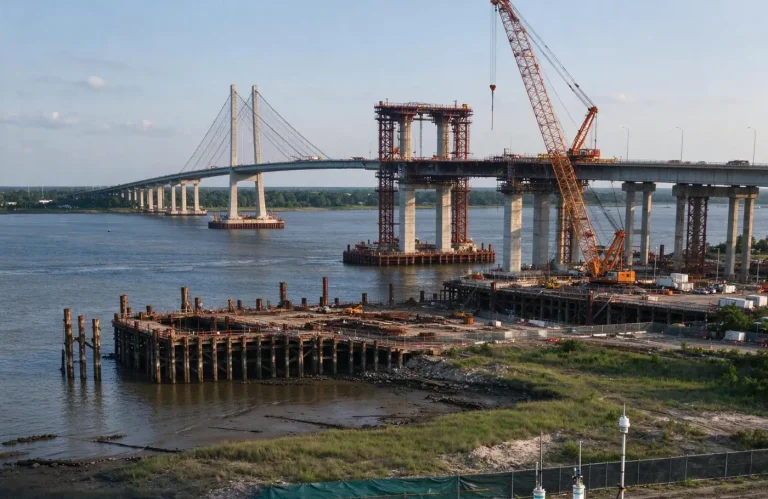
The sediment at the center of the dispute comes from maintenance and improvement dredging in the ship channel that serves the Port of Mobile. The Army Corps of Engineers, which is responsible for keeping federal navigation channels at their authorized depths, says that dredging is necessary to keep the port operating. The material removed from the channel has to go somewhere, and the agency has been placing some of it in open water inside the bay.
The method the Corps uses is called thin-layer placement. Rather than piling sediment into mounds, the approach spreads it across an area in relatively shallow layers. The Corps said it pairs this intentional open-water placement with a monitoring program designed to predict how the sediment will behave once it is placed.
According to the agency, that monitoring includes surveys taken before and after dredging, along with interim checks when they are needed. The Corps said it also tracks turbidity, a measure of how cloudy water becomes from suspended particles, both in the surrounding background water and in a designated mixing zone at the dredge and placement locations. That tracking continues throughout each dredging event so the agency can confirm that water quality standards are being met.
The Federal View of Beneficial Use
In August, a Corps spokesperson described thin-layer placement as one of several tools the agency considers beneficial use of dredged material. The spokesperson said beneficial use is broader than building marsh or placing sediment on land or in confined sites, and that it can also mean keeping suitable sediment inside the coastal system when conditions make that appropriate.
The Corps has said its support for beneficial use extends to several other approaches as well: building new marsh, protecting shorelines, restoring habitat, and placing material in confined sites or on upland property. Each option carries its own cost, engineering demands and environmental tradeoffs, which is part of why the choice of where sediment goes is so closely watched.
Asked about public concerns, the spokesperson said the district is aware of worries about how the work could affect seagrass beds, oyster reefs, fisheries, water quality and the communities along the coast. Those same concerns, the spokesperson said, are the reason sediment management decisions go through several layers of scrutiny, from environmental reviews and water quality studies to engineering assessments, consultation with resource agencies at the state and federal levels, and an examination of conditions at each specific site. The agency describes its job as balancing two duties: keeping the federal navigation channel safe and dependable, and protecting the bay’s long-term health through decisions grounded in science and the law.
Advocates Push for Other Options
Mobile Baykeeper, a nonprofit that works on water quality issues in the Mobile Bay watershed, has called for an end to placing dredged mud in the bay. The group estimates that the practice would deposit roughly 90 million cubic yards of material, which it describes as sludge, in Mobile Bay during the coming two decades.
The group is not alone. Other organizations, as well as lawmakers, have urged the Corps to steer the material into beneficial-use projects that go beyond thin-layer placement, such as the marsh and shoreline work the agency itself lists among its options.
For residents trying to follow the issue, federal dredging projects typically involve public notices and environmental documents, and the Corps district office accepts public comment at certain stages of the review process. Elected officials and advocacy groups often use those windows to press for changes in how and where sediment is placed.
The Cost for Oyster Farmers
The losses are not limited to wild reefs. Off-bottom oyster farming, in which growers raise oysters in cages, bags or floating gear rather than on the bay floor, has become an important part of the Alabama coast’s seafood economy. Farmers buy tiny seed oysters and tend them for months before they reach market size.
The longtime harvester said that even with significant money invested in improving conditions, some farmers have still lost as much as 95 percent of their crop this year. He described the emotional weight of buying an oyster no larger than a grain of sand, caring for it for 12 to 15 months, and then watching it open up and die before it can be sold. He called the loss enormous and said it takes a heavy toll on the people doing the work.
Restoration Work and a Long History
Several organizations have taken on reef restoration, growing oysters and moving them to sites around Mobile and Baldwin counties in hopes of rebuilding populations. Restoration projects of this kind often involve placing shell or other hard material on the bottom to give spat a place to attach, then monitoring whether new oysters take hold.
The harvester remains doubtful that those efforts can succeed while sediment placement continues. In his view, no amount of restoration will make a lasting difference if mud keeps being placed in the bay.
He also pointed to how deeply oysters are woven into coastal history. Fishing towns along the Gulf and on both the Atlantic and Pacific coasts, he said, were built in part on harvested oyster shell used as fill and foundation material, and he noted that even parts of New York sit on shell. Closer to home, he said, the shell used to build Old Shell Road in Mobile came from Mobile Bay.
For the small communities that once thrived on the bay’s reefs, the shrinking harvest is a reminder that a way of life may not return in the form many remember. Whether the answer lies in changing how sediment is handled, waiting out a stretch of harsh water conditions, or both, the next several seasons will show whether Mobile Bay’s oysters can recover.