Flu Confirmed Across Alabama as Mobile County Health Officials Urge Shots Before the Holidays
With lab-confirmed flu now reported in every region of Alabama, Mobile County health officials are urging residents to get vaccinated and ask providers about COVID-19, RSV and pneumococcal shots.
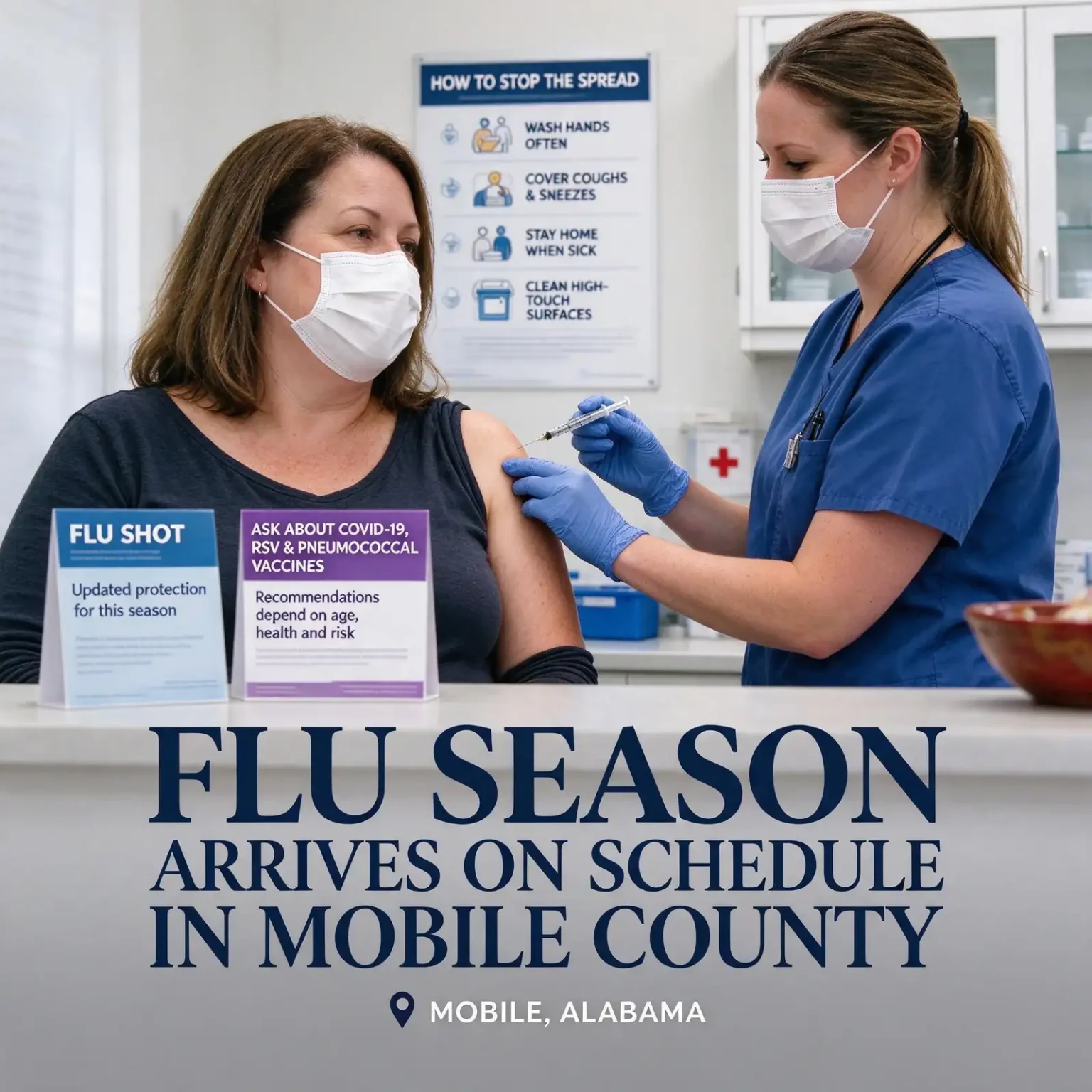
MOBILE, Ala. — With laboratory-confirmed influenza now showing up in every part of Alabama, the Mobile County Health Department is urging residents to get their flu shots and to talk with their health care providers about other vaccines that can help them get through the winter healthy.
The county’s health officer said respiratory illness activity this fall is tracking closely with what the area has seen in earlier years, meaning flu season has arrived on its usual timeline. Confirmed flu cases have been reported across all regions of the state over roughly the past two weeks.
Flu Activity Follows Its Usual Timeline
Cooler weather routinely brings a rise in respiratory infections, and health officials pointed to three viruses in particular: influenza, COVID-19 and respiratory syncytial virus, better known as RSV. The trio is often grouped together because of the toll it can take on households and on people who are most vulnerable to serious illness.
The department noted, however, that those three are not the only respiratory viruses spreading in the community right now. Many other common viruses, including those that cause ordinary colds, also circulate during the colder months.
When the flu typically peaks
In the United States, flu activity generally begins to climb in the fall and most often peaks sometime between December and February, although it can continue well into spring. Because the virus spreads easily in crowded indoor settings, the holiday period, with its travel, family gatherings and shopping trips, can give it plenty of opportunities to move from person to person.
Vaccines Available This Season
The health officer said residents have effective ways to protect themselves and those around them, and he listed several options:
- Updated flu vaccines for the current season.
- The latest COVID-19 vaccines.
- RSV immunization for people who are eligible.
- Pneumococcal vaccination, which he described as an important layer of protection, especially for older adults and people with certain health conditions.
He said he hopes everyone can enjoy a holiday season that is both safe and healthy.
Which vaccines are right for you
Not every vaccine is recommended for every person. The department is encouraging residents to have a conversation with their health care provider or pharmacist about which shots make sense for them, taking into account their age, overall health and personal risk factors.
Federal health guidance has long recommended a yearly flu vaccine for nearly everyone 6 months of age and older, with rare exceptions. Recommendations for RSV, COVID-19 and pneumococcal vaccines are more targeted and depend on factors such as age, pregnancy and underlying medical conditions, which is one reason a provider’s advice is useful.
Why a yearly flu shot matters
Flu viruses change over time, and the vaccine is reviewed and updated each year to match the strains expected to circulate. Protection from a flu shot also fades over the months after it is given. Those two factors are why public health agencies recommend a new dose every season rather than relying on a shot from a previous year.
It generally takes about two weeks after vaccination for the body to build up protection. Getting vaccinated now, before flu activity reaches its typical winter peak and before holiday gatherings, gives that protection time to develop.
A flu vaccine does not guarantee that someone will avoid the flu entirely, but it lowers the chance of getting sick and is associated with less severe illness among people who do become infected.
Who Faces Higher Risk
Anyone can catch the flu, but some groups are more likely to develop serious complications such as pneumonia or hospitalization. According to longstanding public health guidance, those groups include:
- Adults 65 and older
- Young children, especially those under 2
- Pregnant people
- People with chronic conditions such as asthma, diabetes, heart disease or lung disease
- People with weakened immune systems
Vaccinating the people around these groups, including caregivers, family members and household contacts, can also help shield those who are most at risk.
Everyday Habits That Slow the Spread
Alongside vaccination, the department is reminding residents that a few basic habits continue to play a big role in limiting illness:
- Wash your hands often, particularly after time in public places or after caring for someone who is sick.
- Cover coughs and sneezes using a tissue or the inside of your elbow.
- Stay home if you are ill so you do not pass the virus along to coworkers, classmates or relatives.
Other commonly recommended steps include using an alcohol-based hand sanitizer when soap and water are not handy, avoiding touching the eyes, nose and mouth, and cleaning surfaces that are touched often, such as doorknobs, phones and countertops.
The health officer said pairing vaccination with those routine precautions offers the community its best opportunity to cut down on illness. He added that taking those steps allows residents to look out for one another and have a healthier holiday season.
Recognizing the Flu
Flu often comes on suddenly. Common signs include fever or feeling feverish, chills, cough, sore throat, runny or stuffy nose, muscle or body aches, headache and fatigue. Some people, more often children, may also have vomiting or diarrhea. Not everyone with the flu runs a fever.
Because flu, COVID-19, RSV and other respiratory viruses can cause similar symptoms, testing is often the only way to know which virus is responsible. People who feel sick, especially those in a higher-risk group, should contact a health care provider. Prescription antiviral medications are available for flu, and they tend to work best when started soon after symptoms begin.
When to seek urgent care
Anyone experiencing warning signs such as difficulty breathing, chest pain or pressure, confusion, severe weakness, or symptoms that improve and then return or worsen should seek medical care right away. Parents should get prompt care for children who have trouble breathing, are not drinking enough fluids, or are unusually difficult to wake.
Where to Get Vaccinated in Mobile County
Vaccines are widely available throughout Mobile County at local pharmacies and health care providers. Many residents can get a flu shot at a neighborhood pharmacy without an appointment, and some locations offer more than one vaccine during the same visit. Residents may want to call ahead to confirm which vaccines a location has in stock and to ask about insurance coverage.
People who are unsure where to start can ask their regular doctor’s office or contact the Mobile County Health Department for guidance on vaccine options in their area.
The Bottom Line
Flu has returned to Alabama right on time, and the coming months typically bring the heaviest respiratory illness activity of the year. Health officials in Mobile County are asking residents to take a few simple steps now:
- Get this season’s flu vaccine.
- Ask a provider or pharmacist whether COVID-19, RSV or pneumococcal vaccines are recommended for you.
- Keep up with handwashing and covering coughs and sneezes.
- Stay home when sick.
Taken together, those measures can help families protect themselves and the people around them through the holidays and the rest of the winter.