Mobile Native Laverne Cox Rises to Hollywood Fame, With Her Mother Cheering Quietly From Home
As Mobile native Laverne Cox earns Hollywood recognition, her mother, a retired Mobile County teacher, remains her proudest and quietest fan.
Few television shows have generated as much buzz for binge-watchers as the second season of “Orange Is the New Black,” the hit Netflix comedy-drama set inside a women’s federal prison, and much of the attention has centered on a Mobile native playing one of its standout characters — Sophia Burset, a transgender hairstylist who was once a firefighter before transitioning. The actress, Laverne Cox, grew up in Mobile and has become one of the most prominent advocates for transgender awareness in American entertainment, building a public profile that now reaches well beyond her role on the show.
Cox became the first openly transgender person to appear on the cover of a major national newsmagazine, a milestone that made her a fixture of the national conversation about transgender lives at the very moment her acting career was breaking through. This week, she is up for Best Supporting Actress in a Comedy at the Critics’ Choice Television Awards, a televised honors show in Los Angeles where the industry’s performers and critics gather each year. The nomination places the Mobile native among the most recognized supporting performances on television and marks another step in a career that has moved from relative obscurity to national prominence in a handful of years, driven as much by her advocacy as by her acting.
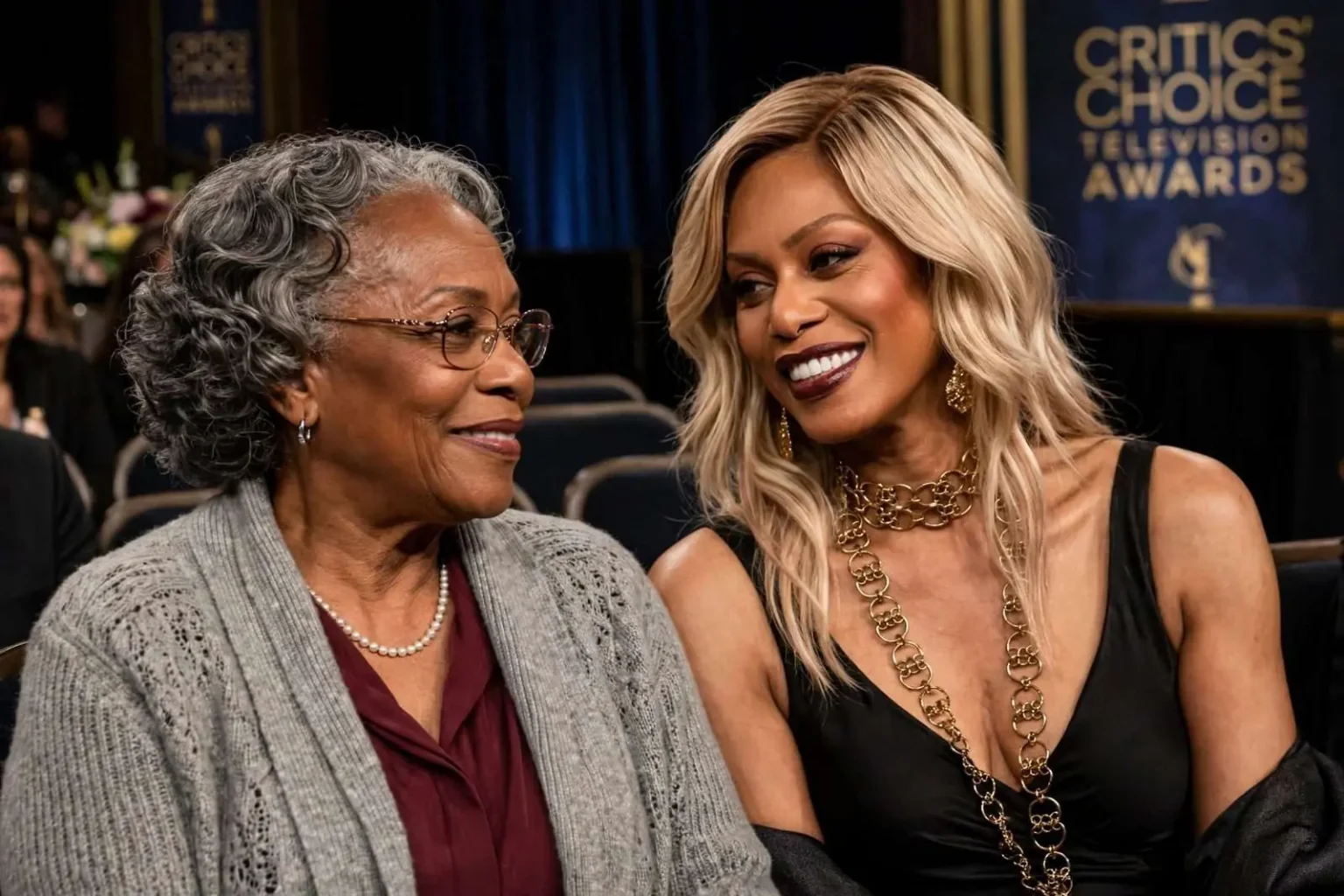
Sitting beside her at the ceremony will be her mother, who still lives in Mobile and has spent a lifetime supporting her daughter’s ambitions while avoiding the spotlight herself. The mother, a retired Mobile County public school reading teacher who taught for two decades, said she has always preferred to stay out of view, even at her children’s earlier performances, sitting in the back row to cheer quietly rather than draw attention. That habit of quiet support has carried through every stage of her daughter’s rise, from school auditoriums in Mobile to awards-show seating in Los Angeles.
Raising two artists in Down the Bay
Raising her daughter and her daughter’s identical twin brother — now a performance artist in his own right — as a single mother in Mobile’s Down the Bay neighborhood, she said she always encouraged her children to learn as much as they could, brushing off suggestions from friends that the kids should focus on part-time jobs instead of the arts. Down the Bay, the historic neighborhood south of downtown Mobile, has produced generations of the city’s musicians, athletes and performers, and its families have long understood the delicate balance between encouraging a child’s creative gifts and keeping them grounded through difficult circumstances.
Both children attended Council and Woodcock elementary schools, then Palmer Pillans Middle School, where her daughter served as vice president of the student council and became a familiar voice on the school’s PA system despite enduring bullying throughout her childhood for not conforming to gender expectations. Her mother said the other students recognized leadership when they saw it, even as they teased her. That combination — visible talent and steady harassment — is a familiar story for gender-nonconforming children everywhere, and Cox has spoken about those years as formative in both her resilience and her artistry.
Her daughter also developed public speaking skills as part of the Mobile City Federation youth group, traveling throughout the Southeast for engagements, and got an early creative start through a Saturday morning arts program at Bishop State Community College, where she impressed the program’s director enough to be invited to audition on the spot. Those early Mobile institutions — the civic youth organizations, the community college arts programs, the church and school stages — gave a gifted but struggling child somewhere to be seen, and Cox has credited such spaces in her hometown with setting her on the path she now travels.
Now touring college campuses around the country and appearing on national television, the actress has spoken often in interviews about the challenges of growing up gender-nonconforming in Mobile, and about how her mother, navigating unfamiliar territory of her own, ultimately became one of her strongest supporters. Her campus appearances have drawn students by the hundreds, and her speeches about bullying, identity and perseverance have made her a sought-after voice well beyond entertainment media. Back home, that mother says she’s simply proud, even if she’d rather stay out of the photographs.
What the role means on screen
The character Cox plays sits at the center of some of the show’s most discussed storylines. Sophia Burset came to the prison after a credit-card fraud conviction tied to the cost of her transition, and the second season digs deeper into what life inside looks like for a transgender woman navigating the institution — the segregation, the medical care, the family strain, and the way her salon chair becomes a small kingdom of dignity within the prison. Cox’s performance has been praised for giving the character humor and warmth without softening the institutional realities around her.
The show itself changed the economics and culture of television when it arrived. As one of Netflix’s early originals, it helped establish the model of full-season drops that made binge-watching a national habit, and its ensemble cast — built around women whose stories network television had largely ignored — became a cultural phenomenon almost overnight. For Cox, being part of that ensemble gave her a platform no prior transgender actor had occupied on American television, and she has used it deliberately, talking about the realities transgender people face in interviews, awards stages and campus lecture halls alike.
The visibility has carried real weight. In the period since Cox’s breakout, national publications, policymakers and advocacy organizations have described a shift in public awareness of transgender lives, with Cox frequently cited as a central figure in that change. Her Time cover appearance — the first for an openly transgender person — was paired with a cover story about what the magazine called a new transgender movement, and she followed it with an Emmy nomination that made her the first openly transgender person nominated in a primetime acting category.
Mobile roots that still show
For all the national attention, Cox’s story remains rooted in the institutions and neighborhoods of her hometown. Down the Bay, where her mother raised the twins, sits just south of downtown Mobile, a neighborhood with a deep tradition of Black family life and culture along the bay’s western shore. Council Elementary, Woodcock Elementary and Pillans Middle School educated generations of the neighborhood’s children, and Bishop State Community College — the historically Black institution on Martin Luther King Jr. Avenue — has served for decades as both a workforce pipeline and a cultural center for the city. The Saturday arts program that gave a young Cox an early stage is exactly the kind of community resource that has shaped Mobile’s creative talent for generations.
The Mobile City Federation youth group connected her to something larger: a civic tradition of leadership training and public speaking that has operated in Mobile’s Black community for decades. Traveling around the Southeast for youth engagements gave a teenager from Down the Bay practice in commanding a room, and those skills show today in the television appearances and campus lectures that now make up much of her public work.
A mother in the back row
The dynamic between Cox and her mother has become one of the quieter threads of her public story. A retired reading teacher who spent two decades in Mobile County classrooms, her mother learned — as many parents of transgender children of her generation had to — without a roadmap, moving from confusion to fierce support as her child grew into the person she is. Cox has described her mother’s journey in interviews, noting that the woman who once sat in back rows to avoid attention now watches her daughter receive some of television’s highest honors.
The twin brother, an accomplished performance artist, rounds out a family in which all three members built lives around creative expression — one in television, one in avant-garde performance, one in the classroom that produced them both. That the two siblings are identical twins has been a subject of fascination in profiles of Cox, who has spoken about the ways their paths diverged and converged as each found an artistic voice.
At the Critics’ Choice Television Awards, the mother’s seat beside her daughter will represent a journey that began in Down the Bay and ran through Mobile’s public schools, a community college stage and decades of quiet encouragement. Win or lose on the awards stage, the nomination itself stands as the latest milestone in a career that has carried Mobile’s name onto one of television’s biggest platforms — and a reminder, for the city that watched her grow up, of how far a child from the back rows can go.