Mobile Police Weigh Body Camera Expansion Amid Tight Budget
Mobile's police chief says body camera upgrades are a priority, but an aging patrol fleet is competing for limited city funding.
Mobile’s top law enforcement official told city leaders this week that outfitting officers with reliable body cameras is a priority, but competing budget demands are making the upgrade difficult to fund.
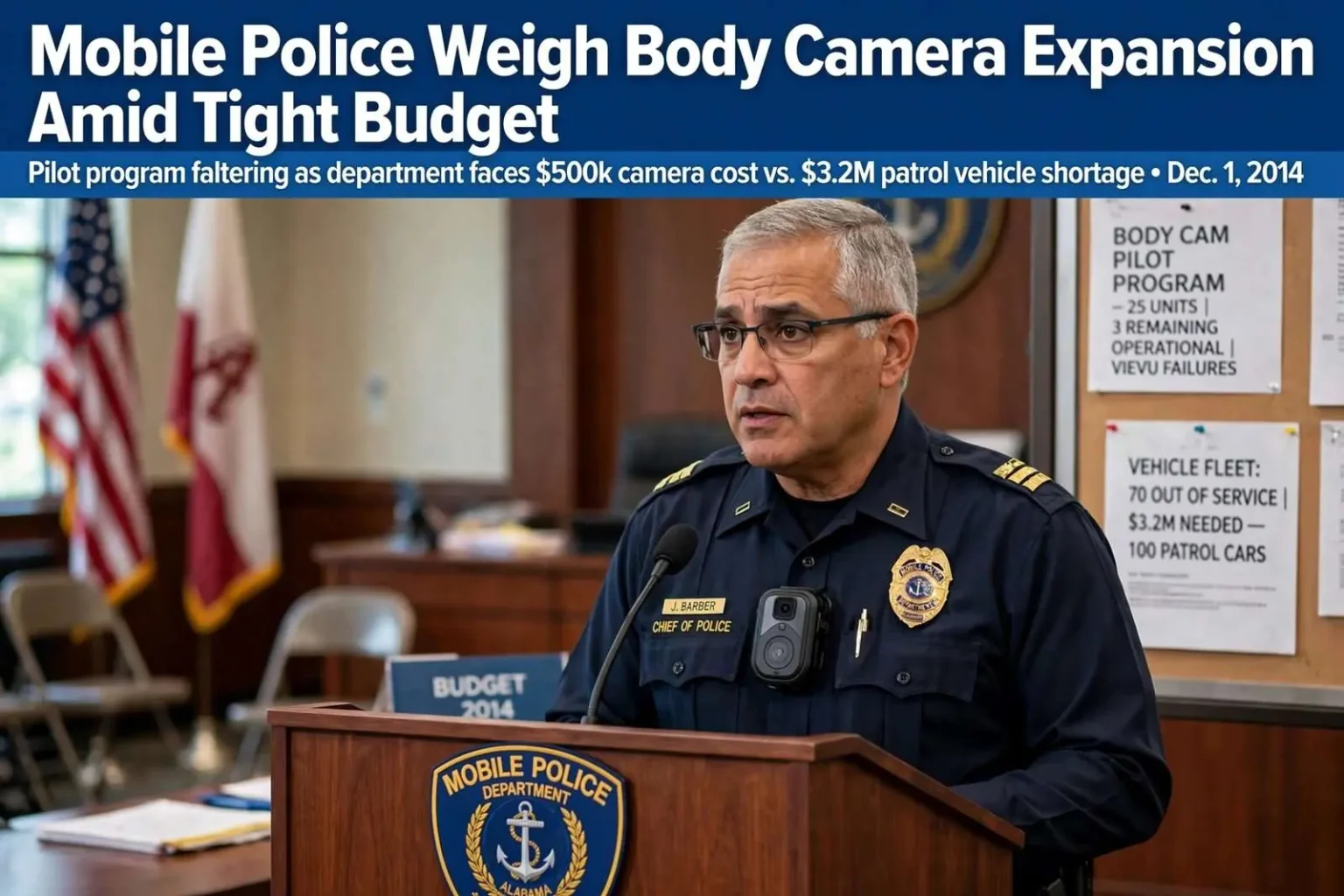
Police Chief James Barber briefed the Mobile City Council on the status of a body-worn camera pilot program launched roughly two years earlier. Of the 25 cameras purchased for that initial test group, only three remain in working order. The rest, made by VieVu, failed over time, according to Barber.
To replace the pilot equipment and expand coverage department-wide, Barber said the city would need to buy about 300 new units. He estimated the cameras alone would cost roughly $500,000, without factoring in ongoing costs for cloud-based data storage and maintenance that he declined to specify.
Vehicle Fleet Needs Compete for Funding
The chief said the department is exploring every available funding source, including grants, but acknowledged the timing is difficult. Mobile police are also trying to rebuild a capital budget for patrol vehicles after the council voted in late September to redirect $2.5 million earmarked for new police and fire vehicles toward the city’s General Fund to help cover retiree health care costs.
Barber said the vehicle shortage is the more urgent problem. He told council members that as many as 70 patrol cars are out of service at any given time, and the department estimates it needs roughly $3.2 million to add about 100 vehicles to its aging fleet.
“If we can’t get to a scene, it’s not going to do us any good to have a body cam,” Barber said, framing the vehicle need as the higher near-term priority even as he continues to push for camera funding.
Choosing the Right Camera Technology
On the technology itself, Barber said the department is currently leaning toward equipment used by other Alabama law enforcement agencies, though he cautioned it’s too early to draw conclusions about performance. A major consideration, he said, is how footage will be stored and retrieved. He indicated a preference for systems that allow officers to upload video wirelessly from patrol cars rather than relying on the department’s current server-based setup, which he described as limiting.
Body camera adoption was an emerging issue for law enforcement agencies nationwide in 2014, with departments across Alabama and beyond weighing the costs of equipment, data storage and long-term maintenance against expectations for greater transparency and accountability in police interactions with the public.
Mobile City Council members did not take formal action on the camera funding request during the meeting.
On Dec. 1, 2014, a few weeks after Barber’s presentation, the White House proposed $75 million in federal matching funds to help state and local agencies buy 50,000 body-worn cameras.