Mobile Rescue Dog Tinkerbell Settles Into New Home in Upstate New York
A beagle mix rescued in Mobile has been adopted by a family in central New York after a cross-country transport organized by a local rescue group.
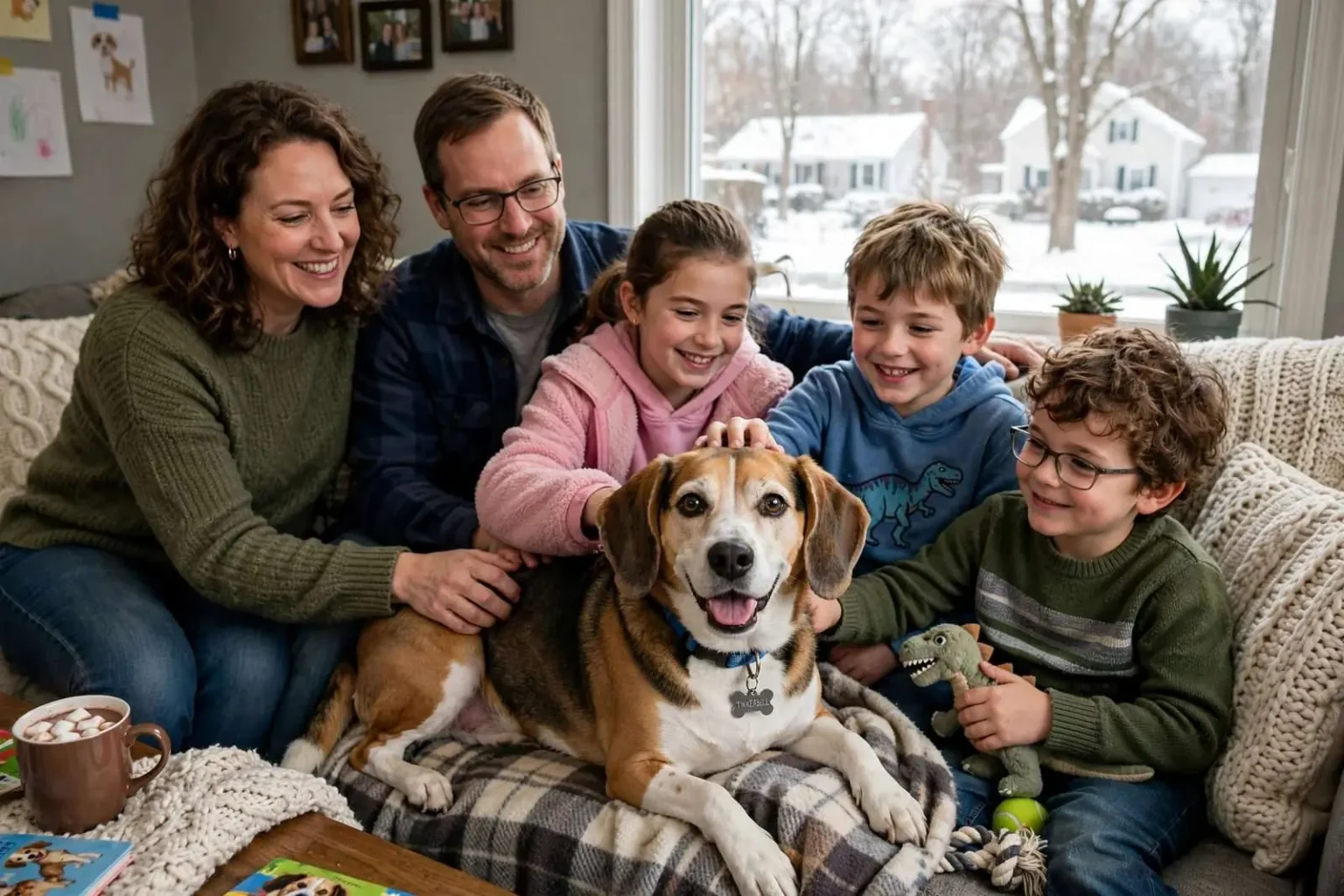
A beagle mix named Tinkerbell, once a stray taken in by a Mobile-based animal rescue group, is adjusting to a new life more than a thousand miles from the Gulf Coast after being adopted by a family in Dewitt, New York.
Tinkerbell was one of dozens of dogs and puppies gathered by Save A Stray, a Mobile rescue organization, before boarding a transport van bound for the Northeast in late February. The trip was part of an ongoing partnership between Save A Stray, Angels’ Arms Animal Welfare Connection and Helping Hounds Dog Rescue, a New York-based shelter that has worked with Alabama rescues since 2012 to find homes for animals in areas with fewer adopters.
Before making the trip north, Tinkerbell spent time in foster care with a Mobile couple, Cathy and Richard Shields, who cared for her while she waited for a permanent home to be found. “I was elated that finally Tinkerbell was adopted. I was getting antsy,” Cathy Shields said of the wait.
Once she arrived in New York, Tinkerbell didn’t stay unclaimed for long. A family with three children who had been asking for a dog decided she was the right fit, according to Kathy Gilmour, who works with Helping Hounds Dog Rescue. “I can only imagine the excitement in that house when they got home from school,” Gilmour said, describing the moment the children learned they had a new pet.
Gilmour said the family felt their children were mature enough to help care for a dog and take on some of the responsibility themselves.
That matching process — shelter staff evaluating a family’s readiness, not just their enthusiasm — is a deliberate part of how transport programs work. A dog that arrives from out of state has already survived stray life, shelter intake and a long van ride, and the goal is to make the next move the last one. Families with children are asked to demonstrate that feeding, walking and vet visits will be shared responsibilities rather than burdens that fall entirely on parents.
The Transport Pipeline From Alabama to the Northeast
Tinkerbell was part of a larger group of roughly five dozen animals that made the same trip from the Mobile area earlier this year. According to Gilmour, about a dozen of those dogs were still waiting to be adopted as of mid-March, while the rest had already found homes in the region.
Those numbers illustrate why the partnership has endured. A placement rate that clears most of a transport load within weeks means shelters up north can commit van space on a recurring schedule, and Southern rescues can plan intakes around dates they know will move animals out. The dozen still waiting in mid-March are typical of any transport — some dogs need more time, more training or simply the right family to come along.
The partnership between the Alabama and New York rescue groups has become a routine part of how Save A Stray manages the volume of strays and surrendered animals it takes in around Mobile. Transport trips allow dogs to move from crowded Southern shelters, where space and adopter pools are limited, into regions where demand for adoptable dogs consistently exceeds supply.
The economics of the arrangement work because the two regions face opposite problems. In much of the South, including the Mobile area, loose dogs, unplanned litters and low spay-neuter rates keep shelters full year-round, and euthanasia rates in underfunded municipal facilities remain far higher than anyone in the rescue world would like. In the Northeast, decades of aggressive spay-neuter campaigns, strict shelter regulations and strong adoption cultures have thinned the local supply of adoptable dogs, leaving would-be adopters facing waiting lists.
Transport programs bridge that gap. A licensed transport van, health certificates, vaccinations and coordination between three organizations turn a Mobile stray into an upstate New York family pet within weeks — a journey that ends in a living room in Dewitt rather than a euthanasia checklist back home.
The Role of Foster Homes
Foster families like the Shieldses are the quiet engine of the whole system. Before a dog can travel, it needs evaluation, socialization and often basic medical recovery — and kennel space at a rescue is always scarce. Foster homes take dogs in for weeks at a time, teaching house manners, observing temperament and giving rescue staff the information they need to match the dog with the right family up north.
Fostering also saves lives in a direct sense: every dog placed in a foster home frees kennel space for the next intake, and every behavioral report from a foster family makes a more accurate adoption match possible. The volunteers who open their homes do the unglamorous work — midnight potty breaks for puppies, transport to vet appointments, the bittersweet goodbye at the van — that makes the happy endings possible.
For Cathy Shields, the goodbye came with the news every foster hopes for: an adoption. Her account of “getting antsy” during Tinkerbell’s wait captures the peculiar tension of foster life, where the goal is to love a dog enough to prepare her for someone else’s family.
Why the South Ships Dogs North
The Mobile-to-New York route reflects a nationwide imbalance that animal welfare groups have worked to address for decades. Southern states, with warm climates that allow dogs to breed and stray year-round, generate far more homeless animals than their adoption markets can absorb. Northern states, with colder climates, stricter animal control and mature spay-neuter infrastructure, import dogs to meet demand.
Rescue leaders on both ends stress that transport is a relief valve, not a solution. The durable fixes are local: accessible spay-neuter services, pet retention programs that help families keep animals through hard times, microchipping to reunite lost dogs with owners, and enforcement of animal cruelty and neglect laws. Every dog that is sterilized or reclaimed is one that never needs a thousand-mile ride to survive.
Groups like Save A Stray work on that front as well, pulling animals from municipal shelters around Mobile County, arranging veterinary care and relying on volunteers and donors to keep operations running. The transport partnerships multiply the impact of every kennel and every volunteer hour by ensuring that space is never the reason an adoptable dog runs out of time.
The Journey North
A transport run is a carefully choreographed operation. Dogs are health-checked, vaccinated and issued the certificates required for interstate travel before loading day, then ride in crates sized to each animal with scheduled stops for water, walks and rest. Volunteers and staff coordinate handoffs, paperwork and arrival logistics so that receiving shelters know exactly what — and who — is coming.
For the dogs, the ride is disorienting but brief, measured in days. Most arrive frightened and soon settle in, and receiving shelters like Helping Hounds have refined their intake routines for Southern arrivals: decompression time, medical checks and prompt adoption marketing to move each dog into a home before the stress of relocation takes hold.
Helping Hounds has been doing this work with Alabama partners since 2012, building the kind of institutional trust that lets a Mobile rescue load a van with confidence and a New York shelter promise homes at the other end. The relationship has now moved hundreds of dogs from Gulf Coast streets to Northeast living rooms.
A New Life in Dewitt
Tinkerbell’s story ends where transport stories hope to end: with a family, in a house, with three children eager to share the work of caring for her. The beagle mix who once roamed as a stray around Mobile now has a bed of her own more than a thousand miles from where she was found.
For the Shieldses and the volunteers of Save A Stray, her adoption is the payoff of hours of unpaid work. For Helping Hounds, she is one more successful match in a partnership that has run for years. And for the dozens of dogs still waiting in Mobile-area kennels and foster homes for the next van north, her story is the proof that the system works when everyone does their part.
Residents who want to help can do so on either end of the pipeline: fostering for local rescues, volunteering for transport days, donating toward vetting costs, or adopting locally so that more transport slots open for dogs like Tinkerbell. Every step in that chain is what turns a stray into somebody’s dog.
Shelter staff on the New York end say the region’s adopters often come looking specifically for the mixed-breed dogs the South produces in abundance, valuing their hardiness and temperament. A beagle mix like Tinkerbell fits the profile of a family dog perfectly — sturdy, sociable and energetic enough to keep up with three children, mellow enough to settle in at the end of the day.