Former Mobile DHR Caseworker Pleads Guilty in Elder Abuse Case
A former Alabama DHR caseworker pleaded guilty to elder abuse after her disabled brother was found malnourished and severely neglected in her care.
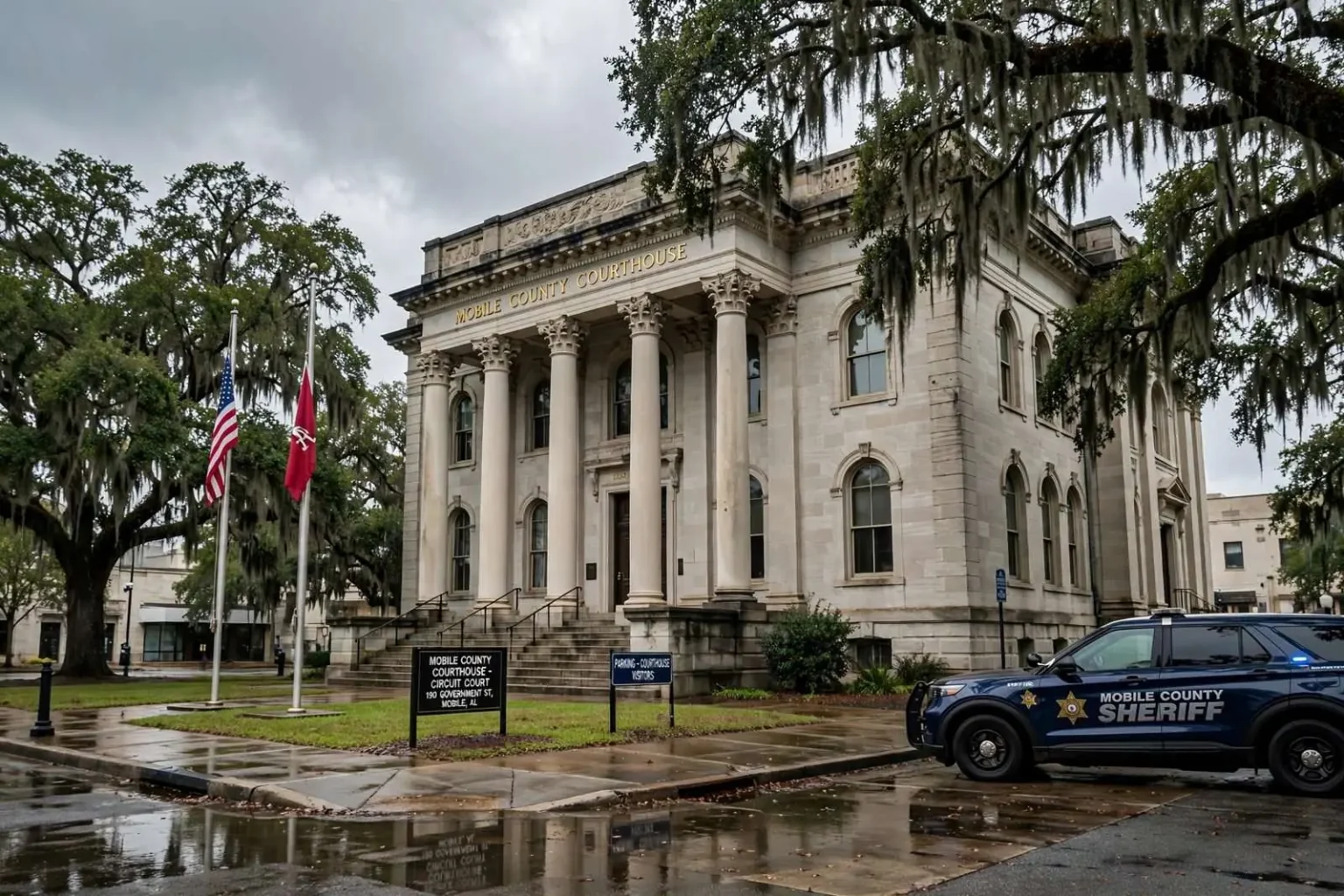
A former Mobile-based caseworker with the Alabama Department of Human Resources pleaded guilty this month to abusing and neglecting her elderly, mentally disabled brother, according to Mobile County court records.
The woman, now 43, entered what is known as a blind plea to one count of elder abuse and neglect on the same day a jury pool had gathered for her scheduled trial. A blind plea means she pleaded guilty without a sentencing agreement in place, leaving punishment up to the judge. She could face as much as 20 years in prison.
The timing told its own story. With prospective jurors assembled and the state’s evidence about to be laid out in open court, the defendant chose to admit guilt and place her fate entirely in a judge’s hands rather than risk what a jury might do after hearing it. The plea closed the trial chapter of a case that has shadowed her since deputies walked into her brother’s home more than two years earlier.
Mobile County sheriff’s deputies arrested the woman in May 2013 after her brother, then 74 years old, was discovered malnourished and covered in bed sores while lying in his own waste. The Mobile County District Attorney’s Office said his condition was so severe that some of the bedsores required skin grafts to treat.
The brother, who requires round-the-clock care because of a mental disability, had been under his sister’s care at the time deputies found him. A sheriff’s office lieutenant involved in the case said at the time that he believed deputies may have saved the man’s life by intervening when they did.
Bedsores — pressure ulcers, in clinical language — develop when a person is left in one position for extended periods without being turned, cleaned or moved. In a cared-for adult they are considered a signal of neglect, and in their most advanced stages they reach bone, become infected and can turn fatal. The skin grafts required here indicated wounds deep enough that the body could not close them on its own, a level of deterioration that investigators said reflected months of inattention rather than days.
The May 2013 discovery began with a response to the brother’s home, where deputies found conditions investigators later described as among the worst they had encountered in a case of family caregiving gone wrong. Malnourishment compounded the wounds: a bedbound adult who is not being fed, hydrated or repositioned deteriorates on every front at once, and the medical response required — nutritional rehabilitation alongside surgical treatment of the ulcers — reflected how far his condition had progressed by the time anyone intervened.
The arrest followed within the investigation’s early days, and the case moved through the court system across the following two years — through grand jury indictment, defense motions and the scheduling delays that mark felony dockets in a busy county. What did not change was the central allegation: that the one person responsible for a helpless man’s daily survival had allowed him to waste away, and that only a deputy’s intervention stood between him and death.
A Caseworker’s Double Life
Court records show the woman had worked for the Alabama Department of Human Resources since 2003, spending much of her career helping children navigate the foster care system. She resigned from the agency a few months after her arrest, according to a DHR spokesperson.
The irony at the center of the case was not lost on anyone who followed it. The Department of Human Resources is the state agency charged with protecting Alabama’s most vulnerable residents — abused and neglected children foremost among them — and its caseworkers are trained to recognize exactly the conditions investigators found in the brother’s home. For more than a decade, the woman held a job built on intervening in households where care had broken down, while, prosecutors said, presiding over the breakdown of care in her own family.
Agency officials have generally been careful to distinguish an individual employee’s conduct from the agency’s work, and DHR made no public defense of the former caseworker, confirming only her departure. But cases like this one inevitably prompt uncomfortable questions inside such agencies about screening, supervision and what support exists for employees who are themselves caregivers at home.
The brother’s circumstances following the rescue were not detailed in court records, but adults found in conditions of severe neglect typically enter protective care — hospital treatment first, then placement with relatives, guardianship arrangements or state-supervised settings. Adults with mental disabilities who have been cared for by a single family member for years face a particularly difficult transition, having lost both their primary caregiver and their familiar surroundings at once.
The Blind Plea and What Comes Next
Following her guilty plea, the woman was scheduled to appear before a Mobile County Circuit Court judge in March for sentencing.
Because the plea was blind, the sentencing hearing will carry real weight. Prosecutors will present the facts of the neglect and argue for the harshest available outcome; the defense will present its own account of the defendant’s circumstances, capacity and record. The judge will have before him a presentence investigation — the standard report on a defendant’s background, criminal history and the offense itself — before fixing a sentence that can run up to 20 years for the single count.
Whatever the sentence, the plea itself stands as a formal admission that the neglect occurred — an acknowledgment that matters to the case’s witnesses and to the agencies that now look after her brother. The March hearing will conclude the criminal case, but the questions it raises about oversight of private caregiving arrangements will outlast the sentence.
Elder Abuse and the Family Caregiver Gap
Elder abuse and neglect cases involving family caregivers remain a persistent challenge for Mobile County law enforcement, who have said that vulnerable adults living with relatives can sometimes go without protective oversight for years. Advocates for the elderly and disabled have pushed for more consistent welfare checks in cases where a family member serves as the primary caregiver, particularly when that caregiver has no outside support.
The scale of the problem is national as well as local. Most long-term care in the United States is provided not by institutions but by family members, usually unpaid and frequently untrained, and the vast majority do demanding, devoted work without incident. But the same private arrangement that makes family care possible also makes it invisible: no shift changes, no supervisors, no outside eyes. When care fails inside a private home, the failure can continue undetected until a neighbor, a bank teller, a hospice worker or a deputy happens to notice.
The demands on family caregivers of disabled adults are easy to underestimate. Round-the-clock care means lifting, bathing, feeding and medication management without relief, often for decades, frequently while the caregiver balances a job and children of her own. Respite programs, adult day services and caregiver support groups exist to relieve that pressure, but they are unevenly available and often unknown to the families who need them most. Advocates argue that a caregiver in crisis who reaches out for help before it fails is exactly the outcome the system should make easy — and that criminal cases like this one mark the point where every earlier off-ramp was missed.
Alabama’s protective framework for vulnerable adults runs through Adult Protective Services, which receives and investigates reports of abuse, neglect and exploitation of elderly and disabled adults, alongside law enforcement. Advocates have long argued that the system is reactive by design — it depends on someone reporting — and that the adults least able to report their own mistreatment are precisely the ones most likely to be missed. Proposals for stronger oversight have included more frequent checks on high-risk households, better training for medical providers to spot and report signs of neglect, and clearer standards for caregivers who take on round-the-clock responsibility.
Recognizing the Signs
For the public, cases like this one underscore the warning signs that neighbors, relatives and service providers are urged to watch for: unexplained weight loss, poor hygiene, pressure sores, withdrawn behavior, a caregiver who isolates the vulnerable person from other family members or refuses to let others see them alone. Any of these can justify a call to Adult Protective Services or the sheriff’s office, and officials stress that reporting a suspicion does not require certainty — investigation is the system’s job, not the caller’s.
In this case, it was deputies who ultimately walked through the door and found a man whom one officer believes would not have survived much longer. The judge who sentences his sister in March will do so knowing what the rescue found — and the sentencing hearing will be the last formal moment in a case that began when someone in a position of trust stopped providing the care her brother could not provide for himself.