

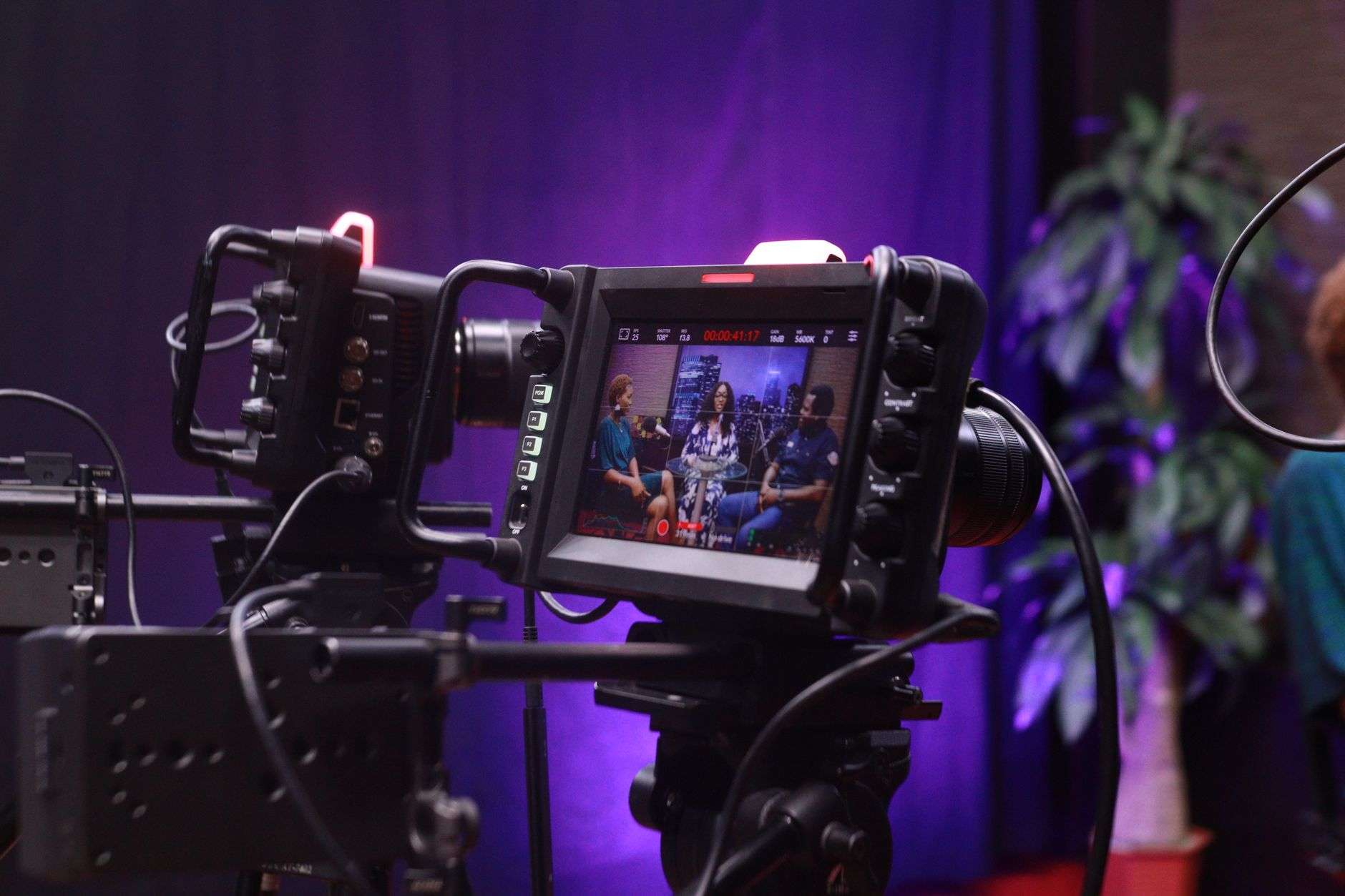
A Mobile-based video producer is earning national recognition for the kind of storytelling that turns a hospital hallway into a place of hope. Andrew Conniff, a videographer with the University of South Alabama Health System’s Office of Marketing and Communications, has won two honors in the 47th annual Telly Awards, announced this past May. The awards spotlight two patient-centered films Conniff produced from start to finish, work that colleagues say captures the human side of academic medicine in the Mobile area — and that do it with a one-person production crew rather than the armies of specialists most award-winning videos deploy.
Conniff earned a Silver Telly in the non-broadcast biography category for a video chronicling former patient Sydnee Cantley’s journey through treatment at USA Health Children’s & Women’s Hospital. He also took home a Bronze Telly in the same category for a film documenting the care 1st Lt. Nathan Cole received at the USA Health Kelly Butler ALS Center, one of the region’s specialized resources for patients and families confronting amyotrophic lateral sclerosis. The two films could hardly be more different in subject — a pediatric patient’s recovery story and an adult’s confrontation with a terminal neurological disease — yet both spring from the same premise: that the best way to explain a hospital is to let its patients narrate it.
The Kelly Butler ALS Center occupies a special place in the region’s medical landscape. ALS — amyotrophic lateral sclerosis, long known as Lou Gehrig’s disease — is a progressive neurodegenerative condition with no cure, and patients and families in the Gulf Coast region have historically had to travel long distances for multidisciplinary care. A named center in Mobile brings neurologists, therapists, and support services together in one program, and documenting its work honestly requires a filmmaker willing to sit with subjects whose time and strength are not unlimited.
For both projects, Conniff was responsible for the interviews, filming, and post-production editing, a solo creative effort that required building trust with patients during some of the most vulnerable moments of their lives. Health system video work lives or dies on that trust: patients agree to be filmed at bedside, in therapy sessions, and at home, and what they are willing to share depends entirely on the person holding the camera. A one-person crew is not merely a budget choice — it changes what the footage can be.
Recognition From Health System Leadership
Marie Katz, executive director of USA Health’s Office of Marketing and Communications, praised Conniff’s contribution to how the health system tells its story. “Andrew’s work exemplifies the power of storytelling in academic medicine,” Katz said, adding that his ability to earn patients’ trust while producing compelling, professional-quality content sets his work apart. In an academic health system, where the dual missions of research and care can make institutional communication feel technical, Katz’s assessment amounts to a strategic argument: the stories patients tell themselves reach people that clinical achievement statistics cannot.
That trust is often the difference between a video that feels clinical and one that feels genuinely personal, a distinction that matters for families weighing where to seek specialized care in the Mobile and Gulf Coast region. When a family in the region faces an ALS diagnosis or a complicated pediatric condition, the decision about where to go is made in an atmosphere of fear and uncertainty, and a film that shows real patients — their faces, their voices, their setbacks and milestones — does reassurance work that no advertising campaign can buy.
A Growing Track Record
This year’s wins are not Conniff’s first trip to the Telly Awards podium. He also received recognition in 2024 and 2025 for other patient-focused video projects produced for USA Health, building a track record of storytelling that has helped humanize the institution’s clinical work over several consecutive award cycles. Sustained recognition across three consecutive years suggests something beyond a hot streak: a production approach, refined within the same institution, that consistently clears a national judging bar.
Before joining USA Health, Conniff built his skills in local television news as a photojournalist, work that earned him the Alabama Broadcasters Association’s 2019 Photojournalist of the Year honor. Television news is a demanding school for the skills his current job requires — working fast, listening hard, finding the visual detail that carries a story — and the ABA award marked him as one of the best in Alabama’s newsrooms at exactly that craft. He is a graduate of the University of South Alabama, giving his current role with the university’s health system something of a homecoming quality: a USA-trained storyteller now documenting the institution that trained him.
About the Telly Awards
The Telly Awards are widely regarded as one of the largest international honors for video and television production, recognizing work across broadcast, streaming, and non-broadcast categories. Founded in 1979 to showcase work that commercial television overlooked, the program has grown into a sprawling competition that now receives thousands of entries annually from around the world. Submissions are judged by a panel of more than 200 industry professionals drawn from advertising agencies, production companies, and major networks, all of whom are themselves past Silver Telly recipients — a peer-review structure that keeps the judging anchored to working practitioners.
Winning in such a competitive field is notable for any production team, but especially so for an in-house health system video unit working alongside patients rather than professional actors. Health care marketing departments typically compete for internal audiences and trade-association recognition; taking Silver and Bronze honors against professional shops in an open international competition is a different tier of achievement, and it signals that USA Health’s communications operation is producing work of genuine craft rather than institutional service video.
Why It Matters Locally
For Mobile-area residents, the awards are more than a professional accolade. USA Health operates as the region’s academic medical center, and how it communicates about patient care, from ALS treatment to pediatric services, can shape public understanding of the resources available close to home. Academic medical centers live and die by their referral reputations — by whether a family physician in a small town across the Gulf Coast thinks of USA Health first when a patient needs specialized care — and patient films have become one of the most persuasive forms of that reputation-building.
Videos like the ones featuring Cantley and Cole are used to help prospective patients and their families understand what treatment at USA Health facilities actually looks like, offering a firsthand window into the experience beyond a clinical brochure. The films walk viewers through entrances, treatment rooms, and therapy sessions with the people who live them, collapsing the distance between “what does this hospital do” and “what would our family’s days here actually feel like.”
Both award-winning videos remain available for viewing on the USA Health website, allowing local families to see the stories that impressed an international panel of judges — and allowing Mobile to watch one of its own institutions earn national attention for telling its story the right way, one patient at a time.
The biography category the films competed in is among the Telly program’s most demanding, because it judges stories against the same standard whether they come from a network documentary unit or a hospital basement edit suite. Non-broadcast work — the videos made for websites, capital campaigns, and community outreach rather than airtime — has grown into the lifeblood of institutional communication, and judges have steadily raised the bar for what qualifies as award-worthy within it.
Conniff’s path through the industry reflects a broader convergence between news and institutional storytelling. As television newsrooms contracted across Alabama and the country, many of their best photojournalists carried their skills into universities, health systems, and nonprofits — organizations that need broadcast-quality storytelling but not a broadcast license. The craft honed on deadline — composing in available light, conducting interviews that go somewhere, editing to the rhythm of a person’s own words — transfers directly to work like the Cantley and Cole films.
The financial logic of an award-winning in-house unit is also worth noting. Professional production houses charge tens of thousands of dollars for a single polished patient story, and a health system that runs ongoing video campaigns cannot sustain those rates. An internal producer who wins national recognition changes that equation: the institution gains a storyteller who knows its hallways, its physicians, and its patients by name, and whose work competes with — and beats — vendors charging many times the cost.
For the patients, meanwhile, the value is permanence. Clinical outcomes are documented in charts that stay sealed; a film documents what treatment felt like, and gives families a way to say thank you, to bear witness, and to tell the next family walking into the Kelly Butler ALS Center or Children’s & Women’s Hospital what they found when they got there. That is the quiet work the Telly Awards recognized this May, and it is work that will keep playing long after the trophies are shelved.