University of South Alabama Mobile
Mobile Student’s Report of Turning In $10,000 Prepaid Card Meets Retailer Skepticism
A Mobile student says he found and turned in a prepaid card worth more than $10,000, but the retailer now disputes key parts of his account.
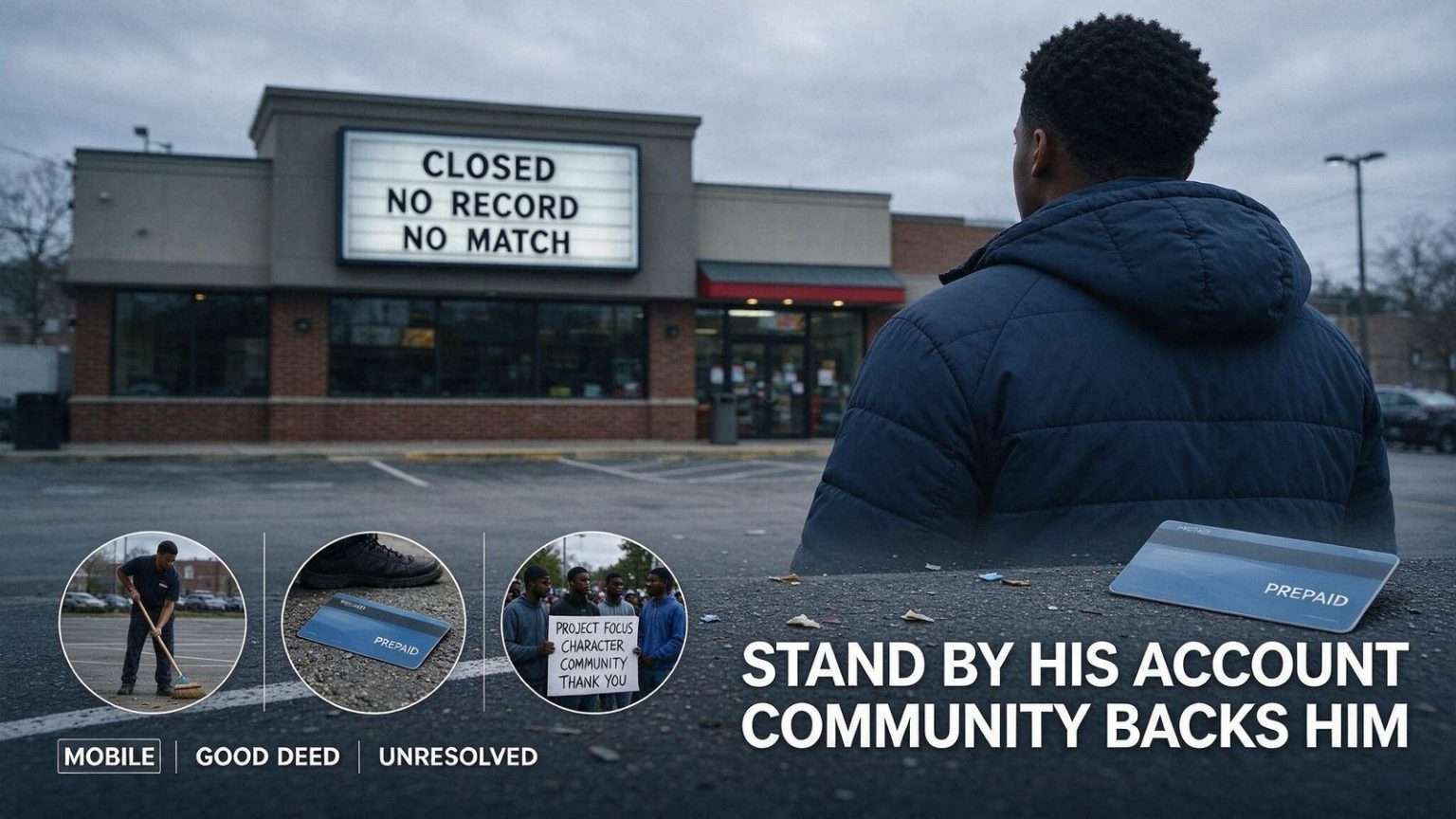
A Mobile-area fast-food manager says a moment of honesty turned into an unexpected dispute after he handed over a prepaid card he says was loaded with more than $10,000 to the store where it appeared to have been issued. What he expected to be a simple good deed has instead left him tangled in conflicting accounts, a corporate investigation and a police referral — and an unresolved question about what really happened to the card he says he turned in.
A card in a parking lot
Demetrius Reynolds, a graduate of Davidson High School who works as a manager at a fast-food restaurant, said he was sweeping the parking lot in mid-February when he spotted a blue prepaid Visa card lying on the ground. Reynolds, who has been working to pay his way through the University of South Alabama, said he checked the balance out of curiosity and found it listed at more than $10,000.
The discovery presented a genuine test for a college student supporting himself on restaurant wages. More than $10,000 on a single card represented more than most students in his position earn in months of work, and no one was around to see him pocket it. Reynolds said his decision was straightforward: the card was not his, and whoever lost it might need it desperately.
Rather than keep the card, Reynolds said he decided to take it to the retailer whose name appeared on it, hoping employees could track down the rightful owner. He said a customer service worker took the card without asking for his name or contact information, and that when he returned the next day to check on it, no one could tell him what had happened to it.
That second visit — a courtesy check that Reynolds expected to end with thanks or at least confirmation that the owner had been found — instead became the start of a frustrating search for answers. Without a receipt, a reference number or even his name on file, Reynolds had no way to prove he had turned the card in at all.
The retailer’s account
The retailer’s local store management later said it had no record of a card matching that description and no evidence the balance Reynolds described was accurate, noting that a standard prepaid card of that type from the company is capped well below $10,000 and that a card’s balance can’t be verified through a register at a different business.
A corporate spokesperson said the company could not locate the card Reynolds described, has referred the matter to law enforcement, and will continue to look into it if authorities pursue it further. The company’s position amounts to a polite but firm non-confirmation: no matching card, no such balance, and no way to reconcile the account with its records.
The technical explanation the retailer offered contains an important kernel about how prepaid cards actually work. Cards issued by one retailer can be activated and loaded by that company, but their balances are managed by the card network rather than the store’s own registers — which is why a cashier at one business cannot look up the value of a card issued by another. Balance inquiries generally require the card number itself, contacted through the issuing network, not a store database.
The caps matter too. Prepaid cards sold at retail are typically issued with maximum load limits set by the issuer, and balances above those limits would be unusual for ordinary over-the-counter cards. Cards used for payroll, benefits or business expenses can carry larger values, but those are generally issued directly through employers or programs rather than purchased off a store rack. The gap between those two categories is where the dispute lives.
Sticking to the account
Reynolds said he stands by his account of what he found and turned in, and he has not wavered from the story he told friends, family and, eventually, the community members who rallied around him. He has acknowledged the uncertainty of his position — he turned in the card without taking his name, which seemed unimportant at the time — but he disputes any suggestion that the story is anything other than what happened.
For his part, Reynolds said he never expected money or attention for returning the card; his goal was to see it reach its owner. The irony that the good deed has instead required him to defend his own account is not lost on those who know him.
The community rallies
Word of his decision spread through Project Focus, a local mentoring program for young men, whose members knew Reynolds through his work with the group. A fellow participant in the program started an online fundraiser to help Reynolds cover tuition and car repairs, calling his choice to return the card an example of strong character.
The fundraiser has drawn more than $5,000 in donations, a total that grew as the story circulated among Mobile residents who saw in it a familiar tension: a young man doing the right thing without an audience, then facing skepticism when the record could not back him up. Donors have described their contributions as rewards for honesty rather than judgments about the dispute — support for the choice Reynolds made, whatever happened to the card afterward.
Project Focus, the mentoring organization at the center of the outreach, works with young men in the Mobile area on education, character and career development, and its members have framed Reynolds’s situation as exactly the kind of moment the program prepares young people for: doing right when no one is checking. The organization has stood by Reynolds publicly as the dispute has continued.
What happens now
The disagreement between Reynolds’ account and the retailer’s records remains unresolved, with both the company and Reynolds saying they hope the matter eventually gets sorted out. The police referral means that if investigators take up the matter, the inquiry would presumably seek to determine whether a high-value card was lost, what became of it, and whether any crime occurred — questions that would extend beyond Reynolds to include whoever handled the card after it entered the store.
Consumer advocates note that the episode offers lessons on both sides. For cardholders, losing a prepaid card is not like losing cash — issuers can track, freeze or replace cards in many circumstances, which is why reporting a loss quickly matters. For good Samaritans, Reynolds’s experience illustrates an uncomfortable reality: turning in something valuable without documenting the handoff — a name, a time, a reference number — can leave the do-gooder with no proof of the good deed.
For Reynolds, a Davidson High School graduate working his way through the University of South Alabama, the past month has delivered an education no class offered. The more than $5,000 raised by strangers who believed his account has helped with tuition and car repairs, and whatever investigators conclude about the card, his standing in the community that rallied around him appears secure.
How the story traveled
The path the story took through the community says something about Mobile itself. Reynolds did not go to the media; members of Project Focus talked among themselves, and the account of a young manager who swept a parking lot on a February evening and gave away a fortune moved from the mentoring group to social media to the fundraiser in a matter of days. Local attention followed, and the fundraiser’s total climbed past $5,000 as donations arrived from people with no connection to Reynolds beyond the story itself.
That pattern — a quiet good deed rescued by a community’s response after institutions could not verify it — has become the defining feature of the episode. For the mentoring program’s young members, it has served as a real-world demonstration of both halves of the lesson: that doing right can carry a cost, and that character has a way of being recognized even when paperwork cannot prove it.
The open questions
Whether the card ever existed as Reynolds described it, and where it went after he handed it over, remain questions for investigators rather than the public. If authorities pursue the referral from the retailer’s corporate office, the inquiry would have tools Reynolds never did: transaction records from the card network, store surveillance footage from the day in question, and interviews with the employees on duty.
Until then, the account stands as one side’s sworn word against the other’s inability to confirm it. Reynolds continues his studies at the University of South Alabama and his work at the restaurant, backed by a community fundraiser, a mentoring organization and more than $5,000 from strangers convinced that the man who turned in a $10,000 card deserves something better than doubt.